Youtube Description:
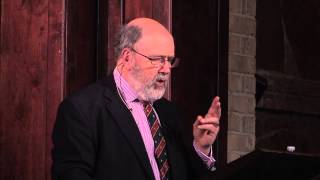
Jesus is loved by (Christians and Muslims) almost four billion people on the planet. The lecture addresses the position Jesus holds in Islam with a special emphasis on 'his return' near the end of times. The lecture was attended by distinguished members of the community, including local MPs and politicians. The lecture presents a Muslim view on the life and ministry of Jesus (peace be upon him). It was delivered on Sunday 22/12/2019 at the Zakariyyah Masjid in Bolton, UK.
Follow Adnan Rashid on social media:
Jesus is loved by (Christians and Muslims) almost four billion people on the planet. The lecture addresses the position Jesus holds in Islam with a special emphasis on 'his return' near the end of times. The lecture was attended by distinguished members of the community, including local MPs and politicians. The lecture presents a Muslim view on the life and ministry of Jesus (peace be upon him). It was delivered on Sunday 22/12/2019 at the Zakariyyah Masjid in Bolton, UK.
Follow Adnan Rashid on social media:
Explore More
 Who is Adnan Rashid?
Adnan Rashid is a public figure, historian, traveller, poet, author and a philanthropist. He is also a Senior Researcher and Lecturer at the Hittin Institute, London. Rashid has speciality in the history of Islamic civilisation, comparative religion
and Quran/Hadith sciences. He also takes a keen interest in lslamic numismatics, ancient manuscripts and antiquities. He has debated many high profile figures in the field of politics, history, Muslim/Christian theology. Rashid has represented Islam and Muslims appearing on a number of radio and TV platforms such as the BBC Asia Netwrok, Press TV, Iqra TV and Islam Channel.
 What is Islam?
One of the major religions of the world, Islam literally translates to "submission," as a follower of Islam (Muslims) devotes their life to that of their God. The religion began with the teachings of Muhammad in the 7th century. The theology of Islam
is based on the Qur'an, which was given to Muhammad by God. Some of the major fundamental principles of Islam include the Five Pillars, which hope to unite all Muslims into a community. Two different factions of Muslims exist - the majority are known as Sunni, with a small percentage known as Shi'a - both predominantly reside throughout the Middle East.
Muhammad died in 632 AD and the religion of Islam formally started after his death. The Quran was formally compiled and finalised in 650 AD, prior to which it was 'memorised' and written across many parchments.