Explore More
Saudi Arabia Archaeology Abu Layth Petra ONSSearch Google Search Explore Topics
 What is Saudi Arabia?
Saudi Arabia, officially the Kingdom of Saudi Arabia (KSA) is a country in Western Asia constituting the bulk of the Arabian Peninsula. With a land area of approximately 2,150,000 km2 (830,000 sq mi), Saudi Arabia is geographically the largest sovereign state in the Middle East, the 2nd largest in the Arab world (after Algeria), the 5th largest in Asia, and the 12th largest in the world. Saudi Arabia is bordered by Jordan and Iraq to the north, Kuwait to the northeast, Qatar, Bahrain, and the United Arab Emirates to the east, Oman to the southeast and Yemen to the south; most of its terrain consists of arid desert, lowland and mountains. As of October 2018, the Saudi economy was the largest in the Middle East and the 18th largest in the world. Saudi Arabia also enjoys one of the world's youngest populations; 50% of its 33.4 million people are under 25 years old.
 What is Archaeology?
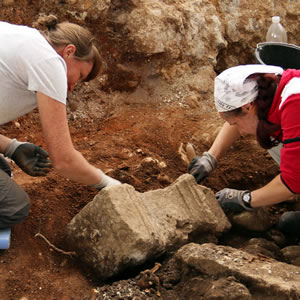
Archaeology or archeology is the study of human activity through the recovery and analysis of material culture. The archaeological record consists of artifacts, architecture, biofacts or ecofacts, sites, and cultural landscapes. Archaeology can be considered both a social science and a branch of the humanities.
 Who is Abu Layth?
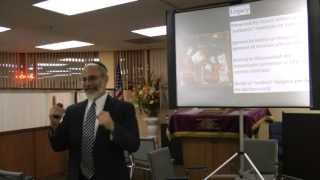
Mufti Abu Layth carried out preliminary Arabic and Islamic Studies as a teenager in the UK in 1997. He went onto study Islam in Damascus, Syria. Abu Layth presents traditional Islam on a contemporary platform.
 Where is Petra?
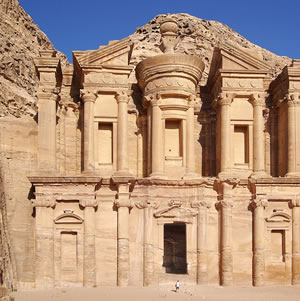
Petra originally known to its inhabitants as Raqmu, is a historical and archaeological city in southern Jordan. Petra lies on the slope of Jabal Al-Madbah in a basin among the mountains which form the eastern flank of the Arabah valley that runs from the Dead Sea to the Gulf of Aqaba. Petra is believed to have been settled as early as 9,000 BC, and it was possibly established in the 4th century BC as the capital city of the Nabataean Kingdom. The Nabataeans were nomadic Arabs who invested in Petra's proximity to the trade routes by establishing it as a major regional trading hub.
 Who are ONS?
The Office for National Statistics (ONS) is the official national statistical institute of the United Kingdom.