Youtube Description:
The Pagan origins of New Year's and Christmas have more in common then just being a week apart. The celebration of the new year is directly related to the same Greek and Roman paganism that Christmas derived from. Should Christian's celebrate New Year's according to what the Bible says? Is New Year's a Christian holiday? Is New Year's in the Bible? Have you ever heard of the god Janus? Explained in this video is the two headed god Janus and the connection to January and New Year's.
We hope you enjoyed the teaching: 'The Pagan Origins of New Years' See below for all the different ways to connect with us.
To continue your journey, please visit our extensive website:
Download our free mobile App for Apple our Android from the App Store. Search: Yahweh's Restoration Ministry
Join us on Roku! To find our channel search: Yahweh's Restoration Ministry
Watch live Sabbath services every Saturday at 1:30pm central.
Find us on Social Media:
To link this video:
-~-~~-~~~-~~-~-
Please watch: 'This Is Yahweh's Restoration Ministry - A HEBREW ROOTS, Messianic, Torah Observant, Congregation'
-~-~~-~~~-~~-~-
The Pagan origins of New Year's and Christmas have more in common then just being a week apart. The celebration of the new year is directly related to the same Greek and Roman paganism that Christmas derived from. Should Christian's celebrate New Year's according to what the Bible says? Is New Year's a Christian holiday? Is New Year's in the Bible? Have you ever heard of the god Janus? Explained in this video is the two headed god Janus and the connection to January and New Year's.
We hope you enjoyed the teaching: 'The Pagan Origins of New Years' See below for all the different ways to connect with us.
To continue your journey, please visit our extensive website:
Download our free mobile App for Apple our Android from the App Store. Search: Yahweh's Restoration Ministry
Join us on Roku! To find our channel search: Yahweh's Restoration Ministry
Watch live Sabbath services every Saturday at 1:30pm central.
Find us on Social Media:
To link this video:
-~-~~-~~~-~~-~-
Please watch: 'This Is Yahweh's Restoration Ministry - A HEBREW ROOTS, Messianic, Torah Observant, Congregation'
-~-~~-~~~-~~-~-
Explore More
 Who are Yahweh Ministry?
Yahweh's Restoration Ministry (YRM) are devoted to exposing pagan church traditions and false doctrine. We also cover end-times prophecy, armageddon and prophetic events. The Hebrew roots of the Christian faith is an important element to unlocking
Bible truth. Discover amazing facts that your church doesn't want you to know! Facts like the Sabbath and Feast Days, the name of god Yahweh, common Bible misnomers, false doctrine, paganism, and amazing Bible facts are all covered.
 What is New Year?
New Year is the time or day at which a new calendar year begins and the calendar's year count increments by one. Many cultures celebrate the event in some manner and the 1st day of January is often marked as a national holiday. In the Gregorian
calendar, the most widely used calendar system today, New Year occurs on January 1 (New Year's Day). This was also the case both in the Roman calendar (at least after about 713 BC) and in the Julian calendar that succeeded it.
 What is Pagan?
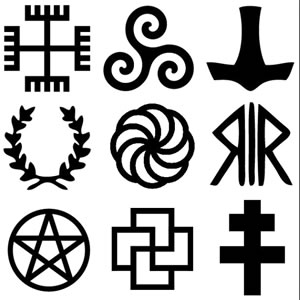
Paganism is a term first used in the fourth century by early Christians. It was applied on populations of the Roman Empire who practiced polytheism, either because they were increasingly rural and provincial relative to the Christian population or
because they were not milites Christi (soldiers of Christ). Alternate terms in Christian texts for the same group were hellene, gentile, and heathen. Pagan and paganism were pejorative terms for the same polytheistic group, implying its inferiority. Paganism has broadly connoted the "religion of the peasantry", and for much of its history was a derogatory term. Both during and after the Middle Ages, pagan was a pejorative term that was applied to any non-Abrahamic or unfamiliar religion, and the term presumed a belief in false god(s).