2 views
·
Last viewed: 17 mins ago
Uploaded: 10 Jun 2023 (3 years ago) · Shared: 30 Sep 2026
Duration: 7:53
Uploaded: 10 Jun 2023 (3 years ago) · Shared: 30 Sep 2026
Duration: 7:53
Youtube Description:
Astrotheology is the study of the relationship between celestial bodies and religious beliefs. This theory holds that many of the gods and goddesses worshiped in ancient religions were actually representations of the sun, moon, stars, and planets. There are some scholars who believe that the story of Jesus and the 12 disciples is an astrotheological tale. According to this interpretation, the story of Jesus is not meant to be taken as a historical account, but rather as a symbolic representation of celestial events.
Astrotheology is the study of the relationship between celestial bodies and religious beliefs. This theory holds that many of the gods and goddesses worshiped in ancient religions were actually representations of the sun, moon, stars, and planets. There are some scholars who believe that the story of Jesus and the 12 disciples is an astrotheological tale. According to this interpretation, the story of Jesus is not meant to be taken as a historical account, but rather as a symbolic representation of celestial events.
Explore More
Search Google Search Explore Topics Astrotheology Christianity Religions Judaism Islam What is Astrotheology?
The term Astrotheology is used in the context of 18th century scholarship aiming at the discovery of the original religion, particularly primitive monotheism. Unlike astrolatry, which usually implies polytheism, frowned upon as idolatrous by Christian authors since Eusebius, Astrotheology is any "religious system founded upon the observation of the heavens", and in particular, may be monotheistic. Astrolatry is the worship of stars and other heavenly bodies as deities, or the association of deities with heavenly bodies. The most common instances of this are Sun gods and Moon gods in polytheistic systems worldwide. Also notable is the association of the planets with deities in Babylonian, and hence in Greco-Roman religion, viz. Mercury, Venus, Mars, Jupiter and Saturn.
 What is Christianity?
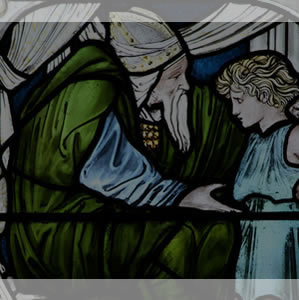
Christianity is a global religion centered on the life and teachings of Jesus Christ, who followers believe is the Son of God. It's a monotheistic faith, meaning Christians believe in one God who exists in three co-equal persons: God the Father, God the Son (Jesus Christ), and the Holy Spirit. Christianity is based on the Bible, with the Old Testament and New Testament serving as sacred texts.
 What are Religions?
Religion is a range of social-cultural systems, including designated behaviors and practices, ethics, morals, beliefs, worldviews, texts, sanctified places, prophecies, or organizations, that generally relate humanity to supernatural, transcendental, and spiritual elements. There is no scholarly consensus over what precisely constitutes a religion. It is an essentially contested concept. Different religions may or may not contain various elements ranging from the divine, sacredness, faith, and a supernatural being or beings. The origin of religious belief is an open question, with possible explanations including awareness of individual death, a sense of community, and dreams. Religions have sacred histories, narratives, and mythologies, preserved in oral traditions, sacred texts, symbols, and holy places, that may attempt to explain the origin of life, the universe, and other phenomena. Religious practice may include rituals, sermons, commemoration or veneration (of deities or saints), sacrifices, festivals, feasts, trances, initiations, matrimonial and funerary services, meditation, prayer, music, art, dance, or public service. There are an estimated 10,000 distinct religions worldwide, though nearly all of them have regionally based, relatively small followings. Four religions: Christianity, Islam, Hinduism, and Buddhism account for over 77% of the world's population, and 92% of the world either follows one of those four religions or identifies as non-religious, meaning that the vast majority of remaining religions account for only 8% of the population combined.
 What is Judaism?
Judaism encompasses the religion, philosophy, culture and way of life of the Jewish people. Judaism is a monotheistic religion, with the Torah as its foundational text (part of the larger text known as the Tanakh or Hebrew Bible), and supplemental oral tradition represented by later texts such as the Midrash and the Talmud. Judaism is considered by religious Jews to be the expression of the covenantal relationship that God established with the Children of Israel. Judaism includes a wide corpus of texts, practices, theological positions, and forms of organization. Within Judaism there are a variety of movements, most of which emerged from Rabbinic Judaism, which holds that God revealed his laws and commandments to Moses on Mount Sinai in the form of both the Written and Oral Torah. The Jews are an ethnoreligious group and include those born Jewish and converts to Judaism. In 2012, the world Jewish population was estimated at about 14 million, or roughly 0.2% of the total world population. About 42% of all Jews reside in Israel and about 42% reside in the United States and Canada, with most of the remainder living in Europe.
 What is Islam?
One of the major religions of the world, Islam literally translates to "submission," as a follower of Islam (Muslims) devotes their life to that of their God. The religion began with the teachings of Muhammad in the 7th century. The theology of Islam is based on the Qur'an, which was given to Muhammad by God. Some of the major fundamental principles of Islam include the Five Pillars, which hope to unite all Muslims into a community. Two different factions of Muslims exist - the majority are known as Sunni, with a small percentage known as Shi'a - both predominantly reside throughout the Middle East. Muhammad died in 632 AD and the religion of Islam formally started after his death. The Quran was formally compiled and finalised in 650 AD, prior to which it was 'memorised' and written across many parchments.