848 views
·
Last viewed: 8 hrs ago
Uploaded: 09 Aug 2012 (14 years ago) · Shared: 20 Dec 2016
Duration: 9:30
Uploaded: 09 Aug 2012 (14 years ago) · Shared: 20 Dec 2016
Duration: 9:30
Youtube Description
What happened at the council of Nicaea? Was the Trinity made up there? Was the divinity of Jesus declared there for the first time? This video answersthese question?
Sources:
History of the Christian Church (Eerdmans, 1985)
Faith of the Early Fathers, Vol. 1 (Jurgens, 1998)
The Christological Controversy (Norris, 1980)
The Rise of Christianity (Rodney Stark, 1997)
The Church History (Eusebius)
Dialogus Adversus Luciferianos (St. Jerome)
Video links mentioned in the video:
http://www.youtube.com/watch?v=cWxwfFNyVws&feature=plcp
http://www.youtube.com/watch?v=5ztfwfS6FEc&feature=plcp
Refuting the Christ-myth theory:
http://www.kingdavid8.com/_full_article.php?id=fe54916c-64bc-11e1-8f66-6067e33f8f11
Video clips are from 'The Da Vinci Code (2003)'.
*If you are caught excessively commenting, insulting, or derailing then your comments will be removed. If you do not like it you can watch this video:
http://www.youtube.com/watch?v=mn0Hq-sy3Wg&feature=plcp
'Copyright Disclaimer Under Section 107 of the Copyright Act 1976, allowance is made for 'fair use' for purposes such as criticism, comment, news reporting, teaching, scholarship, and research. Fair use is a use permitted by copyright statute that might otherwise be infringing. Non-profit, educational or personal use tips the balance in favor of fair use.'
Explore More
InspiringPhilosophy Council of Nicaea Philosophy Nicaea PhiloSearch Google Search Explore Topics
 Who are InspiringPhilosophy?
My name is Michael Jones. I plan on creating a new video for InspiringPhilosophy.org every month dealing with philosophical and apologetic questions.
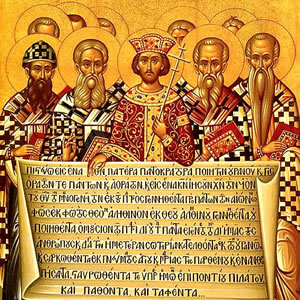 What was the Council of Nicaea?
The First Council of Nicaea was a council of Christian bishops convened in the Bithynian city of Nicaea (now ?znik, Bursa province, Turkey) by the Roman Emperor Constantine I in 325 AD. Its main accomplishments were settlement of the Christological issue of the divine nature of God the Son and his relationship to God the Father, the construction of the first part of the Nicene Creed, establishing uniform observance of the date of Easter, and promulgation of early canon law.
 What is Philosophy?
Philosophy is the study of general and fundamental problems concerning matters such as existence, knowledge, values, reason, mind, and language. The term was probably coined by Pythagoras (c. 570-495 BCE). Philosophical methods include questioning, critical discussion, rational argument, and systematic presentation. Classic philosophical questions include: Is it possible to know anything and to prove it? What is most real? Philosophers also pose more practical and concrete questions such as: Is there a best way to live? Is it better to be just or unjust (if one can get away with it)? Do humans have free will?
Where is Nicaea?Nicaea or Nicea was an ancient city in northwestern Anatolia. It is primarily known as the site of the First and Second Councils of Nicaea (the first and seventh Ecumenical councils in the early history of the Christian Church), the Nicene Creed (which comes from the First Council), and as the capital city of the Empire of Nicaea following the Fourth Crusade in 1204, until the recapture of Constantinople by the Byzantines in 1261.
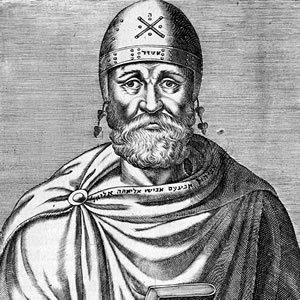 Who was Philo?
Philo of Alexandria (20 BC-50 AD) was a Hellenistic Jewish philosopher who lived in Alexandria, in the Roman province of Egypt. Philo used philosophical allegory to harmonize Jewish scripture, mainly the Torah, with Greek philosophy. His method followed the practices of both Jewish exegesis and Stoic philosophy. His allegorical exegesis was important for some Christian Church Fathers, but he had very little reception history within the Rabbinic Judaism. He adopted allegorical instead of literal interpretations of the Hebrew Bible. Some scholars hold that his concept of the Logos as God's creative principle influenced early Christology.