905 views
·
Last viewed: 5 hrs ago
Uploaded: 23 Oct 2019 (7 years ago) · Shared: 25 Oct 2019
Duration: 9:21
Uploaded: 23 Oct 2019 (7 years ago) · Shared: 25 Oct 2019
Duration: 9:21
Youtube Description
Is Allah God? If the answer to this question were simple, Professor Miroslav Volf would not have written a whole book on the subject. Still, in thisengaging short video, Professor Volf provides a brief summary of the answer.
Professor Volf is the Henry B. Wright Professor of Systematic Theology at Yale Divinity School. He is also the Founding Director of the Yale Center for Faith & Culture. In his book, Allah: A Christian Response (2011), Professor Volf explores every side of this important question and whether Muslims and Christians have a common God.
You can get his book from Amazon:
https://amzn.to/327IQVU
Follow us on social media:
Facebook: https://www.facebook.com/EmirSteinCenter
Twitter: https://twitter.com/EmirSteinCenter
Instagram: https://www.instagram.com/emirsteincenter/
Website: http://www.emir-stein.org
In one sense, for me, a Christian theologian, the answer to the question whether Allah is God is simple. Before the prophet Muhammad proclaimed the message of Islam, Arabic speaking Christians have for centuries read in their Bibles that “Allah loved the world” acting in Jesus Christ to rescue it from perishing. They also prayed to Allah in the name of Jesus Christ to forgive their sins, to bless their marriages, to heal their maladies, and help them rejoice in sufferings. After the seventh century, too, and all the way up to the present day, Arabic speaking Christians have continued to use “Allah” to refer to the God whom they sought to love above all things. To ask whether Allah is God, is then like asking whether Bog is God, whether Dieu is God, or whether Gott is God. Bog, Dieu, and Gott are Croatian, French, and German words for God respectively.
When it comes to lexical meaning of the words, it is simple: Allah is God and God is Allah. But things get more complicated when it comes to the religious meaning of “Allah” and “God.” That’s because today the great majority of people in the world who use “Allah” to refer to God are Muslims, some 1.7 billion of them. In the light of the predominantly Muslim use of “Allah,” the question whether Allah is God acquires new meaning: Do Muslims, when they say “Allah” mean the same thing as do Christians when they say God, Bog, Dieu, Gott, or Allah. Is the God Muslims and Christians worship the same?
I have written a whole book about this question. It is titled Allah: A Christian Response (2011). If the answer to the question were simple, no whole book would have been needed. Still, I can summarize the answer briefly. To do so, I find it helpful to ask the question in two ways. First, is the “entity” whom Muslims and Christians worship identical? Second, are their beliefs about the character the “entity” they worship identical? Let’s take the second question first.
When it comes to God’s nature and attributes, Muslims and Christian agree on many important things. Here are six of them:
1. There is only one God.
2. God created everything that is not God.
3. God is radically different from everything that is not God.
4. God is good, merciful and just.
5. God commands that we love God with our whole being.
6. God commands that we love our neighbors as ourselves.
These agreements are significant. They mark Christianity and Islam, along with Judaism, as belonging to the family of monotheist faiths, requiring of their adherents undivided worship of the One God. “No God but One” of the Apostle Paul (1 Corinthians 8) corresponds to “No God but God” of Shahadah (and both correspond to “No other God but me” of the Ten Commandments).
Notwithstanding these similarities, there are also significant differences in Christian and Muslim understandings of God’s nature and attributes. Two are particularly important. First, Christians believe that the indivisibly one God is the Holy Trinity, which is the foundation of the Christian claim that the Divine Word became flesh in Jesus Christ. Muslim, like Jews before them, contest that claim, believing that it compromises monotheism. Second, Christian affirm that, as it is written in the New Testament, “God is love” (1 John 4). This means not only that God is loving, but that God loves unconditionally: though God doesn’t love evil deeds, God loves all people, including evildoers. Muslims resist that claim. God is infinitely merciful, but God’s love is conditional; there are people, and not just deeds, whom God does not love.
...
Explore More
Emir-Stein Allah GODSearch Google Search Explore Topics
 Who are Emir-Stein?
The Emir-Stein Center is an initiative committed to the promotion of empathy and understanding through cultural and religious literacy.
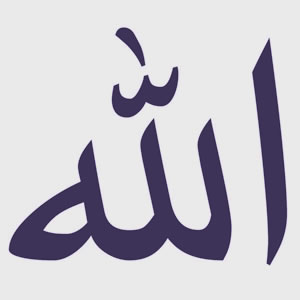 Who is Allah?
Allah is the Arabic word for God in Abrahamic religions. In the English language, the word generally refers to God in Islam. The word is thought to be derived by contraction from al-ilah, which means 'the god', and is related to El and Elah, the Hebrew and Aramaic words for God. The word Allah has been used by Arabic people of different religions since pre-Islamic times. More specifically, it has been used as a term for God by Muslims (both Arab and non-Arab) and Arab Christians.
Who is GOD?In monotheism and henotheism, God is conceived as the Supreme Being and principal object of faith. The concept of God as described by theologians commonly includes the attributes of omniscience (infinite knowledge), omnipotence (unlimited power), omnipresence (present everywhere), omnibenevolence (perfect goodness), divine simplicity, and eternal and necessary existence. In theism, God is the creator and sustainer of the universe In deism, God is the creator, but not the sustainer, of the universe Monotheism is the belief in the existence of one God or in the oneness of God In pantheism, God is the universe itself In atheism, God is purported not to exist, while deemed unknown or unknowable within the context of agnosticism.