853 views
·
Last viewed: 57 mins ago
Uploaded: 14 Oct 2018 (8 years ago) · Shared: 19 Nov 2018
Duration: 21:47
Uploaded: 14 Oct 2018 (8 years ago) · Shared: 19 Nov 2018
Duration: 21:47
Video Description
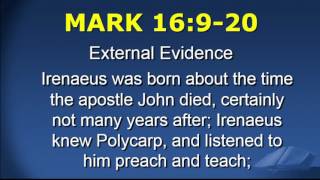
In this thought-provoking video, Tony Costa, known as the Godless Engineer, delves into the historical evidence surrounding Prophet Jesus ' resurrection. He challenges viewers to consider whether the traditional narratives upheld by the Church can be substantiated by historical records or if they should be questioned. This discussion is particularly relevant for those interested in the intersection of faith and history, offering insights that resonate with followers of Judaism, Christianity, and Islam. Costa’s analysis encourages a deeper exploration of the early history and texts, including the Quran and the Bible, to foster a more informed and respectful dialogue among believers and skeptics alike.
Explore More
Godless Engineer Apostle Paul Resurrection Tony Costa GOD JESUS
JESUS
Search Google Search Explore Topics
 Who are Godless Engineer?
Godless, Independent thinking Southerner living in North Alabama surviving in the Christian 'wasteland' one day at a time. Born and raised in North Alabama, John Gleason has a Bachelor's Degree in Computer Engineering and a Master's Degree in Software Engineering.
 Who was Apostle Paul?
Paul the Apostle (Latin: Paulus), commonly known as Saint Paul and also known by his Jewish name Saul of Tarsus was an apostle (though not one of the Twelve Apostles) who taught the gospel of Christ to the first century world. Paul is generally considered one of the most important figures of the Apostolic Age and in the mid-30s to the mid-50s AD he founded several churches in Asia Minor and Europe. He took advantage of his status as both a Jew and a Roman citizen to minister to both Jewish and Roman audiences. According to writings in the New Testament and prior to his conversion, Paul was dedicated to persecuting the early disciples of Jesus in the area of Jerusalem. In Acts, Paul was traveling on the road from Jerusalem to Damascus on a mission to 'arrest them and bring them back to Jerusalem' when the resurrected Jesus appeared to him in a great light. He was struck blind, but after three days his sight was restored by Ananias of Damascus and Paul began to preach that Jesus of Nazareth is the Jewish Messiah and the Son of God.
 What is Resurrection?
Resurrection is the concept of coming back to life after death. In a number of ancient religions, a dying-and-rising god is a deity which dies and resurrects. The death and resurrection of Jesus, an example of resurrection, is the central focus of Christianity. As a religious concept, it is used in two distinct respects: a belief in the resurrection of individual souls that is current and ongoing (Christian idealism, realized eschatology), or else a belief in a singular resurrection of the dead at the end of the world. The resurrection of the dead is a standard eschatological belief in the Abrahamic religions.
 Who is Tony Costa?
Tony's chief passion is in teaching and engaging students of any background in lively class discussions and interactions. He encourages them to ask thought-provoking questions and believes that life-long learning should be fun and life-changing. He is a professor with Providence Theological Seminary in Franklin, Tennessee, USA. He is the author of Worship and the Risen Jesus in the Pauline Letters as well as a contributor of scholarly essays in Christian Origins and Greco-Roman Culture and Christian Origins and Hellenistic Judaism and various journals.
 Who is GOD?
In monotheism and henotheism, God is conceived as the Supreme Being and principal object of faith. The concept of God as described by theologians commonly includes the attributes of omniscience (infinite knowledge), omnipotence (unlimited power), omnipresence (present everywhere), omnibenevolence (perfect goodness), divine simplicity, and eternal and necessary existence. In theism, God is the creator and sustainer of the universe In deism, God is the creator, but not the sustainer, of the universe Monotheism is the belief in the existence of one God or in the oneness of God In pantheism, God is the universe itself In atheism, God is purported not to exist, while deemed unknown or unknowable within the context of agnosticism.