32:42
157 views
·
Last viewed: 3 days ago
Uploaded: 16 May 2022 (4 years ago) · Shared: 07 May 2026
Video Description (from Youtube)
https://www.patreon.com/GnosticInformant Please Consider joining my Patreon to help fund my research and finding scholars to bring on. Any amount helps me. Thank you existing Patrons. Caesar Augustus(23 September 63 B.C.E. – 19 August C.E. 14), also known as Octavian, was the first Roman emperor, reigning from 27 BC until his death in AD 14. His status as the founder of the Roman Principate (the first phase of the Roman Empire) has consolidated a legacy as one of the greatest leaders in human history. The reign of Augustus initiated an era of relative peace known as the Pax Romana.
Originally named Gaius Octavius, he was born into an old and wealthy equestrian branch of the plebeian gens Octavia. His maternal great-uncle Julius Caesar was assassinated in 44 BC and Octavius was named in Caesar's will as his adopted son and heir; as a result, he inherited Caesar's name, estate, and the loyalty of his legions. He, Mark Antony and Marcus Lepidus formed the Second Triumvirate to defeat the assassins of Caesar. Following their victory at the Battle of Philippi (42 BC), the Triumvirate divided the Roman Republic among themselves and ruled as de facto dictators. The Triumvirate was eventually torn apart by the competing ambitions of its members; Lepidus was exiled in 36 BC and Antony was defeated by Octavian at the Battle of Actium in 31 BC.
After the demise of the Second Triumvirate, Augustus restored the outward façade of the free Republic, with governmental power vested in the Roman Senate, the executive magistrates and the legislative assemblies, yet maintained autocratic authority by having the Senate grant him lifetime tenure as commander-in-chief, tribune and censor. A similar ambiguity is seen in his chosen names, the implied rejection of monarchical titles whereby he called himself Princeps Civitatis (First Citizen) juxtaposed with his adoption of the ancient title Augustus.
Augustus dramatically enlarged the Empire, annexing Egypt, Dalmatia, Pannonia, Noricum and Raetia, expanding possessions in Africa, and completing the conquest of Hispania, but suffered a major setback in Germania.
In 59 BC, when he was four years old, his father died. His mother married a former governor of Syria, Lucius Marcius Philippus. Philippus claimed descent from Alexander the Great, and was elected consul in 56 BC. Philippus never had much of an interest in young Octavius. Because of this, Octavius was raised by his grandmother, Julia, the sister of Julius Caesar. Julia died in 52 or 51 BC, and Octavius delivered the funeral oration for his grandmother.
From this point, his mother and stepfather took a more active role in raising him. He donned the toga virilis four years later, and was elected to the College of Pontiffs in 47 BC. The following year he was put in charge of the Greek games that were staged in honor of the Temple of Venus Genetrix, built by Julius Caesar.
According to Nicolaus of Damascus, Octavius wished to join Caesar's staff for his campaign in Africa, but gave way when his mother protested. In 46 BC, she consented for him to join Caesar in Hispania, where he planned to fight the forces of Pompey, Caesar's late enemy, but Octavius fell ill and was unable to travel. Velleius Paterculus reports that after that time, Caesar allowed the young man to share his carriage. When back in Rome, Caesar deposited a new will with the Vestal Virgins, naming Octavius as the prime beneficiary.
Octavius was studying and undergoing military training in Apollonia, Illyria, when Julius Caesar was assassinated on the Ides of March (15 March) 44 BC. He rejected the advice of some army officers to take refuge with the troops in Macedonia and sailed to Italy to ascertain whether he had any potential political fortunes or security, Caesar had no living legitimate children under Roman law, and so had adopted Octavius, his grand-nephew, making him his primary heir. Octavius learned the contents of Caesar's will, and only then did he decide to become Caesar's political heir as well as heir to two-thirds of his estate.
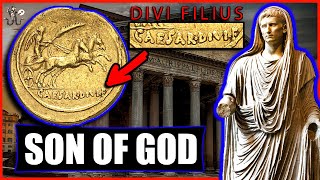
Octavian avenged his adopted father from the grave and all 300 conspirators were dead within a few years. He conquered all of the Roman Empire and was the Sole Dictator after a final civil war with Antony. He then was initiated into the Mysteries of Eleusis, was named Augustus and styled himself as the Son of God (Divi Filius) until he died of old age.
Sources:
Suetonius - 12 Caesars
Plutarch - Lives
Cassius Dio - Roman History
Josephus - Antiquities
Nicolaus of Damascus - Life of Augustus
Philo Judaeus - On the Embassy to Gaius
Ovid - Metamorphosis, Tristia
Lucan - Civil War
Virgil - Georgics, Eclogues
Tacitus - Histories
Seneca - Octavia
Horace - Odes & Epodes
Julius Marathus - Birth of Augustus (Suetonius)
Asclepiades of Mendes - Theologoumenon (Suetonius)
Livy - Rise of Rome
Pliny the Elder
#Augustus #Caesar #DiviFilius #SonofGod #Octavian #Rome #Gnostic #GnosticInformant gnostic informant apotheosis
DISCLAIMER
All videos are shared for educational and information purposes only. All videos are hosted and viewable on Youtube servers. Video titles are generated using the original video title; overall content theme including actual dialogue and speech (Transcript); and A.I-based recommendations with a focus on SEO, keyword density, and internal search functions. The video title does not represent the views held by the Youtube video uploader, or any individual, organisation or business.
If you spot any mistake, omission or give feedback, kindly Contact Us with details
EXPLORE TOPICS :
ROME |
60
CAESAR |
24
GNOSTIC |
41
GNOSTICISM |
0
GNOSTIC INFORMANT |
4
GOD |
0
 JESUS
JESUS
JESUS
Overview & Key Concepts
Who is Gnostic Informant?
 Gnostic Informant is a channel by Neal Sendlak, focusing on History, Mythology, and Comparative Religion.
What is Caesar?
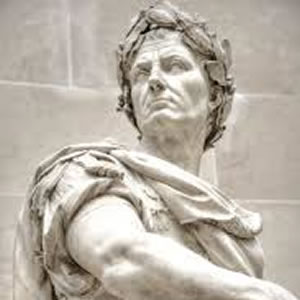 Gaius Julius Caesar, 100-44 BC, known by his cognomen Julius Caesar, was a Roman politician and military general. Caesar played a critical role in the
events that led to the demise of the Roman Republic and the rise of the Roman Empire.
Where is Rome?
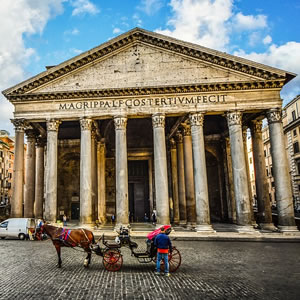 Rome is the capital city of Italy and a special comune (named Comune di Roma Capitale). Rome also serves as the capital of the Lazio region. With
2,872,800 residents in 1,285 km2 (496.1 sq mi), it is also the country's most populated comune. It is the fourth-most populous city in the European Union by population within city limits. It is the centre of the Metropolitan City of Rome, which has a population of 4.3 million residents. Rome is located in the central-western portion of the Italian Peninsula, within Lazio (Latium), along the shores of the Tiber. The Vatican City is an independent country inside the city boundaries of Rome, the only existing example of a country within a city: for this reason Rome has been often defined as capital of two states. Rome's history spans 28 centuries. While Roman mythology dates the founding of Rome at around 753 BC, the site has been inhabited for much longer, making it one of the oldest continuously occupied sites in Europe.
Who is GOD?
In monotheism and henotheism, God is conceived as the Supreme Being and principal object of faith. The concept of God as described by theologians
commonly includes the attributes of omniscience (infinite knowledge), omnipotence (unlimited power), omnipresence (present everywhere), omnibenevolence (perfect goodness), divine simplicity, and eternal and necessary existence.
<ul>
<li>In theism, God is the creator and sustainer of the universe</li>
<li>In deism, God is the creator, but not the sustainer, of the universe</li>
<li>Monotheism is the belief in the existence of one God or in the oneness of God</li>
<li>In pantheism, God is the universe itself</li>
<li>In atheism, God is purported not to exist, while deemed unknown or unknowable within the context of agnosticism. </li>
</ul>
Frequently Asked Questions
1.When did Catholic Christianity become official religion of Rome?
2.What happened after Rome chose Christianity as the state religion?
3.What is the 'Lazarus Effect' or 'Lazarus Syndrome' in science?
Videos on Caesar (22)
 1:23:11
721
1478649600
1787370373
Caesar Messiah: Roman Conspiracy To Invent Jesus - Joseph Atwill
004991
1
 14:09
14:09
1123
1496793600
1787282344
Roots of Jesus' Christianity - Joseph Atwill (Caesar Messiah) 1/2
000849
2
 12:31
12:31
981
1496793600
1787368749
Roots of Jesus' Christianity - Joseph Atwill (Caesar Messiah) 2/2
000751
3
 1:33:34
1174
1496793600
1787366668
Christianity and Mind Control - Joseph Atwill (Caesar Messiah)
005614
4
 55:43
55:43
1645
1496793600
1787353292
Flavian Roman Conspiracy: Origins of Christianity - Joseph Atwill (Caesar Messiah)
003343
5
 33:55
33:55
943
1496793600
1787274017
Flavian Signature: Proof Rome Invented Jesus - Joseph Atwill (Caesar Messiah)
002035
6
 10:45
10:45
1371
1496793600
1787344248
Origins of Christianity - Rod Blackhirst (Caesar Messiah)
000645
7
 20:40
20:40
1134
1496793600
1787365743
Christianity Legitimation and Context - Rod Blackhirst (Caesar Messiah)
001240
8
 11:20
11:20
521
1502912107
1787366345
Caesar Augustus was named Son of God, Divine God, God Incarnate, Lord, Redeemer, Liberator and Savior of World BEFORE Jesus - John Dominic Crossan
000680
9
 32:48
32:48
795
1505867188
1787364696
Julius Caesar, Romans and Pagan Worship - Ryan Reeves
001968
10
 1:52:19
711
1510329636
1787202673
Deliberate Deception: Interview with Pateo TV - Joseph Atwill (Caesar Messiah)
006739
11
 1:53:03
311
1515884425
1787338530
Jesus Christ, the myth was based on Julius Caesar - Francesco Carotta
006783
12
 13:58
13:58
568
1526084006
1787381704
Caesarea Philippi (Banias), Palestine - HolyLandSite
000838
13
 14:17
14:17
354
1526687568
1787334850
Caesarea built by King Herod who sought to kill baby Jesus - HolyLandSite
000857
14
 3:05
3:05
894
1546174318
1787347266
Jesus Christ: A pagan Sun God turned into a Jewish Man - Caesar Messiah
000185
15
 4:37
4:37
1245
1546174315
1787357108
Christians were ordered to 'Render unto Caesar', over Jewish Law - Caesar Messiah
000277
16
 14:17
14:17
656
1548547404
1787315693
Roman Imperialism: Before Jesus, was the 'divine' Caesar Augustus - John Dominic Crossan 1/4
000857
17
 10:33
10:33
422
1593983952
1787367567
Walking with Jesus in Caesarea Philippi, the Gates of Hellfire - DrJohnStevenson
000633
18
 1:07:24
197
1770903865
1787367335
Julius Caesar the Roman Emperor was A Divine God before Jesus - Hamza Saudi vs Paperboy SC
004044
19
 58:17
58:17
164
1773870115
1787298014
Muhammad's letters to Caesar and Kings - Khaybar Conquest - Jews Tried to Poison Muhammad | Towards Eternity
003497
20
 1:29:57
589
1774658478
1787350812
Caesar Messiah EXPOSED: Did Rome Create Christianity? | Joseph Atwill | MythVision TV
005397
21
 32:42
32:42
157
1778177597
1787136273
Caesar Augustus (63 BC-14 AD): Saviour of Rome and Original Son of God | Gnostic Informant
001962
22
EXPLORE TOPICS :
ROME |
60
CAESAR |
24
GNOSTIC |
41
GNOSTICISM |
0
GNOSTIC INFORMANT |
4
GOD |
0
JESUS
JESUS