Explore More
 Who is Ryan Reeves?
Ryan Reeves is Assistant Professor of Historical Theology at Gordon-Conwell Theological Seminary. He is also an adjunct professor for Reformed Theological Seminary and teaches summers at Campus Crusade (Cru). Reeves received his PhD from Cambridge
University and has two masters from Reformed Theological Seminary. He also was a guest student in theology at the University of Munster and has studied at Notre Dame's Medieval Institute and the Centro Pro Unione in Rome.
 What is Caesar?
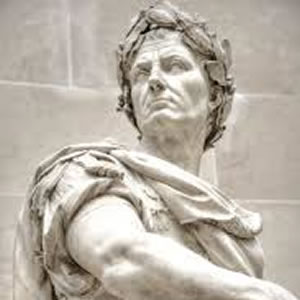
Gaius Julius Caesar, 100-44 BC, known by his cognomen Julius Caesar, was a Roman politician and military general. Caesar played a critical role in the events that led to the demise of the Roman Republic and the rise of the Roman Empire.
 What is Pagan?
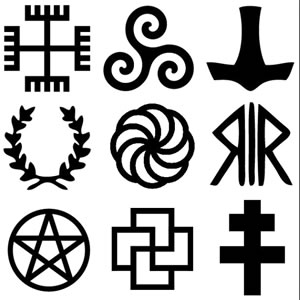
Paganism is a term first used in the fourth century by early Christians. It was applied on populations of the Roman Empire who practiced polytheism, either because they were increasingly rural and provincial relative to the Christian population or
because they were not milites Christi (soldiers of Christ). Alternate terms in Christian texts for the same group were hellene, gentile, and heathen. Pagan and paganism were pejorative terms for the same polytheistic group, implying its inferiority. Paganism has broadly connoted the "religion of the peasantry", and for much of its history was a derogatory term. Both during and after the Middle Ages, pagan was a pejorative term that was applied to any non-Abrahamic or unfamiliar religion, and the term presumed a belief in false god(s).
 What is Roman?
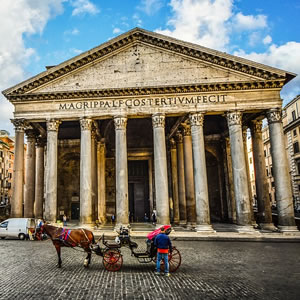
In historiography, ancient Rome is Roman civilization. From the founding of the city of Rome in the 8th century BC to the collapse of the Western Roman Empire in the 5th century AD, encompassing the Roman Kingdom, Roman Republic and Roman Empire
until the fall of the western empire. The civilization began as an Italic settlement in the Italian peninsula, dating from the 8th century BC, that grew into the city of Rome and which subsequently gave its name to the empire over which it ruled and to the widespread civilisation the empire developed. The Roman empire expanded to become one of the largest empires in the ancient world, though still ruled from the city, with an estimated 50 to 90 million inhabitants (roughly 20% of the world's population) and covering 5.0 million square kilometres at its height in AD 117.