213 views
·
Last viewed: 19 hrs ago
Uploaded: 16 May 2022 (4 years ago) · Shared: 07 May 2026
Duration: 32:42
Uploaded: 16 May 2022 (4 years ago) · Shared: 07 May 2026
Duration: 32:42
Youtube Description
https://www.patreon.com/GnosticInformant Please Consider joining my Patreon to help fund my research and finding scholars to bring on. Any amounthelps me. Thank you existing Patrons.
Caesar Augustus (23 September 63 B.C.E. – 19 August C.E. 14), also known as Octavian, was the first Roman emperor, reigning from 27 BC until his death in AD 14. His status as the founder of the Roman Principate (the first phase of the Roman Empire) has consolidated a legacy as one of the greatest leaders in human history. The reign of Augustus initiated an era of relative peace known as the Pax Romana.
Originally named Gaius Octavius, he was born into an old and wealthy equestrian branch of the plebeian gens Octavia. His maternal great-uncle Julius Caesar was assassinated in 44 BC and Octavius was named in Caesar's will as his adopted son and heir; as a result, he inherited Caesar's name, estate, and the loyalty of his legions. He, Mark Antony and Marcus Lepidus formed the Second Triumvirate to defeat the assassins of Caesar. Following their victory at the Battle of Philippi (42 BC), the Triumvirate divided the Roman Republic among themselves and ruled as de facto dictators. The Triumvirate was eventually torn apart by the competing ambitions of its members; Lepidus was exiled in 36 BC and Antony was defeated by Octavian at the Battle of Actium in 31 BC.
After the demise of the Second Triumvirate, Augustus restored the outward façade of the free Republic, with governmental power vested in the Roman Senate, the executive magistrates and the legislative assemblies, yet maintained autocratic authority by having the Senate grant him lifetime tenure as commander-in-chief, tribune and censor. A similar ambiguity is seen in his chosen names, the implied rejection of monarchical titles whereby he called himself Princeps Civitatis (First Citizen) juxtaposed with his adoption of the ancient title Augustus.
Augustus dramatically enlarged the Empire, annexing Egypt, Dalmatia, Pannonia, Noricum and Raetia, expanding possessions in Africa, and completing the conquest of Hispania, but suffered a major setback in Germania.
In 59 BC, when he was four years old, his father died. His mother married a former governor of Syria, Lucius Marcius Philippus. Philippus claimed descent from Alexander the Great, and was elected consul in 56 BC. Philippus never had much of an interest in young Octavius. Because of this, Octavius was raised by his grandmother, Julia, the sister of Julius Caesar. Julia died in 52 or 51 BC, and Octavius delivered the funeral oration for his grandmother.
From this point, his mother and stepfather took a more active role in raising him. He donned the toga virilis four years later, and was elected to the College of Pontiffs in 47 BC. The following year he was put in charge of the Greek games that were staged in honor of the Temple of Venus Genetrix, built by Julius Caesar.
According to Nicolaus of Damascus, Octavius wished to join Caesar's staff for his campaign in Africa, but gave way when his mother protested. In 46 BC, she consented for him to join Caesar in Hispania, where he planned to fight the forces of Pompey, Caesar's late enemy, but Octavius fell ill and was unable to travel. Velleius Paterculus reports that after that time, Caesar allowed the young man to share his carriage. When back in Rome, Caesar deposited a new will with the Vestal Virgins, naming Octavius as the prime beneficiary.
Octavius was studying and undergoing military training in Apollonia, Illyria, when Julius Caesar was assassinated on the Ides of March (15 March) 44 BC. He rejected the advice of some army officers to take refuge with the troops in Macedonia and sailed to Italy to ascertain whether he had any potential political fortunes or security, Caesar had no living legitimate children under Roman law, and so had adopted Octavius, his grand-nephew, making him his primary heir. Octavius learned the contents of Caesar's will, and only then did he decide to become Caesar's political heir as well as heir to two-thirds of his estate.
Octavian avenged his adopted father from the grave and all 300 conspirators were dead within a few years. He conquered all of the Roman Empire and was the Sole Dictator after a final civil war with Antony. He then was initiated into the Mysteries of Eleusis, was named Augustus and styled himself as the Son of God (Divi Filius) until he died of old age.
Sources:
Suetonius - 12 Caesars
Plutarch - Lives
Cassius Dio - Roman History
Josephus - Antiquities
Nicolaus of Damascus - Life of Augustus
Philo Judaeus - On the Embassy to Gaius
Ovid - Metamorphosis, Tristia
Lucan - Civil War
Virgil - Georgics, Eclogues
Tacitus - Histories
Seneca - Octavia
Horace - Odes & Epodes
Julius Marathus - Birth of Augustus (Suetonius)
Asclepiades of Mendes - Theologoumenon (Suetonius)
Livy - Rise of Rome
Pliny the Elder
#Augustus #Caesar #DiviFilius #SonofGod #Octavian #Rome #Gnostic #GnosticInformant gnostic informant apotheosis
Explore More
Gnostic Informant Gnostic Caesar Roman GOD JESUS
JESUS
Search Google Search Explore Topics
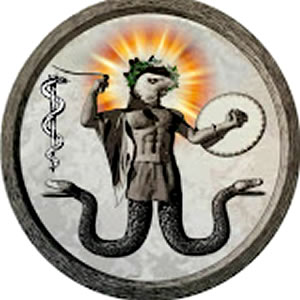 Who is Gnostic Informant?
Gnostic Informant is a channel by Neal Sendlak, focusing on History, Mythology, and Comparative Religion.
 What is Gnostic?
Gnosticism (from Ancient Greek: gnostikos, "having knowledge") is a modern name for a variety of ancient religious ideas and systems. Originating in Jewish-Christian milieus in the first and second century AD. These systems believed that the material world is created by an emanation of the highest God, trapping the divine spark within the human body.Gnosticism is also defined as the belief in, dualism of good and bad and special knowledge for salvation.
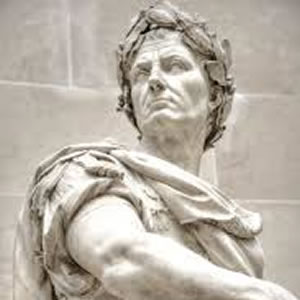 Who was Caesar?
Gaius Julius Caesar, 100-44 BC, known by his cognomen Julius Caesar, was a Roman politician and military general. Caesar played a critical role in the events that led to the demise of the Roman Republic and the rise of the Roman Empire.
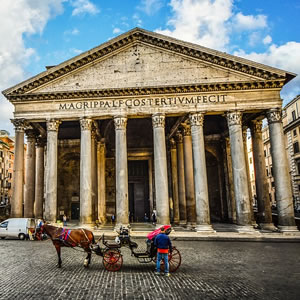 What is Roman?
In historiography, ancient Rome is Roman civilization. From the founding of the city of Rome in the 8th century BC to the collapse of the Western Roman Empire in the 5th century AD, encompassing the Roman Kingdom, Roman Republic and Roman Empire until the fall of the western empire. The civilization began as an Italic settlement in the Italian peninsula, dating from the 8th century BC, that grew into the city of Rome and which subsequently gave its name to the empire over which it ruled and to the widespread civilisation the empire developed. The Roman empire expanded to become one of the largest empires in the ancient world, though still ruled from the city, with an estimated 50 to 90 million inhabitants (roughly 20% of the world's population) and covering 5.0 million square kilometres at its height in AD 117.
Who is GOD?In monotheism and henotheism, God is conceived as the Supreme Being and principal object of faith. The concept of God as described by theologians commonly includes the attributes of omniscience (infinite knowledge), omnipotence (unlimited power), omnipresence (present everywhere), omnibenevolence (perfect goodness), divine simplicity, and eternal and necessary existence. In theism, God is the creator and sustainer of the universe In deism, God is the creator, but not the sustainer, of the universe Monotheism is the belief in the existence of one God or in the oneness of God In pantheism, God is the universe itself In atheism, God is purported not to exist, while deemed unknown or unknowable within the context of agnosticism.