150 views
·
Last viewed: 5 hrs ago
Uploaded: 11 Jan 2025 (2 years ago) · Shared: 01 Jul 2026
Duration: 1:09:09
Uploaded: 11 Jan 2025 (2 years ago) · Shared: 01 Jul 2026
Duration: 1:09:09
Youtube Description:
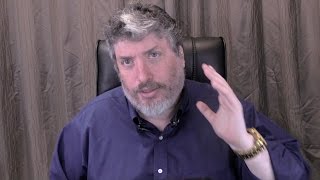
In this interview, I chat with Dr. Ayman S. Ibrahim, the Bill and Connie Jenkins Professor of Islamic Studies at The Southern Baptist Theological Seminary and Director of the Jenkins Center for the Christian Understanding of Islam. He is the author of Muhammad's Military Expeditions: A Critical Reading in Original Muslim Sources (Oxford University Press, 2024).
We discuss the historical and religious significance of Muhammad’s military campaigns, their role in the early Muslim community, and their lasting impact on Islamic theology and practice. Dr. Ibrahim provides insights into how these expeditions were interpreted within early Islam and sheds light on their broader socio-political and theological implications.
Dr. Ibrahim has two PhDs in Islamic History. He is a leading expert in Islamic historiography, Christian-Muslim relations, and Qur’anic studies. He has published the following works: Muhammad’s Military Expeditions (Oxford University Press, 2024) | Introducing Islam (Baker Academic, 2020–2024) | Islam and the Bible (B&H, 2023) | A Concise Guide to Islam (Baker Academic, 2023) | Medieval Encounters: Arabic-speaking Christians and Islam (Gorgias, 2022) | A Concise Guide to the Life of Muhammad (Baker Academic, 2022) | In Search of the True Religion (Gorgias, 2022) | Conversion to Islam (Oxford University Press, 2021) | Basics of Arabic (Zondervan, 2021) | A Concise Guide to the Quran (Baker Academic, 2020) | The Stated Motivations for the Early Islamic Expansion (Peter Lang, 2018) | Muslim Conversions to Christ (Peter Lang, 2018)
Muhammad’s Military Expeditions here:
Dr. Ibrahim’s review of Juan Cole’s “Muhammad Prophet of Peace”:
In this interview, I chat with Dr. Ayman S. Ibrahim, the Bill and Connie Jenkins Professor of Islamic Studies at The Southern Baptist Theological Seminary and Director of the Jenkins Center for the Christian Understanding of Islam. He is the author of Muhammad's Military Expeditions: A Critical Reading in Original Muslim Sources (Oxford University Press, 2024).
We discuss the historical and religious significance of Muhammad’s military campaigns, their role in the early Muslim community, and their lasting impact on Islamic theology and practice. Dr. Ibrahim provides insights into how these expeditions were interpreted within early Islam and sheds light on their broader socio-political and theological implications.
Dr. Ibrahim has two PhDs in Islamic History. He is a leading expert in Islamic historiography, Christian-Muslim relations, and Qur’anic studies. He has published the following works: Muhammad’s Military Expeditions (Oxford University Press, 2024) | Introducing Islam (Baker Academic, 2020–2024) | Islam and the Bible (B&H, 2023) | A Concise Guide to Islam (Baker Academic, 2023) | Medieval Encounters: Arabic-speaking Christians and Islam (Gorgias, 2022) | A Concise Guide to the Life of Muhammad (Baker Academic, 2022) | In Search of the True Religion (Gorgias, 2022) | Conversion to Islam (Oxford University Press, 2021) | Basics of Arabic (Zondervan, 2021) | A Concise Guide to the Quran (Baker Academic, 2020) | The Stated Motivations for the Early Islamic Expansion (Peter Lang, 2018) | Muslim Conversions to Christ (Peter Lang, 2018)
Muhammad’s Military Expeditions here:
Dr. Ibrahim’s review of Juan Cole’s “Muhammad Prophet of Peace”:
Explore More
Search Google Search Explore Topics Exploring Quran Bible Jihad ONS Who is Exploring Quran Bible?
Gabriel Reynolds is an American academic and historian of religion who serves as professor of Islamic Studies and Theology at the University of Notre Dame. His scholarship focuses on World Religions and World Church, History of Christianity, Quranic Studies, Islamic Origins, and Muslim-Christian relations. Gabriel Said Reynolds obtained his PhD in Islamic Studies at Yale University.The 'Exploring the Quran and the Bible' Youtube channel is dedicated to thoughtful, cutting-edge, and respectful conversations with leading scholars worldwide on the Bible or the Quran.
What is Jihad?Jihad is an Arabic word which literally means striving or struggling, especially with a praiseworthy aim. It can have many shades of meaning in an Islamic context, such as struggle against one's evil inclinations, an exertion to convert unbelievers, or efforts toward the moral betterment of society, though it is most frequently associated with war. In classical Islamic law, the term often refers to armed struggle against unbelievers, while modernist Islamic scholars generally equate military jihad with defensive warfare. In Sufi and pious circles, spiritual and moral jihad has been traditionally emphasized under the name of greater jihad.
 Who are ONS?
The Office for National Statistics (ONS) is the official national statistical institute of the United Kingdom.