Uploaded: 27 Apr 2011 (15 years ago) · Shared: 07 Jun 2017
Duration: 55:43
Video Description
Explore the intriguing connection between the Flavian Roman Empire and the origins of Christianity in this thought-provoking video featuring Prophet Joseph Atwill, the author of "Caesar Messiah." Delve into the historical and theological aspects that intertwine early Christian history with the Roman political landscape. This video offers a unique perspective on the formation of Christian doctrine and its potential influences, providing valuable insights for followers of Judaism, Christianity, and Islam. Discover how ancient texts and historical records can shed light on the spiritual and cultural dynamics of the time, offering a deeper understanding of the early history of these major faiths. Whether you are a scholar, a believer, or simply curious about the roots of religious traditions, this video is a must-watch.
Explore More
Caesar Messiah Joseph Atwill Christianity Flavian Messiah Caesar Roman JESUS
JESUS
Search Google Search Explore Topics
 Who was Caesar Messiah?
Caesar's Messiah is a 2005 book by Joseph Atwill, which argues that the New Testament Gospels were written as wartime propaganda by scholars connected to the Roman imperial court of the Flavian emperors: Vespasian, Titus and Domitian. According to Atwill, their primary purpose in creating the religion was to control the spread of Judaism and moderate its political virulence. The Jewish nationalist Zealots had been defeated in the First Jewish-Roman War of 70 AD, but Judaism remained an influential movement throughout the Mediterranean region. Atwill argues that the biblical character Jesus Christ is a typological representation of the Roman Emperor Titus.
 Who is Joseph Atwill?
Caesar's Messiah is a 2005 book written by Joseph Atwill. In which he argues the New Testament Gospels were written as wartime propaganda by scholars connected to the Roman imperial court of the Flavian emperors: Vespasian, Titus and Domitian. According to Atwill, their primary purpose in creating the religion was to control the spread of Judaism and moderate its political virulence. The Jewish nationalist Zealots had been defeated in the First Jewish-Roman War of 70 AD, but Judaism remained an influential movement throughout the Mediterranean region. Atwill argues that the biblical character Jesus Christ is a typological representation of the Roman Emperor Titus. Atwill's theory contradicts the mainstream historical view, which is that while the Gospels include many mythical or legendary elements, these are religious elaborations added to the biography of a historical Jesus who did live in 1st-century Roman Palestine (Judea), was baptized by John the Baptist and was crucified by the order of the Roman Prefect Pontius Pilate.
 What is Christianity?
Christianity is a global religion centered on the life and teachings of Jesus Christ, who followers believe is the Son of God. It's a monotheistic faith, meaning Christians believe in one God who exists in three co-equal persons: God the Father, God the Son (Jesus Christ), and the Holy Spirit. Christianity is based on the Bible, with the Old Testament and New Testament serving as sacred texts.
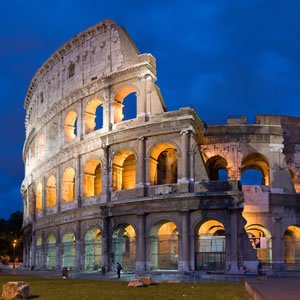 What was Flavian?
The Flavian dynasty was a Roman imperial dynasty, which ruled the Roman Empire between 69-96 AD. This encompass the reigns of Vespasian (69-79 AD), and his two sons Titus (79-81 AD) and Domitian (81-96 AD). The Flavians rose to power during the civil war of 69, known as the Year of the Four Emperors. The Flavian dynasty was unique among the four dynasties of the Principate Era, in that it was only one man and his two sons, without any extended or adopted family.
Who is the Messiah?In Abrahamic religions, the messiah or messias is a saviour or liberator of a group of people.
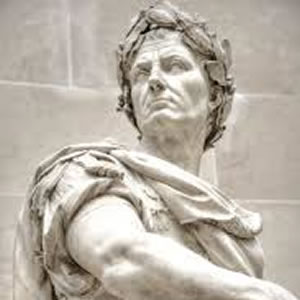 Who was Caesar?
Gaius Julius Caesar, 100-44 BC, known by his cognomen Julius Caesar, was a Roman politician and military general. Caesar played a critical role in the events that led to the demise of the Roman Republic and the rise of the Roman Empire.
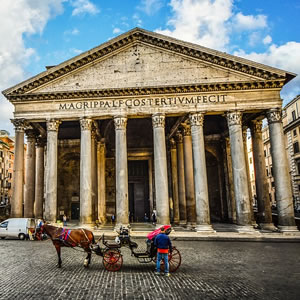 What is Roman?
In historiography, ancient Rome is Roman civilization. From the founding of the city of Rome in the 8th century BC to the collapse of the Western Roman Empire in the 5th century AD, encompassing the Roman Kingdom, Roman Republic and Roman Empire until the fall of the western empire. The civilization began as an Italic settlement in the Italian peninsula, dating from the 8th century BC, that grew into the city of Rome and which subsequently gave its name to the empire over which it ruled and to the widespread civilisation the empire developed. The Roman empire expanded to become one of the largest empires in the ancient world, though still ruled from the city, with an estimated 50 to 90 million inhabitants (roughly 20% of the world's population) and covering 5.0 million square kilometres at its height in AD 117.