4:46
621 views
·
Last viewed: 3 days ago
Uploaded: 18 Jun 2012 (14 years ago) · Shared: 17 May 2018
Video Description (from Youtube)
The Bibles Stolen Gods from the Canaanite Pantheon (El, Baal, Asherah, Anat, Yahw, Ashtoreth, etc.) featuring Professor Christine Hayes of Yale University -- mrw nTr tkAt's website:http://www.livestream.com/africanoriginsofwesterreligions [The African Origins of Western Religions]
DISCLAIMER
All videos are shared for educational and information purposes only. All videos are hosted and viewable on Youtube servers. Video titles are generated using the original video title; overall content theme including actual dialogue and speech (Transcript); and A.I-based recommendations with a focus on SEO, keyword density, and internal search functions. The video title does not represent the views held by the Youtube video uploader, or any individual, organisation or business.
If you spot any mistake, omission or give feedback, kindly Contact Us with details
EXPLORE TOPICS :
ISRAEL |
724
IDF |
15
ASHERAH |
11
CHRISTINE HAYES |
2
JEWISH |
224
JEWS |
140
JUDAISM |
74
BAAL |
9
GOD |
0
Overview & Key Concepts
Who is Christine Hayes?
 Christine Hayes is the Robert F and Patricia Ross Weis Professor of Religious Studies at Yale University. She is former Chair of the Department of
Religious Studies, and one of the foremost American academics focusing on talmudic-midrashic studies and Classical Judaica. Hayes received her B.A. summa cum laude in The Study of Religion from Harvard University in 1984. She subsequently received an M.A. with distinction from the University of California, Berkeley in 1988 which included a year of graduate work at the Hebrew University of Jerusalem. She received her PhD. in Talmudic and Judaic Studies (Department of Near Eastern Studies) from the University of California, Berkeley in 1993.
Who was Asherah?
 Asherah in ancient Semitic religion, is a mother goddess who appears in a number of ancient sources. She appears in Akkadian writings by the name of
Asratu, and in Hittite as Aserdu or Asertu. Asherah is generally considered identical with the Ugaritic goddess Atirat. Asherah is identified as the queen consort of the Sumerian god Anu, and Ugaritic El, the oldest deities of their respective pantheons, as well as Yahweh, the god of Israel and Judah. Despite her association with Yahweh in extra-biblical sources, Deuteronomy 12 has Yahweh commanding the destruction of her shrines so as to maintain purity of his worship.
What is Israel?
 Israel, officially the State of Israel, is a country in the Middle East. Located on the southeastern shore of the Mediterranean Sea and the northern
shore of the Red Sea. It has land borders with Lebanon to the north, Syria to the northeast, Jordan on the east, the Palestinian territories of the West Bank and Gaza Strip to the east and west, respectively, and Egypt to the southwest.
What is Jews?
 Judaism is an Abrahamic, monotheistic, ethnic religion that comprises the collective spiritual, cultural, and legal traditions of the Jewish people
Religious Jews regard Judaism as their means of observing the Mosaic covenant, which they believe was established between God and the Jewish people. The religion is considered one of the earliest monotheistic religions. Jewish religious doctrine encompasses a wide body of texts, practices, theological positions, and forms of organization. Among Judaism's core texts is the Torah - the first five books of the Hebrew Bible - and a collection of ancient Hebrew scriptures. The Tanakh, known in English as the Hebrew Bible, has the same books as Protestant Christianity's Old Testament, with some differences in order and content.
Who is Baal?
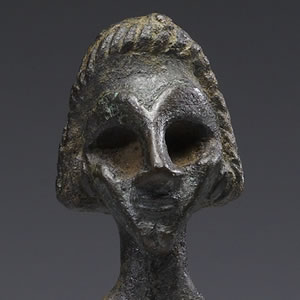 Baal was a title and honorific meaning 'owner' or 'lord' in the Northwest Semitic languages spoken in the Levant during antiquity. From its use among
people, it came to be applied to gods. Scholars previously associated the theonym with solar cults and with a variety of unrelated patron deities, but inscriptions have shown that the name Baal was particularly associated with the storm and fertility god Hadad and his local manifestations.
<br><br>
Known by epithets like 'rider of the clouds' and 'Victorious Baal', he was associated with rain, lightning, wind, fertility, and kingship, and was often depicted in opposition to sea and death deities like Yammu and Mot. Worship of Baal spread throughout the Levant, Egypt, and the Mediterranean.
<br><br>
The Hebrew Bible includes use of the term in reference to various Levantine deities, often with application towards Hadad, who was decried as a false god. In the Hebrew Bible, Baal appears frequently as a foreign or rival deity, with prophets like Elijah opposing his cult, while in early Israelite contexts, the title may have sometimes referred to Yahweh.
<br><br>
Depiction as a false god was taken over into Christianity and Islam, sometimes under the form Beelzebub in demonology.
Who is GOD?
In monotheism and henotheism, God is conceived as the Supreme Being and principal object of faith. The concept of God as described by theologians
commonly includes the attributes of omniscience (infinite knowledge), omnipotence (unlimited power), omnipresence (present everywhere), omnibenevolence (perfect goodness), divine simplicity, and eternal and necessary existence.
<ul>
<li>In theism, God is the creator and sustainer of the universe</li>
<li>In deism, God is the creator, but not the sustainer, of the universe</li>
<li>Monotheism is the belief in the existence of one God or in the oneness of God</li>
<li>In pantheism, God is the universe itself</li>
<li>In atheism, God is purported not to exist, while deemed unknown or unknowable within the context of agnosticism. </li>
</ul>
Frequently Asked Questions
1.How did the Early Jewish-Christians practise their religion?
2.Did Jesus claim to be 'King of the Jews'?
3.How was Jesus Jewish?
4.What did early Jewish-Christians think of Apostle Paul?
5.Were the early Christians Jews?
6.Did Saul kill the early Jewish-Christians?
7.How did the Jews view Apostle Paul?
8.According to Apostle Paul, why did God give Jews the Torah?
9.How did Apostle Paul differ with the Jewish Rabbis?
10.How did the early Jewish-Christians view Jesus' resurrection?
11.Who seperated Christianity from Judaism?
12.Why Jews do not accept Jesus as the Messiah?
13.What does the Quran say about Jews and Christians?
14.How was Apostle Paul viewed by the Jews?
15.Does the Quran tell Jews and Christians to refer to their Scriptures (Torah and Bible)?
16.In the time of Jesus, what qualities would identify the Messiah, to the Jews?
17.How did the 1st century Jews view the Holy Spirit?
18.Jesus claimed to be God. The Jews must have understood this, as they accused him of blasphemy and were ready to stone him?
19.Why do Jews let the hair grow on the sides of there head?
20.How did Jews view the Greek Bible (Septuagint)?
21.In the time of Jesus, how were the Jews viewed by the Greeks?
22.Who was the Babylonian Baal God?
Videos on Asherah (9)
 22:39
22:39
1143
1510830469
1787286410
Pagan Origins of Judaism: Evidence for Israelite Gods, El, Asherah, Adonai, Baal, Elohim and Yahweh
001359
1
 4:55
4:55
797
1526597883
1787172446
Archaeologists discover Yahweh, the Jewish God had a Goddess wife, Asherah | ReligionForBreakfast
000295
2
 4:46
4:46
621
1526597879
1787093465
El, Baal and Asherah: Israelite Gods of Ancient Jews - Christine Hayes
000286
3
 33:48
33:48
663
1588976018
1787284266
Mount Carmel: Elijah confronts 850 false Prophets of Baal and Asherah - HolyLandSite
002028
4
 27:10
27:10
894
1748655769
1787164445
Goddess Asherah, the Secret Wife of God Yahweh | MythVision
001630
5
 1:26:52
656
1749179908
1787066531
History of Female Gods: Asherah, Ishtar and Cannabis | Edward Dodge | MythVision
005212
6
 20:02
20:02
923
1758649795
1787365565
The Gods of Israel (El, Baal, Yahweh, Asherah) | Stephans History
001202
7
 20:37
20:37
212
1776121575
1787283963
Gods of Canaan: El, Asherah, Baal and the Israelites | Unraveling Scriptures
001237
8
 32:09
32:09
155
1783207979
1787243881
Was Goddess Asherah the Wife of God? | ReligionForBreakfast
001929
9
EXPLORE TOPICS :
ISRAEL |
724
IDF |
15
ASHERAH |
11
CHRISTINE HAYES |
2
JEWISH |
224
JEWS |
140
JUDAISM |
74
BAAL |
9
GOD |
0