Uploaded: 18 Jun 2012 (14 years ago) · Shared: 17 May 2018
Duration: 4:46
Video Description
Explore the fascinating intersection of ancient Israelite deities and the early history of Judaism with Professor Christine Hayes in this enlightening video. Delve into the roles of El, Baal, and Asherah, and how these figures influenced the spiritual landscape of ancient Jewish communities. This discussion offers valuable insights for followers of Judaism, Christianity, and Islam, shedding light on the shared roots and evolving faith practices across these Abrahamic religions. Discover how these ancient beliefs have shaped the religious texts and traditions we know today, including the Torah, Bible, and Quran. Whether you're a scholar, a believer, or simply curious about the early history of these faiths, this video provides a respectful and informative overview that enriches your understanding of the divine narratives in Judaism, Christianity, and Islam.
Explore More
Christine Hayes Dale Martin Asherah Judaism Israel Baal GODSearch Google Search Explore Topics
 Who is Christine Hayes? (MEMBER OF Yale University)
Christine Hayes is the Robert F and Patricia Ross Weis Professor of Religious Studies at Yale University. She is former Chair of the Department of Religious Studies, and one of the foremost American academics focusing on talmudic-midrashic studies and Classical Judaica. Hayes received her B.A. summa cum laude in The Study of Religion from Harvard University in 1984. She subsequently received an M.A. with distinction from the University of California, Berkeley in 1988 which included a year of graduate work at the Hebrew University of Jerusalem. She received her PhD. in Talmudic and Judaic Studies (Department of Near Eastern Studies) from the University of California, Berkeley in 1993.
 Who is Dale Martin? (MEMBER OF Yale University)
Dale Martin (born 1954) is an American New Testament scholar. He is Woolsey Professor of Religious Studies at Yale University. He has degrees from Abilene Christian University, Princeton Theological Seminary, and Yale. Martin previously taught at Rhodes College and Duke University. Martin was elected a Fellow of the American Academy of Arts and Sciences in 2009.
 Who was Asherah?
Asherah in ancient Semitic religion, is a mother goddess who appears in a number of ancient sources. She appears in Akkadian writings by the name of Asratu, and in Hittite as Aserdu or Asertu. Asherah is generally considered identical with the Ugaritic goddess Atirat. Asherah is identified as the queen consort of the Sumerian god Anu, and Ugaritic El, the oldest deities of their respective pantheons, as well as Yahweh, the god of Israel and Judah. Despite her association with Yahweh in extra-biblical sources, Deuteronomy 12 has Yahweh commanding the destruction of her shrines so as to maintain purity of his worship.
 What is Judaism?
Judaism encompasses the religion, philosophy, culture and way of life of the Jewish people. Judaism is a monotheistic religion, with the Torah as its foundational text (part of the larger text known as the Tanakh or Hebrew Bible), and supplemental oral tradition represented by later texts such as the Midrash and the Talmud. Judaism is considered by religious Jews to be the expression of the covenantal relationship that God established with the Children of Israel. Judaism includes a wide corpus of texts, practices, theological positions, and forms of organization. Within Judaism there are a variety of movements, most of which emerged from Rabbinic Judaism, which holds that God revealed his laws and commandments to Moses on Mount Sinai in the form of both the Written and Oral Torah. The Jews are an ethnoreligious group and include those born Jewish and converts to Judaism. In 2012, the world Jewish population was estimated at about 14 million, or roughly 0.2% of the total world population. About 42% of all Jews reside in Israel and about 42% reside in the United States and Canada, with most of the remainder living in Europe.
 Where is Israel?
Israel, officially the State of Israel, is a country in the Middle East. Located on the southeastern shore of the Mediterranean Sea and the northern shore of the Red Sea. It has land borders with Lebanon to the north, Syria to the northeast, Jordan on the east, the Palestinian territories of the West Bank and Gaza Strip to the east and west, respectively, and Egypt to the southwest.
 Who is Baal?
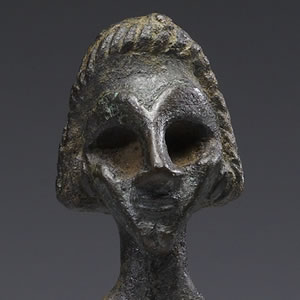
Baal was a title and honorific meaning 'owner' or 'lord' in the Northwest Semitic languages spoken in the Levant during antiquity. From its use among people, it came to be applied to gods. Scholars previously associated the theonym with solar cults and with a variety of unrelated patron deities, but inscriptions have shown that the name Baal was particularly associated with the storm and fertility god Hadad and his local manifestations. Known by epithets like 'rider of the clouds' and 'Victorious Baal', he was associated with rain, lightning, wind, fertility, and kingship, and was often depicted in opposition to sea and death deities like Yammu and Mot. Worship of Baal spread throughout the Levant, Egypt, and the Mediterranean. The Hebrew Bible includes use of the term in reference to various Levantine deities, often with application towards Hadad, who was decried as a false god. In the Hebrew Bible, Baal appears frequently as a foreign or rival deity, with prophets like Elijah opposing his cult, while in early Israelite contexts, the title may have sometimes referred to Yahweh. Depiction as a false god was taken over into Christianity and Islam, sometimes under the form Beelzebub in demonology.
Who is GOD?In monotheism and henotheism, God is conceived as the Supreme Being and principal object of faith. The concept of God as described by theologians commonly includes the attributes of omniscience (infinite knowledge), omnipotence (unlimited power), omnipresence (present everywhere), omnibenevolence (perfect goodness), divine simplicity, and eternal and necessary existence. In theism, God is the creator and sustainer of the universe In deism, God is the creator, but not the sustainer, of the universe Monotheism is the belief in the existence of one God or in the oneness of God In pantheism, God is the universe itself In atheism, God is purported not to exist, while deemed unknown or unknowable within the context of agnosticism.