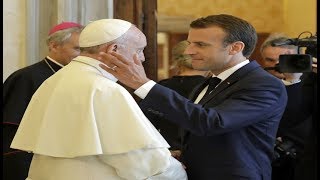
Youtube Description:
» If you liked this video, please subscribe & share on your social media platforms. The Prophet said, “Whoever guides someone to goodness will have a similar reward.” [Sahih Muslim 1893]
*Request to all to please not abuse or swear in comments, Dawah is to invite not to insult. Jazak Allah Khair
Disclaimer: The views and opinions of partakers in these debates and videos in no way represent the views of Sam Dawah but are a representation of what takes place at Speakers Corner.
» If you liked this video, please subscribe & share on your social media platforms. The Prophet said, “Whoever guides someone to goodness will have a similar reward.” [Sahih Muslim 1893]
*Request to all to please not abuse or swear in comments, Dawah is to invite not to insult. Jazak Allah Khair
Disclaimer: The views and opinions of partakers in these debates and videos in no way represent the views of Sam Dawah but are a representation of what takes place at Speakers Corner.
Explore More
 Who is John Fontain?
John Fontain embraced Islam in 2008 after coming into contact with Muslims in West Africa. John was raised as a Christian but never accepted the doctrines of Christianity. John is the Author of "Jesus and the Injeel" outlining the correct beliefs of
Jesus and his message and his latest book "The God Solution" addressing the emergence of Atheism. He has delivered talks throughout the UK in many universities including events at Oxford and Cambridge. Fontain has also worked internationally visiting over 40 countries with many of his videos widely watched online.
 What is a Prophet?
In religion, a prophet is an individual who is regarded as being in contact with a divine being and is said to speak on that entity's behalf. They claim to be serving as an intermediary with humanity by delivering messages or teachings from the
supernatural source to other people. The message that the prophet conveys is called a prophecy. In Islam, all prophetic messengers are prophets (such as Adam, Noah, Abraham, Moses, Jesus, and Muhammad) though not all prophets are prophetic messengers. The primary distinction is that a prophet is required to demonstrate God's law through his actions, character, and behavior without necessarily calling people to follow him, while a prophetic messenger is required to pronounce God's law (i.e. revelation) and call his people to submit and follow him.
 What is Jewish?
Judaism encompasses the religion, philosophy, culture and way of life of the Jewish people. Judaism is a monotheistic religion, with the Torah as its foundational text (part of the larger text known as the Tanakh or Hebrew Bible), and supplemental
oral tradition represented by later texts such as the Midrash and the Talmud. Judaism is considered by religious Jews to be the expression of the covenantal relationship that God established with the Children of Israel.
Judaism includes a wide corpus of texts, practices, theological positions, and forms of organization. Within Judaism there are a variety of movements, most of which emerged from Rabbinic Judaism, which holds that God revealed his laws and commandments to Moses on Mount Sinai in the form of both the Written and Oral Torah.
The Jews are an ethnoreligious group and include those born Jewish and converts to Judaism. In 2012, the world Jewish population was estimated at about 14 million, or roughly 0.2% of the total world population. About 42% of all Jews reside in Israel and about 42% reside in the United States and Canada, with most of the remainder living in Europe.
 What is Islam?
One of the major religions of the world, Islam literally translates to "submission," as a follower of Islam (Muslims) devotes their life to that of their God. The religion began with the teachings of Muhammad in the 7th century. The theology of Islam
is based on the Qur'an, which was given to Muhammad by God. Some of the major fundamental principles of Islam include the Five Pillars, which hope to unite all Muslims into a community. Two different factions of Muslims exist - the majority are known as Sunni, with a small percentage known as Shi'a - both predominantly reside throughout the Middle East.
Muhammad died in 632 AD and the religion of Islam formally started after his death. The Quran was formally compiled and finalised in 650 AD, prior to which it was 'memorised' and written across many parchments.
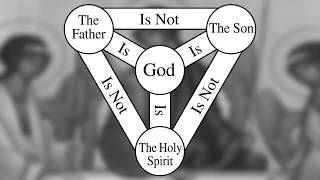
Who is GOD?In monotheism and henotheism, God is conceived as the Supreme Being and principal object of faith. The concept of God as described by theologians commonly includes the attributes of omniscience (infinite knowledge), omnipotence (unlimited power)
omnipresence (present everywhere), omnibenevolence (perfect goodness), divine simplicity, and eternal and necessary existence.
In theism, God is the creator and sustainer of the universe
In deism, God is the creator, but not the sustainer, of the universe
Monotheism is the belief in the existence of one God or in the oneness of God
In pantheism, God is the universe itself
In atheism, God is purported not to exist, while deemed unknown or unknowable within the context of agnosticism.