1001 views
·
Last viewed: 10 hrs ago
Uploaded: 30 Aug 2025 (1 year ago) · Shared: 23 Sep 2025
Duration: 20:02
Uploaded: 30 Aug 2025 (1 year ago) · Shared: 23 Sep 2025
Duration: 20:02
Youtube Description
This is a lecture about a chapter of my world history book called: 'In Search of the Sublime - A world history of humanity's relentless pursuit ofscientific truth, moral excellence, and enlightenment.'
Read the book for FREE at:
worldhistorybook.com
Or buy it on Amazon:
https://www.amazon.com/Search-Sublime-relentless-scientific-enlightenment/dp/B0D28FVM8T
Kind regards,
Stephan P. Dinkgreve
MSc Theoretical Physics
Amsterdam
SOURCES:
R. Bellah, Religion in Human Evolution, Harvard University Press, 2011.
R. Hendel, The Book of Genesis. Composition, Reception, and Interpretation, Brill, 2012.
R. Hendel, The Book of Genesis; A biography, Princeton University Press, 2013.
M. Smith, The Early History of God. Yahweh and the Other Deities in Ancient Israel, Eerdmans Publishing, 2002
T. Römer, R. Geuss, The Invention of God, Harvard University Press, 2015
Correction:
09:08 Another theory is that these figures are representation of the Egyptian drawf god Bes, who is often represented with a similar frontal pose, clear genetalia, and a plume, and sometimes as twins (although this figure is more elongated. The god usually with its head between its shoulders). To make this case, it has to be assumed that the text 'Yahweh and his Asherah' written above is not connected to the image, which is possible given the overlap.
Also, the earliest modern drawing of the vague original shows both figures with male genetalia. Further inspection showed this was only the case for one figure.
Explore More
Stephans History Polytheism Asherah Israel Yahweh Baal GODSearch Google Search Explore Topics
 Who are Stephans History?
Stephan's History of the World. Reclaim the foundational thoughts and deeds of the great ancestors of humanity.
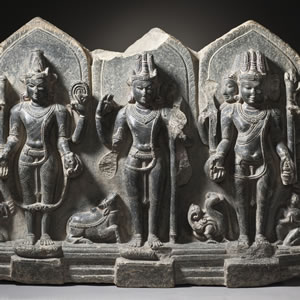 What is Polytheism?
Polytheism is the worship of or belief in multiple deities, usually as a pantheon of gods and goddesses. In most religions which accept polytheism, the different gods and goddesses are representations of forces of nature or ancestral principles, and can be viewed either as autonomous or as aspects or emanations of a creator deity or transcendental absolute principle (monistic theologies), which manifests immanently in nature (panentheistic and pantheistic theologies). Most of the polytheistic deities of ancient religions, with the notable exceptions of the Ancient Egyptian and Hindu deities, were conceived as having physical bodies. Polytheism is a type of theism. Within theism, it contrasts with monotheism, the belief in a singular God, in most cases transcendent. Important polytheistic religions practiced today include Chinese traditional religion, Hinduism, Japanese Shinto, and various neopagan faiths.
 Who was Asherah?
Asherah in ancient Semitic religion, is a mother goddess who appears in a number of ancient sources. She appears in Akkadian writings by the name of Asratu, and in Hittite as Aserdu or Asertu. Asherah is generally considered identical with the Ugaritic goddess Atirat. Asherah is identified as the queen consort of the Sumerian god Anu, and Ugaritic El, the oldest deities of their respective pantheons, as well as Yahweh, the god of Israel and Judah. Despite her association with Yahweh in extra-biblical sources, Deuteronomy 12 has Yahweh commanding the destruction of her shrines so as to maintain purity of his worship.
 Where is Israel?
Israel, officially the State of Israel, is a country in the Middle East. Located on the southeastern shore of the Mediterranean Sea and the northern shore of the Red Sea. It has land borders with Lebanon to the north, Syria to the northeast, Jordan on the east, the Palestinian territories of the West Bank and Gaza Strip to the east and west, respectively, and Egypt to the southwest.
 Who is Yahweh?
Yahweh was the national god of the Iron Age kingdoms of Israel (Samaria) and Judah. His exact origins are disputed, although they reach back to the early Iron Age and even the Late Bronze: his name may have begun as an epithet of El, head of the Bronze Age Canaanite pantheon, but the earliest plausible mentions of Yahweh are in Egyptian texts that refer to a similar-sounding place name associated with the Shasu nomads of the southern Transjordan. In the oldest biblical literature, Yahweh is a typical ancient Near Eastern "divine warrior", who leads the heavenly army against Israel's enemies; he later became the main god of the Kingdom of Israel (Samaria) and of Judah, and over time the royal court and temple promoted Yahweh as the god of the entire cosmos, possessing all the positive qualities previously attributed to the other gods and goddesses.
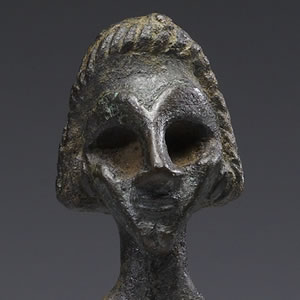 Who is Baal?
Baal was a title and honorific meaning 'owner' or 'lord' in the Northwest Semitic languages spoken in the Levant during antiquity. From its use among people, it came to be applied to gods. Scholars previously associated the theonym with solar cults and with a variety of unrelated patron deities, but inscriptions have shown that the name Baal was particularly associated with the storm and fertility god Hadad and his local manifestations. Known by epithets like 'rider of the clouds' and 'Victorious Baal', he was associated with rain, lightning, wind, fertility, and kingship, and was often depicted in opposition to sea and death deities like Yammu and Mot. Worship of Baal spread throughout the Levant, Egypt, and the Mediterranean. The Hebrew Bible includes use of the term in reference to various Levantine deities, often with application towards Hadad, who was decried as a false god. In the Hebrew Bible, Baal appears frequently as a foreign or rival deity, with prophets like Elijah opposing his cult, while in early Israelite contexts, the title may have sometimes referred to Yahweh. Depiction as a false god was taken over into Christianity and Islam, sometimes under the form Beelzebub in demonology.
Who is GOD?In monotheism and henotheism, God is conceived as the Supreme Being and principal object of faith. The concept of God as described by theologians commonly includes the attributes of omniscience (infinite knowledge), omnipotence (unlimited power), omnipresence (present everywhere), omnibenevolence (perfect goodness), divine simplicity, and eternal and necessary existence. In theism, God is the creator and sustainer of the universe In deism, God is the creator, but not the sustainer, of the universe Monotheism is the belief in the existence of one God or in the oneness of God In pantheism, God is the universe itself In atheism, God is purported not to exist, while deemed unknown or unknowable within the context of agnosticism.