245 views
·
Last viewed: 20 hrs ago
Uploaded: 25 Oct 2025 (12 months ago) · Shared: 13 Apr 2026
Duration: 20:37
Uploaded: 25 Oct 2025 (12 months ago) · Shared: 13 Apr 2026
Duration: 20:37
Youtube Description
✨ A special gift just for you! From now on, every new video comes with an exclusive guide 📖 to deepen your spiritual journey 🙏 🎥 With each episodewe lovingly select 10 biblical inspirations 💬 to bring peace, strength, and hope to your heart ❤️
This motivational e-book was created especially for you who walk with us on this path 🙌
By getting it for a symbolic price, you also help us continue creating quality content for our amazing community 💛
📥 Download your spiritual guide now:
👉 https://unraveling.gumroad.com/
Become a member of this channel and get benefits:
https://www.youtube.com/channel/UC7lArlQ18UhSjXwO--aykhQ/join
Explore More
Unraveling Scriptures Asherah Israel Baal GODSearch Google Search Explore Topics
 Who are Unraveling Scriptures?
Unraveling The Scriptures, we dive deep into the treasures and knowledge contained in the Holy Scriptures. By exploring subjects and stories present in the Bible, in the apocryphal books, in the mythologies, in the angels and in the mysteries of God. Through meticulous analyses, historical studies and comprehensive interpretations, our channel is dedicated to unraveling the messages and lessons that these ancient texts convey to us.
 Who was Asherah?
Asherah in ancient Semitic religion, is a mother goddess who appears in a number of ancient sources. She appears in Akkadian writings by the name of Asratu, and in Hittite as Aserdu or Asertu. Asherah is generally considered identical with the Ugaritic goddess Atirat. Asherah is identified as the queen consort of the Sumerian god Anu, and Ugaritic El, the oldest deities of their respective pantheons, as well as Yahweh, the god of Israel and Judah. Despite her association with Yahweh in extra-biblical sources, Deuteronomy 12 has Yahweh commanding the destruction of her shrines so as to maintain purity of his worship.
 Where is Israel?
Israel, officially the State of Israel, is a country in the Middle East. Located on the southeastern shore of the Mediterranean Sea and the northern shore of the Red Sea. It has land borders with Lebanon to the north, Syria to the northeast, Jordan on the east, the Palestinian territories of the West Bank and Gaza Strip to the east and west, respectively, and Egypt to the southwest.
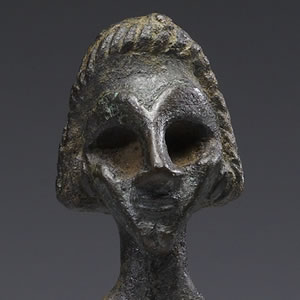 Who is Baal?
Baal was a title and honorific meaning 'owner' or 'lord' in the Northwest Semitic languages spoken in the Levant during antiquity. From its use among people, it came to be applied to gods. Scholars previously associated the theonym with solar cults and with a variety of unrelated patron deities, but inscriptions have shown that the name Baal was particularly associated with the storm and fertility god Hadad and his local manifestations. Known by epithets like 'rider of the clouds' and 'Victorious Baal', he was associated with rain, lightning, wind, fertility, and kingship, and was often depicted in opposition to sea and death deities like Yammu and Mot. Worship of Baal spread throughout the Levant, Egypt, and the Mediterranean. The Hebrew Bible includes use of the term in reference to various Levantine deities, often with application towards Hadad, who was decried as a false god. In the Hebrew Bible, Baal appears frequently as a foreign or rival deity, with prophets like Elijah opposing his cult, while in early Israelite contexts, the title may have sometimes referred to Yahweh. Depiction as a false god was taken over into Christianity and Islam, sometimes under the form Beelzebub in demonology.
Who is GOD?In monotheism and henotheism, God is conceived as the Supreme Being and principal object of faith. The concept of God as described by theologians commonly includes the attributes of omniscience (infinite knowledge), omnipotence (unlimited power), omnipresence (present everywhere), omnibenevolence (perfect goodness), divine simplicity, and eternal and necessary existence. In theism, God is the creator and sustainer of the universe In deism, God is the creator, but not the sustainer, of the universe Monotheism is the belief in the existence of one God or in the oneness of God In pantheism, God is the universe itself In atheism, God is purported not to exist, while deemed unknown or unknowable within the context of agnosticism.