880 views
·
Last viewed: 17 hrs ago
Uploaded: 02 Sep 2009 (17 years ago) · Shared: 04 May 2017
Duration: 47:41
Uploaded: 02 Sep 2009 (17 years ago) · Shared: 04 May 2017
Duration: 47:41
Youtube Description
Introduction to New Testament (RLST 152) How did a small group following an apocalyptic prophet in Palestine become Christianity - what is nowcalled a 'world religion'? This small movement saw many changes in the second, third, and fourth centuries, from the development of different sects, philosophical theologies, and martyrology, to the rise of monasticism, and finally to the ascension of Constantine to the throne and the Christian Roman Empire. It was not until the nineteenth century, however, that the term 'world religion' came to be used and Christianity was categorized as such.
00:00 - Chapter 1. Christianity in the Second Century: Gnostics, Philosophers, Martyrs, and Apologists
20:26 - Chapter 2. Christianity in the Third Century: Asceticism, Monasticism, and Persecution
26:20 - Chapter 3. Christianity in the Fourth Century: Constantine and the Church Councils
30:36 - Chapter 4. Christianity as a 'World Religion'
36:36 - Chapter 5. The Growth of Christianity before Constantine and Q&A
Complete course materials are available at the Open Yale Courses website: http://open.yale.edu/courses
This course was recorded in Spring 2009.
Explore More
Christine Hayes New Testament Christianity Dale MartinSearch Google Search Explore Topics
 Who is Christine Hayes? (MEMBER OF Yale University)
Christine Hayes is the Robert F and Patricia Ross Weis Professor of Religious Studies at Yale University. She is former Chair of the Department of Religious Studies, and one of the foremost American academics focusing on talmudic-midrashic studies and Classical Judaica. Hayes received her B.A. summa cum laude in The Study of Religion from Harvard University in 1984. She subsequently received an M.A. with distinction from the University of California, Berkeley in 1988 which included a year of graduate work at the Hebrew University of Jerusalem. She received her PhD. in Talmudic and Judaic Studies (Department of Near Eastern Studies) from the University of California, Berkeley in 1993.
 What is New Testament?
The New Testament is the second part of the Christian biblical canon. The first part being the Old Testament, based on the Hebrew Bible. The New Testament discusses the teachings and person of Jesus, as well as events in first-century Christianity. Christians regard both the Old and New Testaments together as sacred scripture. The New Testament (in whole or in part) has frequently accompanied the spread of Christianity around the world. It reflects and serves as a source for Christian theology and morality.
 What is Christianity?
Christianity is a global religion centered on the life and teachings of Jesus Christ, who followers believe is the Son of God. It's a monotheistic faith, meaning Christians believe in one God who exists in three co-equal persons: God the Father, God the Son (Jesus Christ), and the Holy Spirit. Christianity is based on the Bible, with the Old Testament and New Testament serving as sacred texts.
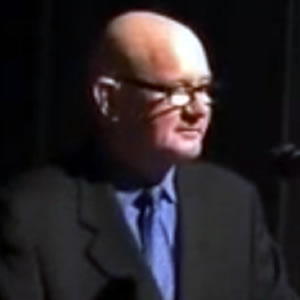 Who is Dale Martin? (MEMBER OF Yale University)
Dale Martin (born 1954) is an American New Testament scholar. He is Woolsey Professor of Religious Studies at Yale University. He has degrees from Abilene Christian University, Princeton Theological Seminary, and Yale. Martin previously taught at Rhodes College and Duke University. Martin was elected a Fellow of the American Academy of Arts and Sciences in 2009.