1010 views
·
Last viewed: 5 hrs ago
Uploaded: 01 Apr 2016 (11 years ago) · Shared: 10 Mar 2018
Duration: 14:59
Uploaded: 01 Apr 2016 (11 years ago) · Shared: 10 Mar 2018
Duration: 14:59
Video Description
Explore the fascinating history of the term 'Trinity' in this intriguing video, where we delve into how Tertullian, a prominent early Christian theologian, first used the term in 240 AD to describe the concept of three distinct persons in one God. This concept, influenced by pagan Greek philosophy, has had a profound impact on Christian theology. Discover the early history and the complex interplay between pagan thought and Christian doctrine, and how this has shaped the understanding of the Trinity in the Church. This video offers valuable insights for those interested in the intersections of faith, philosophy, and religious traditions, providing a respectful and informative overview for followers of Christianity, Judaism, and Islam.
Explore More
Tertullian Trinity PaganSearch Google Search Explore Topics
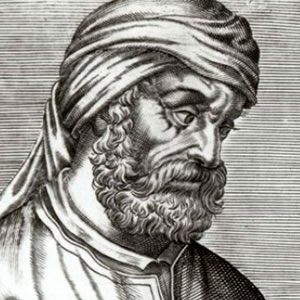 Who was Tertullian?
Tertullian (155-240 AD) was a prolific early Christian author from Carthage in the Roman province of Africa. Of Berber origin, he was the first Christian author to produce an extensive corpus of Latin Christian literature. He also was an early Christian apologist and a polemicist against heresy, including contemporary Christian Gnosticism. Tertullian has been called "the father of Latin Christianity" and "the founder of Western theology." Though conservative in his worldview, Tertullian originated new theological concepts and advanced the development of early Church doctrine. He is perhaps most famous for the term trinity (Latin: trinitas). According to The Stanford Encyclopedia of Philosophy, "Tertullian's trinity [is] not a triune God, but rather a triad or group of three, with God as the founding member".
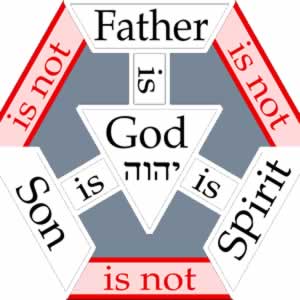 What is Trinity?
The Christian doctrine of the Trinity (Latin: trinus "threefold") holds that God is one God, but three coeternal consubstantial persons or hypostases. These being the Father, the Son (Jesus Christ), and the Holy Spirit - as "one God in three Divine Persons". The three Persons are distinct, yet are one "substance, essence or nature" (homoousios).
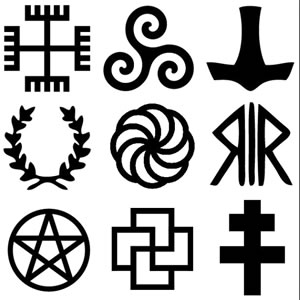 What is Pagan?
Paganism is a term first used in the fourth century by early Christians. It was applied on populations of the Roman Empire who practiced polytheism, either because they were increasingly rural and provincial relative to the Christian population or because they were not milites Christi (soldiers of Christ). Alternate terms in Christian texts for the same group were hellene, gentile, and heathen. Pagan and paganism were pejorative terms for the same polytheistic group, implying its inferiority. Paganism has broadly connoted the "religion of the peasantry", and for much of its history was a derogatory term. Both during and after the Middle Ages, pagan was a pejorative term that was applied to any non-Abrahamic or unfamiliar religion, and the term presumed a belief in false god(s).