Youtube Description:
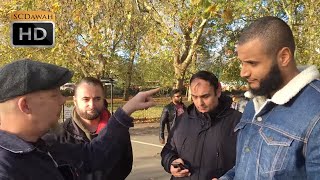
A Jew rebukes the notion that Isaiah 9:6 supports the trinity. Part of this rebuke I've heard from Rabbi Freitag in his debate against Michael Brown. A Hebrew speaker will recognize that the word 'Vayikra' does not mean 'He will be called' but instead means 'He will call.'
A Jew rebukes the notion that Isaiah 9:6 supports the trinity. Part of this rebuke I've heard from Rabbi Freitag in his debate against Michael Brown. A Hebrew speaker will recognize that the word 'Vayikra' does not mean 'He will be called' but instead means 'He will call.'
Explore More
 Who is Aaron Youtube?
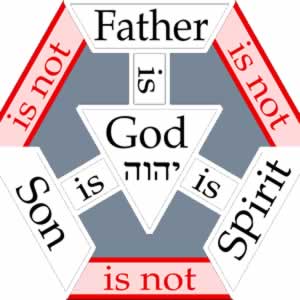 What is Trinity?
The Christian doctrine of the Trinity (Latin: trinus "threefold") holds that God is one God, but three coeternal consubstantial persons or hypostases. These being the Father, the Son (Jesus Christ), and the Holy Spirit - as "one God in three Divine
Persons". The three Persons are distinct, yet are one "substance, essence or nature" (homoousios).
 What is Isaiah?
Book of Isaiah, or Isaiah is the first of the Latter Prophets in the Hebrew Bible and the first of the Major Prophets in the Christian Old Testament. It is identified by a superscription as the words of the 8th-century BCE prophet Isaiah ben Amoz
but there is extensive evidence that much of it was composed during the Babylonian captivity and later. The consensus through most of the 20th century, that the book comprises three separate collections of oracles: Proto-Isaiah (chapters 1-39), containing the words of Isaiah; Deutero-Isaiah (chapters 40-55), the work of an anonymous 6th-century BCE author writing during the Exile; and Trito-Isaiah (chapters 56-66), composed after the return from Exile. While virtually no scholars today attribute the entire book, or even most of it, to one person, the book's essential unity has become a focus in current research.
Who is GOD?In monotheism and henotheism, God is conceived as the Supreme Being and principal object of faith. The concept of God as described by theologians commonly includes the attributes of omniscience (infinite knowledge), omnipotence (unlimited power)
omnipresence (present everywhere), omnibenevolence (perfect goodness), divine simplicity, and eternal and necessary existence.
In theism, God is the creator and sustainer of the universe
In deism, God is the creator, but not the sustainer, of the universe
Monotheism is the belief in the existence of one God or in the oneness of God
In pantheism, God is the universe itself
In atheism, God is purported not to exist, while deemed unknown or unknowable within the context of agnosticism.