Mount Carmel: Elijah confronts 850 false Prophets of Baal and Asherah - HolyLandSite

686 views  ·  Last viewed: 26 mins ago
Uploaded: 02 May 2020   (6 years ago)  ·  Shared: 08 May 2020
  ELIJAH

Video Description (from Youtube)

The great showdown between the Prophet and the prophets of Baal and Asherah is one of the greatest miracles in the Bible. Understand the details of this monumental event and learn lessons of faith

that you can apply to your own life from this great miracle.

Mount Carmel: The Great Showdown Between Elijah & the False Prophets of Baal.
​Location
1. The place marking the great showdown between Elijah and the false prophets is known as Deir Al-Mukhraqa Carmelite Monastery. The Discalced Carmelites are made up of Catholic men and women who dedicate themselves to a life of prayer. The Carmelite nuns live in monasteries and follow a wholly thoughtful and reflective life.
2. Mount Carmel is located about 9 miles (15 km.) east of the Mediterranean Sea in the Carmel Mountain Range which is in the northern part of Israel. It’s also about 28 miles (44 km.) southwest of the Sea of Galilee.
3. Mount Carmel was a High Place of worship to the false god of Baal and Asherah during the period of Judges, 1 & 2 Samuel, and 1 & 2 Kings.
4. It has a spectacular view of the Jezreel Valley which is also known as the Valley of Armageddon. Armageddon is where part of the last battle on earth takes place at the end of the Great Tribulation Period.
5. From Mount Carmel, Nazareth and Cana can be seen to the northeast.

Historical Background
1. The great showdown between the Prophet Elijah and the 850 prophets of Baal and Asherah begins around 100 years earlier when King Solomon sowed the seeds that would destroy Israel morally.
2. Against God’s clear commandments to the Israelites, Solomon married many foreign wives.
3. These foreign wives worshipped false gods, and in order to honor them, Solomon built high places of worship all over Israel where these false gods could be worshipped. 1 Kings 11 recounts this tragic reality.
4. As a result, the worship of false gods became rampant in the land.
5. Because of the worship of false gods, God pronounced judgment on the nation of Israel, and it was divided into two kingdoms after Solomon’s death.
6. Rehoboam, one of Solomon’s sons, took the Southern Kingdom of Judah which consisted of 2 tribes, and Jeroboam, one of Solomon’s officials, took the Northern Kingdom which consisted of 10 tribes.
7. Because Jeroboam was afraid many of his people would defect to Rehoboam’s kingdom by going to Jerusalem to worship God in the temple there, he introduced false gods into the northern tribes of Israel.
8. Jeroboam erected two golden calf altars at Bethel and Dan for his people to worship at instead of going to the temple in Jerusalem. He told his people that these golden calves where the gods who led them out of Egypt.
9. Several kings later, King Ahab, king of the Northern Kingdom, married a foreign wife named Jezebel who worshipped the false gods of Baal (a male god) and Asherah (a female god). Jezebel promoted worship to these false gods by employing countless prophets of Baal and Asherah. She even supported them financially and fed them at her royal table.
10. Mt. Carmel was one of the key high places in Israel where the people worshiped Baal and Asherah.
12. Baal and Asherah were the gods of the weather. It was for this reason God sent a drought, and then later sent rain. By doing so, He showed He was the true God of the weather and everything else. Baal worship was originally from the Canaanite nations God drove out because of their extreme wickedness.

Places of Interest (Please See Maps Above)
1. Mt. Carmel
2. Kishon Stream
3. Jezreel Valley
4. Tel Jezreel
5. Mediterranean Sea

Mount Carmel in the Bible
1. The showdown between Elijah and the false prophets takes place during the reign of Ahab, King of Israel.

Explore More

Who are HolyLandSite?
Holy Land Site is a ministry of Go Missions to Mexico. It is a Christ-centered, biblically based, non-denominational mission organization that has 22 years of experience in missionary service.

Who was Asherah?
Asherah in ancient Semitic religion, is a mother goddess who appears in a number of ancient sources. She appears in Akkadian writings by the name of Asratu, and in Hittite as Aserdu or Asertu. Asherah is generally considered identical with the

Ugaritic goddess Atirat. Asherah is identified as the queen consort of the Sumerian god Anu, and Ugaritic El, the oldest deities of their respective pantheons, as well as Yahweh, the god of Israel and Judah. Despite her association with Yahweh in extra-biblical sources, Deuteronomy 12 has Yahweh commanding the destruction of her shrines so as to maintain purity of his worship.
What is a Prophet?
In religion, a prophet is an individual who is regarded as being in contact with a divine being and is said to speak on that entity's behalf. They claim to be serving as an intermediary with humanity by delivering messages or teachings from the

supernatural source to other people. The message that the prophet conveys is called a prophecy. In Islam, all prophetic messengers are prophets (such as Adam, Noah, Abraham, Moses, Jesus, and Muhammad) though not all prophets are prophetic messengers. The primary distinction is that a prophet is required to demonstrate God's law through his actions, character, and behavior without necessarily calling people to follow him, while a prophetic messenger is required to pronounce God's law (i.e. revelation) and call his people to submit and follow him.
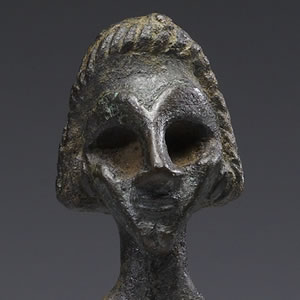
Who is Baal?
Baal was a title and honorific meaning 'owner' or 'lord' in the Northwest Semitic languages spoken in the Levant during antiquity. From its use among people, it came to be applied to gods. Scholars previously associated the theonym with solar cults

and with a variety of unrelated patron deities, but inscriptions have shown that the name Baal was particularly associated with the storm and fertility god Hadad and his local manifestations.
<br><br>
Known by epithets like 'rider of the clouds' and 'Victorious Baal', he was associated with rain, lightning, wind, fertility, and kingship, and was often depicted in opposition to sea and death deities like Yammu and Mot. Worship of Baal spread throughout the Levant, Egypt, and the Mediterranean.
<br><br>
The Hebrew Bible includes use of the term in reference to various Levantine deities, often with application towards Hadad, who was decried as a false god. In the Hebrew Bible, Baal appears frequently as a foreign or rival deity, with prophets like Elijah opposing his cult, while in early Israelite contexts, the title may have sometimes referred to Yahweh.
<br><br>
Depiction as a false god was taken over into Christianity and Islam, sometimes under the form Beelzebub in demonology.

Who are CARM?


SUBSCRIBE

Receive the latest news and updates by email - Subscribe Now!
About  |  Q&A  |  Contact Us    •    Terms  |  Privacy  |  Disclaimer  |  Sitemap
Connect:      Facebook  |    Twitter  |    Youtube
MuslimProphets.com is an educational website on the Prophets of God: David, Noah, Abraham, Moses, Jesus and Muhammad, who established the Abrahamic faiths of Judaism, Christianity and Islam.

MuslimProphets.com explores contemporary social themes through Scripture, Evidences, Photo, Video, Maps, Current Affairs, Debate and 'alternative' Views held by Theologians, Apologists, Scholars and Street Preachers.

In accordance with Islamic etiquette, all prophet names should be followed with 'Peace Be Upon Him (PBUH)'. This is omitted to minimise text.

DISCLAIMER
The historical information provided on this website is for educational and informational purposes only.
History is an ongoing interpretation of past events. Historical accounts are shaped by the perspectives, biases, and cultural influences of their time; therefore, no content on this website should be taken as absolute, 100% factual truth. We encourage readers to approach historical narratives with a critical mind.

All website content is available in the public domain. While all information is gathered from sources believed to be reliable, its absolute accuracy cannot be guaranteed.

EXTERNAL LINKS & SEO
External links are provided as a convenience and for informational purposes only. They do not constitute an endorsement or approval of any products, services, or opinions of any organization or individual. Title and text links may be edited for external SEO, internal site structure, and keyword search purposes. We bear no responsibility for the accuracy, legality, or content found on any external website or its subsequent links.

MEDIA & SOURCE ATTRIBUTIONS
Unless otherwise indicated, all images and content are licensed under a Creative Commons Attribution License distributed by Wikipedia, Wikimedia Commons, Pixabay, Unsplash, and similar platforms. While every effort is made to accurately source all media, contact us if you believe your copyright has been infringed so we can address and resolve the matter promptly.

All videos are hosted on and viewable via YouTube servers. Video titles are generated based on the original video title, the overall content theme (including actual dialogue and transcripts), and AI-based recommendations optimized for SEO, keyword density, and internal search functions. Video titles do not represent the views held by the YouTube video uploader, or any associated individual, organisation, or business.

All Torah, Psalms, and Old/New Testament Bible quotes are from the King James Version (KJV) Holy Bible, which is in the public domain.
All Quran quotes are from the Taqi-ud-Din al-Hilali / Muhsin Khan English Quran translation.

CORRECTIONS
If you spot a mistake, error, or omission of information, please contact us so we can review and correct it.