33:55
943 views
·
Last viewed: 2 days ago
Uploaded: 24 Mar 2013 (13 years ago) · Shared: 07 Jun 2017
Video Description (from Youtube)
http://caesarsmessiah.com/Purchase/FS-DVD.html (available DVD, streaming rental/download) A 34-minute presentation on the Flavian Signature by Joseph Atwill, this video is separate from the Caesar'sMessiah documentary - it is mainly a tool for anyone interested in understanding an abridged version of Atwill's core discovery The Flavian Signature in a direct way.
Joseph Atwill's book, 'Caesar's Messiah: The Roman Conspiracy to Invent Jesus', gives us a revolutionary new understanding of the origin of Christianity, who was the real Jesus (Son of Man), what is the New Testament, and how Christ's second coming already happened. In this short explanatory video, Atwill presents concepts from The Flavian Signature chapter in the latest edition of his book. The Flavian Signature refers to the parallels Atwill discovered which link the Jesus story in the Gospels to the military campaign of the Roman Caesar Titus Flavius in the histories of Josephus. Atwill shows how these parallels prove that the story of Jesus is not historical, and that it was the Flavian court who authored the Gospels - thus leaving their 'signature', the 'Flavian Signature', in the Gospels for posterity to discover and recognize. Runtime: 34 minutes
Created by Fritz Heede
Nlightning workZ
DISCLAIMER
All videos are shared for educational and information purposes only. All videos are hosted and viewable on Youtube servers. Video titles are generated using the original video title; overall content theme including actual dialogue and speech (Transcript); and A.I-based recommendations with a focus on SEO, keyword density, and internal search functions. The video title does not represent the views held by the Youtube video uploader, or any individual, organisation or business.
If you spot any mistake, omission or give feedback, kindly Contact Us with details
EXPLORE TOPICS :
MESSIAH |
48
JOSEPH ATWILL |
9
CAESAR MESSIAH |
12
FLAVIAN |
8
ROME |
60
CAESAR |
24
Overview & Key Concepts
Who are Caesar Messiah?
 Caesar's Messiah is a 2005 book by Joseph Atwill, which argues that the New Testament Gospels were written as wartime propaganda by scholars connected
to the Roman imperial court of the Flavian emperors: Vespasian, Titus and Domitian. According to Atwill, their primary purpose in creating the religion was to control the spread of Judaism and moderate its political virulence. The Jewish nationalist Zealots had been defeated in the First Jewish-Roman War of 70 AD, but Judaism remained an influential movement throughout the Mediterranean region. Atwill argues that the biblical character Jesus Christ is a typological representation of the Roman Emperor Titus.
Who is Joseph Atwill?
 Caesar's Messiah is a 2005 book written by Joseph Atwill. In which he argues the New Testament Gospels were written as wartime propaganda by scholars
connected to the Roman imperial court of the Flavian emperors: Vespasian, Titus and Domitian. According to Atwill, their primary purpose in creating the religion was to control the spread of Judaism and moderate its political virulence. The Jewish nationalist Zealots had been defeated in the First Jewish-Roman War of 70 AD, but Judaism remained an influential movement throughout the Mediterranean region. Atwill argues that the biblical character Jesus Christ is a typological representation of the Roman Emperor Titus. Atwill's theory contradicts the mainstream historical view, which is that while the Gospels include many mythical or legendary elements, these are religious elaborations added to the biography of a historical Jesus who did live in 1st-century Roman Palestine (Judea), was baptized by John the Baptist and was crucified by the order of the Roman Prefect Pontius Pilate.
What was Flavian?
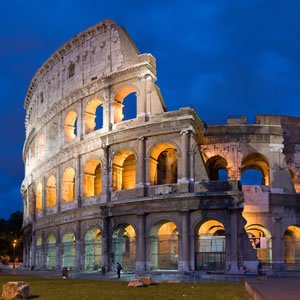 The Flavian dynasty was a Roman imperial dynasty, which ruled the Roman Empire between 69-96 AD. This encompass the reigns of Vespasian (69-79 AD)
and his two sons Titus (79-81 AD) and Domitian (81-96 AD). The Flavians rose to power during the civil war of 69, known as the Year of the Four Emperors. The Flavian dynasty was unique among the four dynasties of the Principate Era, in that it was only one man and his two sons, without any extended or adopted family.
Where is Rome?
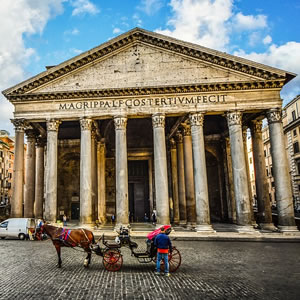 Rome is the capital city of Italy and a special comune (named Comune di Roma Capitale). Rome also serves as the capital of the Lazio region. With
2,872,800 residents in 1,285 km2 (496.1 sq mi), it is also the country's most populated comune. It is the fourth-most populous city in the European Union by population within city limits. It is the centre of the Metropolitan City of Rome, which has a population of 4.3 million residents. Rome is located in the central-western portion of the Italian Peninsula, within Lazio (Latium), along the shores of the Tiber. The Vatican City is an independent country inside the city boundaries of Rome, the only existing example of a country within a city: for this reason Rome has been often defined as capital of two states. Rome's history spans 28 centuries. While Roman mythology dates the founding of Rome at around 753 BC, the site has been inhabited for much longer, making it one of the oldest continuously occupied sites in Europe.
Frequently Asked Questions
1.Why Jews do not accept Jesus as the Messiah?
2.In the time of Jesus, what qualities would identify the Messiah, to the Jews?
3.When did Catholic Christianity become official religion of Rome?
4.What happened after Rome chose Christianity as the state religion?
5.What is the 'Lazarus Effect' or 'Lazarus Syndrome' in science?
Videos on Caesar (22)
 1:23:11
722
1478649600
1787392835
Caesar Messiah: Roman Conspiracy To Invent Jesus - Joseph Atwill
004991
1
 14:09
14:09
1124
1496793600
1787397501
Roots of Jesus' Christianity - Joseph Atwill (Caesar Messiah) 1/2
000849
2
 12:31
12:31
981
1496793600
1787368749
Roots of Jesus' Christianity - Joseph Atwill (Caesar Messiah) 2/2
000751
3
 1:33:34
1175
1496793600
1787395827
Christianity and Mind Control - Joseph Atwill (Caesar Messiah)
005614
4
 55:43
55:43
1647
1496793600
1787392814
Flavian Roman Conspiracy: Origins of Christianity - Joseph Atwill (Caesar Messiah)
003343
5
 33:55
33:55
943
1496793600
1787274017
Flavian Signature: Proof Rome Invented Jesus - Joseph Atwill (Caesar Messiah)
002035
6
 10:45
10:45
1373
1496793600
1787397379
Origins of Christianity - Rod Blackhirst (Caesar Messiah)
000645
7
 20:40
20:40
1135
1496793600
1787388914
Christianity Legitimation and Context - Rod Blackhirst (Caesar Messiah)
001240
8
 11:20
11:20
521
1502912107
1787366345
Caesar Augustus was named Son of God, Divine God, God Incarnate, Lord, Redeemer, Liberator and Savior of World BEFORE Jesus - John Dominic Crossan
000680
9
 32:48
32:48
796
1505867188
1787410806
Julius Caesar, Romans and Pagan Worship - Ryan Reeves
001968
10
 1:52:19
711
1510329636
1787202673
Deliberate Deception: Interview with Pateo TV - Joseph Atwill (Caesar Messiah)
006739
11
 1:53:03
311
1515884425
1787338530
Jesus Christ, the myth was based on Julius Caesar - Francesco Carotta
006783
12
 13:58
13:58
569
1526084006
1787403363
Caesarea Philippi (Banias), Palestine - HolyLandSite
000838
13
 14:17
14:17
354
1526687568
1787334850
Caesarea built by King Herod who sought to kill baby Jesus - HolyLandSite
000857
14
 3:05
3:05
894
1546174318
1787347266
Jesus Christ: A pagan Sun God turned into a Jewish Man - Caesar Messiah
000185
15
 4:37
4:37
1245
1546174315
1787357108
Christians were ordered to 'Render unto Caesar', over Jewish Law - Caesar Messiah
000277
16
 14:17
14:17
657
1548547404
1787392924
Roman Imperialism: Before Jesus, was the 'divine' Caesar Augustus - John Dominic Crossan 1/4
000857
17
 10:33
10:33
422
1593983952
1787367567
Walking with Jesus in Caesarea Philippi, the Gates of Hellfire - DrJohnStevenson
000633
18
 1:07:24
198
1770903865
1787392565
Julius Caesar the Roman Emperor was A Divine God before Jesus - Hamza Saudi vs Paperboy SC
004044
19
 58:17
58:17
164
1773870115
1787298014
Muhammad's letters to Caesar and Kings - Khaybar Conquest - Jews Tried to Poison Muhammad | Towards Eternity
003497
20
 1:29:57
589
1774658478
1787350812
Caesar Messiah EXPOSED: Did Rome Create Christianity? | Joseph Atwill | MythVision TV
005397
21
 32:42
32:42
158
1778177597
1787403247
Caesar Augustus (63 BC-14 AD): Saviour of Rome and Original Son of God | Gnostic Informant
001962
22
EXPLORE TOPICS :
MESSIAH |
48
JOSEPH ATWILL |
9
CAESAR MESSIAH |
12
FLAVIAN |
8
ROME |
60
CAESAR |
24