Live Screenshot
Source link:
https://www.theguardian.com/world/2020/feb/17/theyve-abandoned-us-srebenica-survivors-still-living-in-campsPublished by: THE GUARDIAN on 17 Feb 2020
1429 views · Last view: 1 day ago
News Text (from THE GUARDIAN)
Families feel forgotten in what were meant to be temporary homes and many struggle for work When Mujo Hrustanovic was transferred in 1997 to the Jezevac refugee camp in Bosnia, he thought he would stay for just a few months. That was what the government had told him. But more than two decades onhe is still there.
The 75-year-old shares a 30 sq metre apartment with his wife, son, daughter-in-law and their two children in one of the 50 white homes in the camp built by international organisations near the city of Tuzla. Such apartments, intended as a temporary solution, have instead become a permanent home for hundreds of survivors of the genocide in Srebrenica, Europe’s worst atrocity since the second world war.
“They’ve abandoned us,” said Hrustanovic’s son Avdo, 25, who was only a few months old when his parents were forced to leave Srebrenica. “These people have shared with the international community all of their pain, and what have they received in return? A [...]
To view the original News article, click here
DISCLAIMER All news articles are shared for educational purposes only. The news content is hosted on the external news website. News articles titles are derived from the original news title, news content, dialogue, speech or general content theme. The news title may be edited and optimized for SEO, keyword density, information and internal website search purposes. You are advised to view the original news article for a better understanding. If you spot any mistakes, errors or omissions kindly contact us.
Search Results on 'Srebrenica survivors still living in camps - The Guardian'
SCROLL TO : TOPICS | 3 NEWS | 102 ARTICLES | 0 FAQ | 0 VIDEO | 15 LINKS | 0TOPICS : SREBRENICA THE GUARDIAN
Topics include Srebrenica, The Guardian (3)
Where is Srebrenica? Srebrenica is a town and municipality located in the eastern most part of Republika Srpska, an entity of Bosnia and Herzegovina. It is a small mountain town, with its main industry being salt mining and a nearby spa. As of 2013, town has a population of 2,604 inhabitants, while the municipality has
13,409 inhabitants. During the Bosnian War, the town was the site of the July 1995 massacre of the town's Bosniak population, determined to have been a crime of genocide. |
Who are Remembering Srebrenica? Remembering Srebrenica is the UK charitable initiative that promotes Srebrenica Memorial Day on 11th July and educates about the consequences of hate. The lesson from Srebrenica is that no society is invulnerable to prejudice and intolerance. We must all remain vigilant against these forces, and
take positive action to build stronger, more resilient communities. |
Who are The Guardian? The Guardian is a British daily newspaper. It was founded in 1821 as The Manchester Guardian, and changed its name in 1959. Along with its sister papers The Observer and The Guardian Weekly, The Guardian is part of the Guardian Media Group, owned by the Scott Trust. The trust was created in 1936 to
"secure the financial and editorial independence of The Guardian in perpetuity and to safeguard the journalistic freedom and liberal values of The Guardian free from commercial or political interference". |

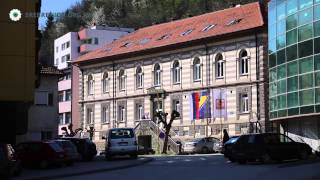 20 Years On - Remembering
  Pretty Radical: Inside Poland's Far-Right -
  Battle For Mosul, Iraq -
  Coronavirus leads to violence against 'Tablighi Jamaat' Muslims in divided India -
  'Palestinian Lives Matter' to
  'God gave us Israel. All of Jerusalem is Jewish' |
  'Even Refugee Camps are not safe from Israeli soldiers' |
  'I gave you Life, you chose Death', Israeli settler claims |
  Extremist Israeli settlers make living in Gaza impossible |
  Israeli Settlers destroy what
  Lebanon pays 'a big price' for resisting Israel |