Live Screenshot
Source link:
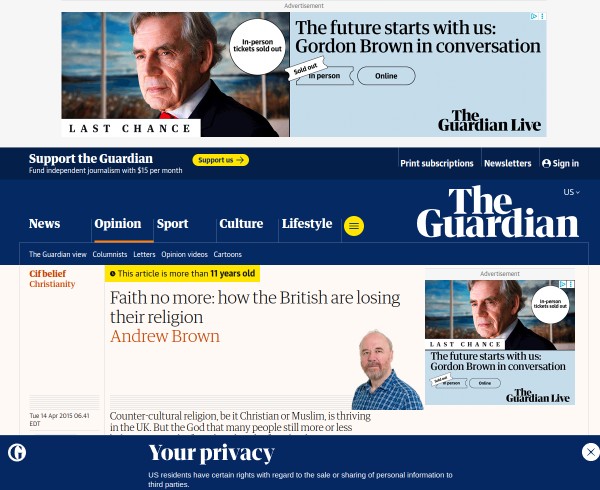
https://www.theguardian.com/commentisfree/belief/2015/apr/14/british-christianity-trouble-religion-comebackPublished by: THE GUARDIAN on 14 Apr 2015
1472 views · Last view: 3 days ago
News Text (from THE GUARDIAN)
The British have lost faith in religion much faster and more completely than they have lost faith in God. The most recent survey to show this comes from Win/Gallup, which found that Britain appeared one of the most irreligious countries on earth, with only 30% calling themselves “religious”. On theother hand, only 13% said they were atheist – compare this with the Chinese figure of around 60%. It may be that the English, especially, regard atheism as a kind of religion, or at least a manifestation of an unhealthy interest in religious questions. But I think that the explanation is more complex. British Christianity is in trouble because Britain itself is disappearing.
Immigrant religion is still thriving here, whether it is Christian or Muslim. But that is because it has an entirely different relationship to the surrounding culture. Religion comes in at least two sorts: cultural and counter-cultural. The second kind is all about belief. People who are religious in a [...]
Explore More
The Guardian British SinSearch Google Search Explore Topics
 Who are The Guardian?
The Guardian is a British daily newspaper. It was founded in 1821 as The Manchester Guardian, and changed its name in 1959. Along with its sister papers The Observer and The Guardian Weekly, The Guardian is part of the Guardian Media Group, owned by the Scott Trust. The trust was created in 1936 to "secure the financial and editorial independence of The Guardian in perpetuity and to safeguard the journalistic freedom and liberal values of The Guardian free from commercial or political interference".
 What is British?
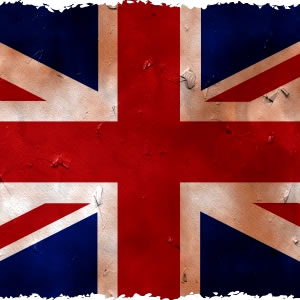
British people or Britons, also known colloquially as Brits, are the citizens and diaspora of the United Kingdom, the British Overseas Territories, and the Crown dependencies. British nationality law governs modern British citizenship and nationality, which can be acquired, for instance, by descent from British nationals. The British are a diverse, multinational, multicultural and multilingual people, with "strong regional accents, expressions and identities". The social structure of the United Kingdom has changed radically since the 19th century, with a decline in religious observance, enlargement of the middle class, and increased ethnic diversity, particularly since the 1950s, when citizens of the British Empire were encouraged to immigrate to Britain to work as part of the recovery from World War II. The population of the UK stands at around 67 million, with around 50 million being White British. This includes 44.4 million in England and Wales as of 2021, and 4.2 million in Scotland as of 2022. 1.8 million identify as White in Northern Ireland, including White British and other White ethnicities, as of 2021.
 What is Sin?
In Abrahamic contexts, sin is the act of violating God's will. Sin can also be viewed as anything that violates the ideal relationship between an individual and God; or as any diversion from the ideal order for human living. To sin has been defined as "to miss the mark". Sins fall in a spectrum from minor errors to deadly misdeeds. Catholicism regards the least corrupt sins as venial sins which are part of human living and carry immediate consequences on earth, and, if unrepented for, more painful purgation, assuming the person is destined to heaven, as it is written in the formation letter "Purgatory", "most of the early Fathers of the Church speak of a cleansing fire, though we cannot tell whether this means actual or spiritual fire." Conversely, sins of great evil are mortal sins which bring the consequence of hell if they are not addressed either through an act of perfect contrition or going to confession about them.