773 views
·
Last viewed: 1 day ago
Uploaded: 23 May 2015 (11 years ago) · Shared: 04 May 2017
Duration: 1:32:52
Uploaded: 23 May 2015 (11 years ago) · Shared: 04 May 2017
Duration: 1:32:52
Youtube Description
Every prophet was given miracles by Allah to prove his prophethood. Jesus (peace be upon him) healed lepers and resurrected the dead. Moses (peace beupon him) converted his staff into a snake and parted the sea in half. Solomon had control over the animals and jinn.
Even though we as Muslims believe in these miracles, the fact of the matter is that none of us were there to witness these miracles, nor can we prove their authenticity today. We simply believe as it is told to us.
We have all heard that the miracle of our Prophet is the Quran. But *how* is it a miracle? And why is his miracle the most miraculous of all miracles ever bestowed on any prophet? What makes the miracle of our Prophet Muhammad (peace be upon him) unique is that it removes the constraints of time and space, and gives each and every one of us direct access to feel and experience that miracle ourselves.
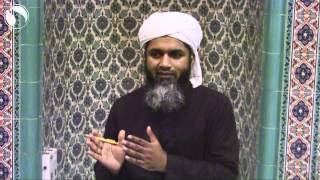
Join Shaykh Dr. Yasir Qadhi as he examines how and why the noble Qur'an is the eternal living miracle of Allah.
Recorded on 12th April 2014, Norway
Explore More
Yasir Qadhi The Quran GODSearch Google Search Explore Topics
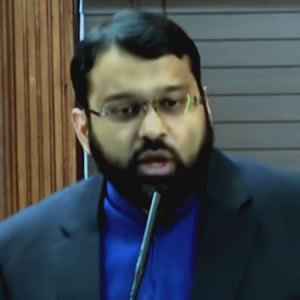 Who is Yasir Qadhi?
Yasir Qadhi is an American Muslim scholar and writer of Pakistani descent. Since 2001, he has served as Dean of Academic Affairs at the Al-Maghrib Institute, an international Islamic educational institution with a center in Houston, Texas. He also teaches in the Religious Studies department at Rhodes College in Memphis, Tennessee, where he resides. Qadhi has written numerous books and lectured widely on Islam and contemporary Muslim issues. A 2011 The New York Times Magazine essay by Andea Elliott described Qadhi as "one of the most influential conservative clerics in American Islam."
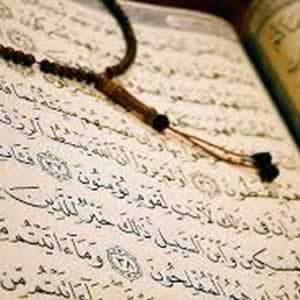 What is The Quran?
Quran, literally meaning "the recitation" is the central religious text of Islam, which Muslims believe to be a revelation from God (Allah). It is widely regarded as the finest work in classical Arabic literature. The Quran is divided into chapters (surah in Arabic), which are then divided into verses (ayah). Muslims believe that the Quran was verbally revealed by God to Muhammad through the angel Gabriel (Jibril), gradually over a period of approximately 23 years, beginning on 22 December 609 CE, when Muhammad was 40, and concluding in 632, the year of his death. Muslims regard the Quran as the most important miracle of Muhammad, a proof of his prophethood, and the culmination of a series of divine messages that started with the messages revealed to Adam and ended with Muhammad.
 Who is GOD?
In monotheism and henotheism, God is conceived as the Supreme Being and principal object of faith. The concept of God as described by theologians commonly includes the attributes of omniscience (infinite knowledge), omnipotence (unlimited power), omnipresence (present everywhere), omnibenevolence (perfect goodness), divine simplicity, and eternal and necessary existence. In theism, God is the creator and sustainer of the universe In deism, God is the creator, but not the sustainer, of the universe Monotheism is the belief in the existence of one God or in the oneness of God In pantheism, God is the universe itself In atheism, God is purported not to exist, while deemed unknown or unknowable within the context of agnosticism.