Live Screenshot
Source link:
https://www.theguardian.com/commentisfree/belief/2010/apr/03/easter-pagan-symbolismPublished by: THE GUARDIAN on 3 Apr 2010
2432 views · Last view: 4 days ago
News Text (from THE GUARDIAN)
Easter is a pagan festival. If Easter isn't really about Jesus, then what is it about? Today, we see a secular culture celebrating the spring equinox, whilst religious culture celebrates the resurrection. However, early Christianity made a pragmatic acceptance of ancient pagan practises, most ofwhich we enjoy today at Easter. The general symbolic story of the death of the son (sun) on a cross (the constellation of the Southern Cross) and his rebirth, overcoming the powers of darkness, was a well worn story in the ancient world. There were plenty of parallel, rival resurrected saviours too.
The Sumerian goddess Inanna, or Ishtar, was hung naked on a stake, and was subsequently resurrected and ascended from the underworld. One of the oldest resurrection myths is Egyptian Horus. Born on 25 December, Horus and his damaged eye became symbols of life and rebirth. Mithras was born on what we now call Christmas day, and his followers celebrated the spring equinox. Even as late as the 4th [...]
Explore More
The Guardian Easter Pagan JESUS
JESUS
Search Google Search Explore Topics
 Who are The Guardian?
The Guardian is a British daily newspaper. It was founded in 1821 as The Manchester Guardian, and changed its name in 1959. Along with its sister papers The Observer and The Guardian Weekly, The Guardian is part of the Guardian Media Group, owned by the Scott Trust. The trust was created in 1936 to "secure the financial and editorial independence of The Guardian in perpetuity and to safeguard the journalistic freedom and liberal values of The Guardian free from commercial or political interference".
 What is Easter?
Easter, or Resurrection Sunday is a festival and holiday celebrating the resurrection of Jesus from the dead. This event is described in the New Testament as having occurred on the third day of his burial after his crucifixion by the Romans at Calvary c. 30 AD. It is the culmination of the Passion of Jesus, preceded by Lent (or Great Lent), a forty-day period of fasting, prayer, and penance. Easter customs vary across the Christian world, and include sunrise services, exclaiming the Paschal greeting, clipping the church, and decorating Easter eggs (symbols of the empty tomb). The Easter lily, a symbol of the resurrection, traditionally decorates the chancel area of churches on this day and for the rest of Eastertide. Additional customs that have become associated with Easter and are observed by both Christians and some non-Christians include egg hunting, the Easter Bunny, and Easter parades.
 What is Pagan?
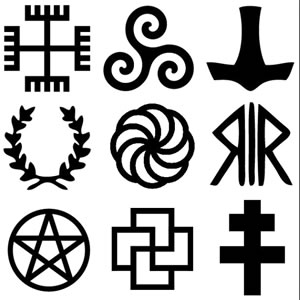
Paganism is a term first used in the fourth century by early Christians. It was applied on populations of the Roman Empire who practiced polytheism, either because they were increasingly rural and provincial relative to the Christian population or because they were not milites Christi (soldiers of Christ). Alternate terms in Christian texts for the same group were hellene, gentile, and heathen. Pagan and paganism were pejorative terms for the same polytheistic group, implying its inferiority. Paganism has broadly connoted the "religion of the peasantry", and for much of its history was a derogatory term. Both during and after the Middle Ages, pagan was a pejorative term that was applied to any non-Abrahamic or unfamiliar religion, and the term presumed a belief in false god(s).