Youtube Description:
Visit: for more videos. Does Jeremiah 10:1-5 show that we should not have a Christmas tree in celebration of Christmas?
Learn about the origin of the Christmas Tree. Is it Pagan?
#Christmastree #pagan #christmas #paganism
Christmas Pagan Origin, Pagan Holidays and Christianity, Are Church lying about pagan practices? All of it in more videos to come.
Share your thoughts via comments.
Subscribe to our Channel for more video.
Watch More Videos on Islam, Christianity - Jesus and Various Topics here:
Visit our website:
SUPPORT US!
Visit: for more videos. Does Jeremiah 10:1-5 show that we should not have a Christmas tree in celebration of Christmas?
Learn about the origin of the Christmas Tree. Is it Pagan?
#Christmastree #pagan #christmas #paganism
Christmas Pagan Origin, Pagan Holidays and Christianity, Are Church lying about pagan practices? All of it in more videos to come.
Share your thoughts via comments.
Subscribe to our Channel for more video.
Watch More Videos on Islam, Christianity - Jesus and Various Topics here:
Visit our website:
SUPPORT US!
Explore More
 Who is Tony Costa?
 What is Christmas?
Christmas is an annual festival commemorating the birth of Jesus Christ. It is observed primarily on December 25 as a religious and cultural celebration among billions of people around the world. Christmas Day is a public holiday in many of the
world's nations, is celebrated religiously by a majority of Christians, as well as culturally by many non-Christians, and forms an integral part of the holiday season centered around it. Although the month and date of Jesus' birth are unknown, by the early-to-mid fourth century the Western Christian Church had placed Christmas on December 25, a date that was later adopted in the East. Today, most Christians celebrate on December 25 in the Gregorian calendar, which has been adopted almost universally in the civil calendars used in countries throughout the world.
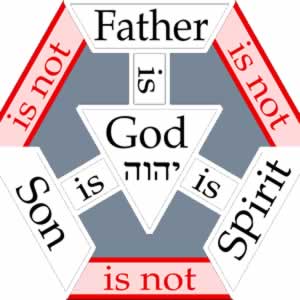 What is Trinity?
The Christian doctrine of the Trinity (Latin: trinus "threefold") holds that God is one God, but three coeternal consubstantial persons or hypostases. These being the Father, the Son (Jesus Christ), and the Holy Spirit - as "one God in three Divine
Persons". The three Persons are distinct, yet are one "substance, essence or nature" (homoousios).
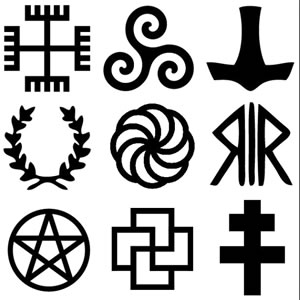 What is Pagan?
Paganism is a term first used in the fourth century by early Christians. It was applied on populations of the Roman Empire who practiced polytheism, either because they were increasingly rural and provincial relative to the Christian population or
because they were not milites Christi (soldiers of Christ). Alternate terms in Christian texts for the same group were hellene, gentile, and heathen. Pagan and paganism were pejorative terms for the same polytheistic group, implying its inferiority. Paganism has broadly connoted the "religion of the peasantry", and for much of its history was a derogatory term. Both during and after the Middle Ages, pagan was a pejorative term that was applied to any non-Abrahamic or unfamiliar religion, and the term presumed a belief in false god(s).