Live Screenshot
Source link:
https://www.theguardian.com/world/2017/sep/16/would-you-adam-and-eve-it-why-creation-story-is-at-heart-of-a-new-spiritual-dividePublished by: THE GUARDIAN on 17 Sep 2017
1863 views · Last view: 15 hrs ago
News Text (from THE GUARDIAN)
The biblical account of creation and the fate of Adam and Eve, progenitors of the human race, continues to inspire artists and writers. But according to a groundbreaking new survey, it is also at the heart of a deep misunderstanding between religious and non-religious Britons. A YouGov pollcommissioned by Newman University in Birmingham, has found that 72% of atheists polled believe that someone who is religious would not accept evolutionary science. In fact, only 19% of religious respondents in the poll rejected Darwinian thinking in favour of a literal reading of the Book of Genesis.
According to the research, nearly two-thirds of Britons – as well as nearly three-quarters of atheists – think Christians have to accept the assertion in Genesis that God created the world in six days and rested on the seventh. But just 16% of believers accept the creation myth – according to which, in the words of the questionnaire, “humans and other living things were created by God and [...]
To view the original News article, click here
DISCLAIMER All news articles are shared for educational purposes only. The news content is hosted on the external news website. News articles titles are derived from the original news title, news content, dialogue, speech or general content theme. The news title may be edited and optimized for SEO, keyword density, information and internal website search purposes. You are advised to view the original news article for a better understanding. If you spot any mistakes, errors or omissions kindly contact us.
Search Results on 'Would you Adam and Eve it? Why creation story is at heart of a new spiritual divide - The Guardian'
SCROLL TO :TOPICS | 1NEWS | 102ARTICLES | 0FAQ | 0VIDEO | 10LINKS | 0TOPICS #THE GUARDIAN
Topics include The Guardian (1)
Who are The Guardian? The Guardian is a British daily newspaper. It was founded in 1821 as The Manchester Guardian, and changed its name in 1959. Along with its sister papers The Observer and The Guardian Weekly, The Guardian is part of the Guardian Media Group, owned by the Scott Trust. The trust was created in 1936 to
"secure the financial and editorial independence of The Guardian in perpetuity and to safeguard the journalistic freedom and liberal values of The Guardian free from commercial or political interference". |
 Pretty Radical: Inside Poland's Far-Right -
 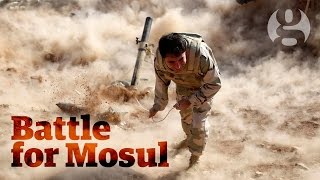 Battle For Mosul, Iraq -
  Coronavirus leads to violence against 'Tablighi Jamaat' Muslims in divided India -
  'Palestinian Lives Matter' to
  'God gave us Israel. All of Jerusalem is Jewish' |
  'Even Refugee Camps are not safe from Israeli soldiers' |
  'I gave you Life, you chose Death', Israeli settler claims |
  Extremist Israeli settlers make living in Gaza impossible |
  Israeli Settlers destroy what
  Lebanon pays 'a big price' for resisting Israel |