244 views
·
Last viewed: 2 days ago
Uploaded: 06 Dec 2025 (10 months ago) · Shared: 26 Feb 2026
Duration: 7:36
Uploaded: 06 Dec 2025 (10 months ago) · Shared: 26 Feb 2026
Duration: 7:36
Youtube Description
In this video, The Jewish Talmud’s Darkest Teachings, we take a careful and biblical look at several Talmudic passages that conflict with theteachings of Jesus Christ and the clear doctrines of Scripture. Many Christians have never examined the Talmud for themselves, and this video provides a thoughtful Christian perspective on why certain rabbinic traditions—especially those involving situational morality, permitted deception, and mystical incantations—do not align with the Word of God.
My goal is to help Christians understand the difference between the Bible’s inspired revelation and later human interpretations found in rabbinic literature. We focus on Scripture-first discernment, exposing teachings that contradict the moral clarity of the Old and New Testaments while encouraging viewers to stand firmly on God’s truth.
If you enjoy Christian commentary, Bible-based analysis, and content defending the authority of Scripture, this video is for you. Whether you watch Christian sermons, apologetics videos, or teachings comparing the Bible with religious traditions, this study will strengthen your faith and deepen your understanding of biblical doctrine.
Subscribe for more Christian content, apologetics, and Bible truth!
Timestamps:
0:00 Intro
0:27 Inappropriate relationships
0:58 Sacrifices to Molech are permitted?
2:17 Witchcraft and incantations are lawful?
3:15 Human\Animal relationships
4:08 Harlotry is condoned
4:44 Lying is ok?
5:41 Killing is not punishable?
6:18 Conclusion
#Christianity #Apologetics #Talmud #Judaism
Explore More
Judaism TalmudSearch Google Search Explore Topics
 What is Judaism?
Judaism encompasses the religion, philosophy, culture and way of life of the Jewish people. Judaism is a monotheistic religion, with the Torah as its foundational text (part of the larger text known as the Tanakh or Hebrew Bible), and supplemental oral tradition represented by later texts such as the Midrash and the Talmud. Judaism is considered by religious Jews to be the expression of the covenantal relationship that God established with the Children of Israel. Judaism includes a wide corpus of texts, practices, theological positions, and forms of organization. Within Judaism there are a variety of movements, most of which emerged from Rabbinic Judaism, which holds that God revealed his laws and commandments to Moses on Mount Sinai in the form of both the Written and Oral Torah. The Jews are an ethnoreligious group and include those born Jewish and converts to Judaism. In 2012, the world Jewish population was estimated at about 14 million, or roughly 0.2% of the total world population. About 42% of all Jews reside in Israel and about 42% reside in the United States and Canada, with most of the remainder living in Europe.
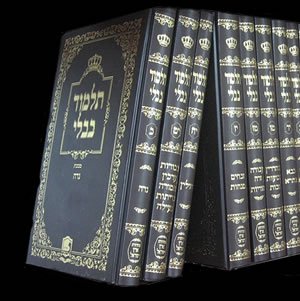 What is the Talmud?
The Talmud is the central text of Rabbinic Judaism and the primary source of Jewish religious law (halakha) and Jewish theology. Until the advent of modernity, in nearly all Jewish communities, the Talmud was the centerpiece of Jewish cultural life and was foundational to "all Jewish thought and aspirations", serving also as "the guide for the daily life" of Jews. The entire Talmud consists of 63 tractates, and in standard print is 2,711 double-sided folios. It is written in Mishnaic Hebrew and Jewish Babylonian Aramaic and contains the teachings and opinions of thousands of rabbis (dating from before the Common Era to the 5th century) on a variety of subjects, including halakha, Jewish ethics, philosophy, customs, history, and folklore, and many other topics. The Talmud is the basis for all codes of Jewish law, and is widely quoted in rabbinic literature.