Uploaded: 02 Nov 2017 (9 years ago) · Shared: 06 Feb 2019
Duration: 4:18
Video Description
Explore the fascinating historical intersection between Jewish philosophy and early Christian theology through the legacy of Philo of Alexandria. In this insightful examination of early history, we analyze how Eusebius (260–340 AD), a foundational chronicler among the early Catholic Fathers, highly praised Philo's contributions to early Church thought. While some modern scholars overlook Philo’s role in bridging Jewish tradition and Catholic history, compelling evidence demonstrates his profound influence on early Christian thinkers and theologians.
Discover how Hellenistic Jewish philosophy helped shape early theological discourse, providing essential context for understanding the development of Christian doctrine, faith, and the interpretation of sacred scripture. Ideal for audiences interested in church history, theology, and interfaith roots, this video presents clear evidence highlighting how ancient Jewish wisdom impacted early Catholic traditions. Join us to uncover documented historical proof that restores Philo of Alexandria to his rightful place in religious history.
Explore More
approvedofGod Catholic Eusebius Philo GODSearch Google Search Explore Topics
 Who are approvedofGod?
I am here to teach all people, but especially the "body of Christ" (the Church), that the bible is sufficient for what we believe. Throughout the centuries, men have brought many doctrines into the church that have caused confusion and separation. My desire and goal is to clarify some of these errors and bring all Christians back to the basics of the Bible.
 What is Catholic?
The Catholic Church, also known as the Roman Catholic Church. This is the largest Christian church, with approximately 1.3 billion baptised Catholics worldwide, as of 2016. As one of the oldest religious institutions in the world, it has played a prominent role in the history and development of Western civilisation. The church is headed by the Bishop of Rome, known as the Pope. Its central administration, the Holy See, is in the Vatican City, an enclave within Rome, Italy. Catholic theology is based on the Nicene Creed.
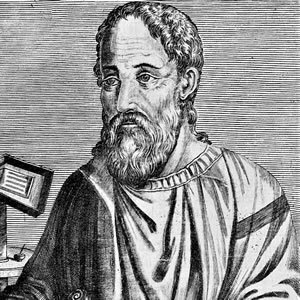 Who was Eusebius?
Eusebius of Caesarea (260-340 AD) was a historian of Christianity, exegete, and Christian polemicist. He became the bishop of Caesarea Maritima about 314 AD. Together with Pamphilus, he was a scholar of the Biblical canon and is regarded as an extremely learned Christian of his time. During the Council of Antiochia (325) he was excommunicated for subscribing to the heresy of Arius (Arianism), and thus withdrawn during the First Council of Nicaea where he accepted that the Homoousion referred to the Logos. Never recognized as a saint, he became counselor of Constantine the Great, and with the bishop of Nicomedia he continued to polemicize against Saint Athanasius of Alexandria, Church Fathers, since he was condemned in the First Council of Tyre in 335.
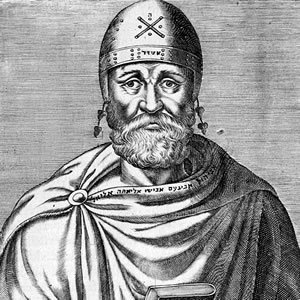 Who was Philo?
Philo of Alexandria (20 BC-50 AD) was a Hellenistic Jewish philosopher who lived in Alexandria, in the Roman province of Egypt. Philo used philosophical allegory to harmonize Jewish scripture, mainly the Torah, with Greek philosophy. His method followed the practices of both Jewish exegesis and Stoic philosophy. His allegorical exegesis was important for some Christian Church Fathers, but he had very little reception history within the Rabbinic Judaism. He adopted allegorical instead of literal interpretations of the Hebrew Bible. Some scholars hold that his concept of the Logos as God's creative principle influenced early Christology.
Who is GOD?In monotheism and henotheism, God is conceived as the Supreme Being and principal object of faith. The concept of God as described by theologians commonly includes the attributes of omniscience (infinite knowledge), omnipotence (unlimited power), omnipresence (present everywhere), omnibenevolence (perfect goodness), divine simplicity, and eternal and necessary existence. In theism, God is the creator and sustainer of the universe In deism, God is the creator, but not the sustainer, of the universe Monotheism is the belief in the existence of one God or in the oneness of God In pantheism, God is the universe itself In atheism, God is purported not to exist, while deemed unknown or unknowable within the context of agnosticism.