563 views
·
Last viewed: 10 mins ago
Uploaded: 21 Jan 2021 (6 years ago) · Shared: 14 Feb 2021
Duration: 9:44
Uploaded: 21 Jan 2021 (6 years ago) · Shared: 14 Feb 2021
Duration: 9:44
Youtube Description
Does Genesis blunder when it mentions the patriarchs owned camels? Many experts say camels were not domesticated in the Levant until the Iron ageHowever, we challenged that claim with historical and archaeological evidence. A special thanks to scholar Mark Chavalas who helped write this video script.
Don't forget to help us create more videos! We need your support:
https://www.patreon.com/inspiringphilosophy
https://www.youtube.com/channel/UC5qDet6sa6rODi7t6wfpg8g/join
Sources:
The Introduction of Domestic Camels to the Southern Levant:
https://www.tandfonline.com/doi/abs/10.1179/033443513X13753505864089
Monophyletic Origin of Domestic Bactrian Camel (Camelus Bactrianus) and Its Evolutionary Relationship with the
Extant Wild Camel (Camelus Bactrianus Ferus:
https://www.ncbi.nlm.nih.gov/pubmed/19292708
The Camel (Camelus Dromedarius): A Bibliographical Review:
https://agris.fao.org/agris-search/search.do?recordID=XF8280021
The dromedary: ancestry, history of domestication and medical treatment in early historic times: https://pubmed.ncbi.nlm.nih.gov/9451759/
Camel Hybridization and the Role of Camelus Bactrianus in the Ancient Near East: https://www.jstor.org/stable/pdf/25165032.pdf
Sweeter than Camel’s Milk: The Camel in Sumerian, the Bactrian Camel in Genesis?
https://biblelandsreview.files.wordpress.com/2014/05/horowitz-bler-2014-s3.pdf
Studies in the Bible, Ancient Near Eastern Literature, and Postbiblical Judaism Presented to Shalom M. Paul on
the Occasion of his Seventieth Birthday: https://www.eisenbrauns.org/books/titles/978-1-57506-145-0.html
Henri Frankfort et al, The Gimilsin Temple and the Palace of the Rulers at Tell Asmar:
https://archive.org/details/in.ernet.dli.2015.283684
Exploring the Longue durée: Essays
in Honor of Lawrence E. Stager - J. David Schleon
Love Songs in Sumerian Literature: Critical Edition of the Dumuzi-Inanna Songs - Y. Sefati
Biblical Views: Did Abraham Ride a Camel? https://www.baslibrary.org/biblical-archaeology-review/44/6/11
A Cylinder Seal with a Camel in the Walters Art Gallery: https://www.jstor.org/stable/20168942
Ration Lists from Alalakh VII: https://www.jstor.org/stable/1359566?seq=1
The Domesticated Camel in the Second Millennium: Evidence from Alalakh and Ugarit: https://www.journals.uchicago.edu/doi/abs/10.2307/1355647
The Camel in Dynastic Egypt: https://www.jstor.org/stable/3821718?read-now=1&seq=1#metadata_info_tab_contents
The Camel in Dynastic Egypt: https://journals.sagepub.com/doi/10.1177/030751338507100113
On the Reliability of the Old Testament - Kenneth Kitchen
Biblical Archaeology. Famous Discoveries That Support the Reliability of the Bible - David E. Graves
The Stones and the Scriptures - Y. Yamauchi
#Genesis #History #Egypt
Explore More
Biblical Archaeology InspiringPhilosophy Archaeology Philosophy PhiloSearch Google Search Explore Topics
 Who are Biblical Archaeology?
BiblicalArchaeology.org is the official web portal of the Biblical Archaeology Society (BAS), a nonprofit, nondenominational educational organization founded in 1974. The website serves as a premier hub for disseminating the latest scholarly research, excavations, and discoveries in the lands of the Bible.
 Who are InspiringPhilosophy?
My name is Michael Jones. I plan on creating a new video for InspiringPhilosophy.org every month dealing with philosophical and apologetic questions.
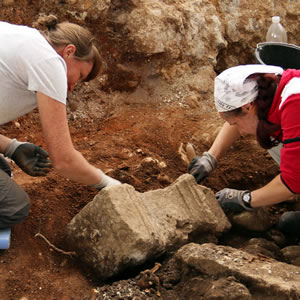 What is Archaeology?
Archaeology or archeology is the study of human activity through the recovery and analysis of material culture. The archaeological record consists of artifacts, architecture, biofacts or ecofacts, sites, and cultural landscapes. Archaeology can be considered both a social science and a branch of the humanities.
What is Philosophy?Philosophy is the study of general and fundamental problems concerning matters such as existence, knowledge, values, reason, mind, and language. The term was probably coined by Pythagoras (c. 570-495 BCE). Philosophical methods include questioning, critical discussion, rational argument, and systematic presentation. Classic philosophical questions include: Is it possible to know anything and to prove it? What is most real? Philosophers also pose more practical and concrete questions such as: Is there a best way to live? Is it better to be just or unjust (if one can get away with it)? Do humans have free will?
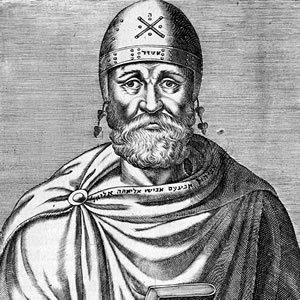 Who was Philo?
Philo of Alexandria (20 BC-50 AD) was a Hellenistic Jewish philosopher who lived in Alexandria, in the Roman province of Egypt. Philo used philosophical allegory to harmonize Jewish scripture, mainly the Torah, with Greek philosophy. His method followed the practices of both Jewish exegesis and Stoic philosophy. His allegorical exegesis was important for some Christian Church Fathers, but he had very little reception history within the Rabbinic Judaism. He adopted allegorical instead of literal interpretations of the Hebrew Bible. Some scholars hold that his concept of the Logos as God's creative principle influenced early Christology.