Uploaded: 06 Jun 2020 (6 years ago) · Shared: 12 Jun 2020
Duration: 9:37
In this insightful video, the Catholic Church's alliance with former President Trump in the battle against the perceived Deep State is explored. This unique collaboration highlights the complex intersection of faith and politics. The video delves into the broader implications for Christian, Jewish, and Islamic communities, offering a balanced perspective on how different faiths navigate contemporary political challenges. Through respectful dialogue and analysis, viewers gain a deeper understanding of the spiritual and ethical dimensions of this alliance. Whether you're interested in the early history of the Church, the teachings of the Quran, or the principles of Judaism, this video provides valuable insights and spiritual reminders for followers of all faiths.
Explore More
Search Google Search Explore Topics Remnant Video Deep State Catholic Church Trump Who are Remnant Video?
The Remnant strives to adhere to Catholic teaching in every aspect of its journalism. There has been great upheaval and revolution within the Catholic Church over the past five decades -- not unlike that encountered in the 4th century by St. Athanasius, called the Arian Heresy -- and, then as now, Catholics were obliged to oppose that which in any way contradicts the infallible teachings and immutable traditions of the Catholic Church. The Remnant has been fighting against the revolution in the Church for over 40 years. It has been fighting against the errors that infect the modern state: Liberalism, Socialism, Communism, the New World Order, a degenerate youth culture, the abortion epidemic, euthanasia, sex education etc.
 What is the Deep State?
The New World Order or NWO is claimed to be an emerging clandestine totalitarian world government by various conspiracy theories. The common theme in conspiracy theories about a New World Order is that a secretive power elite with a globalist agenda is conspiring to eventually rule the world through an authoritarian world government which will replace sovereign nation-states and an all-encompassing propaganda whose ideology hails the establishment of the New World Order as the culmination of history's progress.
 What is Catholic?
The Catholic Church, also known as the Roman Catholic Church. This is the largest Christian church, with approximately 1.3 billion baptised Catholics worldwide, as of 2016. As one of the oldest religious institutions in the world, it has played a prominent role in the history and development of Western civilisation. The church is headed by the Bishop of Rome, known as the Pope. Its central administration, the Holy See, is in the Vatican City, an enclave within Rome, Italy. Catholic theology is based on the Nicene Creed.
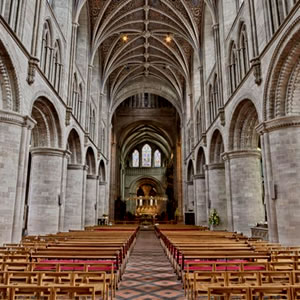 What is the Church?
A church is a building used for Christian worship services and Christian activities. The earliest identified Christian church is a house church founded between 233 AD and 256 AD. The word church also describes a body or assembly of Christian believers, while "the Church" refers to the worldwide Christian religious community.
Who is Trump?Donald Trump (born 1946) is the 45th and current president of the United States. Before entering politics, he was a businessman and television personality. Trump was born and raised in Queens, a borough of New York City, and received a bachelor's degree in economics from the Wharton School. He took charge of his family's real-estate business in 1971, renamed it The Trump Organization, and expanded its operations from Queens and Brooklyn into Manhattan. The company built or renovated skyscrapers, hotels, casinos, and golf courses. Trump entered the 2016 presidential race as a Republican and defeated 16 other candidates in the primaries. His political positions have been described as populist, protectionist, and nationalist.