157 views
·
Last viewed: 16 hrs ago
Uploaded: 24 Apr 2026 (6 months ago) · Shared: 29 Apr 2026
Duration: 38:59
Uploaded: 24 Apr 2026 (6 months ago) · Shared: 29 Apr 2026
Duration: 38:59
Youtube Description
Did the Quran once contain additional suras that are no longer part of the standard text? In this video, we explore reports about the codex of Ubayyibn Ka'b and examine claims about “lost” or excluded suras during the Uthmanic recension.
Music by Filip Holm
Find me and my music here:
https://linktr.ee/filipholm
Support Let's Talk Religion on Patreon:
https://www.patreon.com/letstalkreligion
Or through a one-time donation:
https://paypal.me/talkreligiondonate
Also check out the Let's Talk Religion Podcast: https://open.spotify.com/show/0ih4sqtWv0wRIhS6HFgerb?si=95b07d83d0254b
Sources/Recommended Reading:
Amir-Moezzi, Mohammad Ali. 2022. The Shi’is and the Qur’an: Between Apocalypse, Civil Wars, and Empire. Religions 13: 1.
Anthony, Sean W. (2019). 'TWO ‘LOST’ SŪRAS OF THE QURʾĀN: SŪRAT AL-KHALʿ AND SŪRAT AL-ḤAFD BETWEEN TEXTUAL AND RITUAL CANON (1st-3rd/7th-9th CENTURIES)'. JSAI 46 (2019).
Harvey, R., & College, E. (2017). 'The Legal Epistemology of Qur'anic Variants: The Readings of Ibn Masʿūd in Kufan fiqh and the Ḥanafī madhhab'.
Karimi-Nia, Morteza. (2019). A New Document in the Early History of the Qurʾān. Journal of Islamic Manuscripts. 10. 292-326. 10.1163/1878464X-01003002.
Sadeghi, Behnam & Bergmann, Uwe. (2010). The Codex of a Companion of the Prophet and the Qurān of the Prophet. Arabica. 57. 343-436. 10.1163/157005810X504518.
Sinai, Nicolai (2017). 'The Qur'an: A Historical-Critical Introduction'. Edinburgh University Press.
#quran #islam #history
Explore More
Lets Talk Religion The QuranSearch Google Search Explore Topics
 Who are Lets Talk Religion?
This channel aims to educate on the subject of religion from an academic perspective and to open up for informed discussions on the subject. You will find videos discussing the big religions of the world, historical reviews of important figures and works as well as documentaries about numerous related subjects.
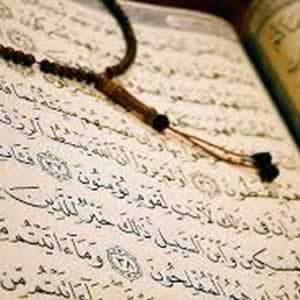 What is The Quran?
Quran, literally meaning "the recitation" is the central religious text of Islam, which Muslims believe to be a revelation from God (Allah). It is widely regarded as the finest work in classical Arabic literature. The Quran is divided into chapters (surah in Arabic), which are then divided into verses (ayah). Muslims believe that the Quran was verbally revealed by God to Muhammad through the angel Gabriel (Jibril), gradually over a period of approximately 23 years, beginning on 22 December 609 CE, when Muhammad was 40, and concluding in 632, the year of his death. Muslims regard the Quran as the most important miracle of Muhammad, a proof of his prophethood, and the culmination of a series of divine messages that started with the messages revealed to Adam and ended with Muhammad.