897 views
·
Last viewed: 24 hrs ago
Uploaded: 21 Dec 2018 (8 years ago) · Shared: 23 Dec 2018
Duration: 9:15
Uploaded: 21 Dec 2018 (8 years ago) · Shared: 23 Dec 2018
Duration: 9:15
Youtube Description:
DOES GOD HAVE HUMAN FORM? – With Rabbi Michael Skobac
Judaism and Christianity don't only differ on the question of whether Jesus was the Messiah. A more critical issue is the Christian claim that Jesus was actually God who came to earth and took on human form. This is referred to as the 'Incarnation'.
In ascribing divinity to Jesus, Christianity asserts that the Creator, indeed, is physical and has human form.
This video addresses this critical issue and shows that the scriptures clearly teach that God does not have human form and cannot have human form. In addition, Rabbi Skobac addresses the question of how to understand various passages in the Bible that seem to imply that God has physical attributes.
JEWS FOR JUDAISM is an international organization dedicated to countering the multi-million dollar efforts of Christian missionary groups that target Jews, the impact of cults and eastern religions, and the growing rate of intermarriage that is devastating the Jewish community. JEWS FOR JUDAISM achieves its goal through FREE educational programs, materials and counseling services that connect Jewish people to the spiritual depth, beauty and wisdom of Judaism and keeps Jews Jewish. Please contact us if we can help you.
DOES GOD HAVE HUMAN FORM? – With Rabbi Michael Skobac
Judaism and Christianity don't only differ on the question of whether Jesus was the Messiah. A more critical issue is the Christian claim that Jesus was actually God who came to earth and took on human form. This is referred to as the 'Incarnation'.
In ascribing divinity to Jesus, Christianity asserts that the Creator, indeed, is physical and has human form.
This video addresses this critical issue and shows that the scriptures clearly teach that God does not have human form and cannot have human form. In addition, Rabbi Skobac addresses the question of how to understand various passages in the Bible that seem to imply that God has physical attributes.
JEWS FOR JUDAISM is an international organization dedicated to countering the multi-million dollar efforts of Christian missionary groups that target Jews, the impact of cults and eastern religions, and the growing rate of intermarriage that is devastating the Jewish community. JEWS FOR JUDAISM achieves its goal through FREE educational programs, materials and counseling services that connect Jewish people to the spiritual depth, beauty and wisdom of Judaism and keeps Jews Jewish. Please contact us if we can help you.
Explore More
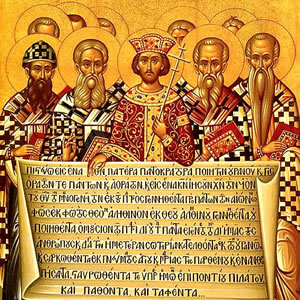 What was the Council of Nicaea?
The First Council of Nicaea was a council of Christian bishops convened in the Bithynian city of Nicaea (now ?znik, Bursa province, Turkey) by the Roman Emperor Constantine I in 325 AD. Its main accomplishments were settlement of the Christological issue of the divine nature of God the Son and his relationship to God the Father, the construction of the first part of the Nicene Creed, establishing uniform observance of the date of Easter, and promulgation of early canon law.
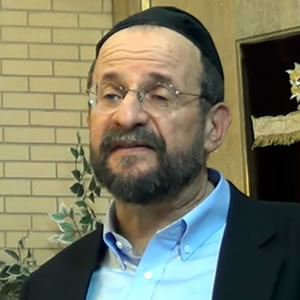 Who is Michael Skobac?
Michael Skobac was educated at Northwestern University and Yeshiva University. He has been involved in informal Jewish education and outreach work since 1975. Skobac was the founding director of Kiruv, the campus outreach arm of the Rabbinical Council of America, and has worked as a campus professional with Hillel groups in Philadelphia, New York and Toronto.
 Who is GOD?
In monotheism and henotheism, God is conceived as the Supreme Being and principal object of faith. The concept of God as described by theologians commonly includes the attributes of omniscience (infinite knowledge), omnipotence (unlimited power), omnipresence (present everywhere), omnibenevolence (perfect goodness), divine simplicity, and eternal and necessary existence. In theism, God is the creator and sustainer of the universe In deism, God is the creator, but not the sustainer, of the universe Monotheism is the belief in the existence of one God or in the oneness of God In pantheism, God is the universe itself In atheism, God is purported not to exist, while deemed unknown or unknowable within the context of agnosticism.