707 views
·
Last viewed: 22 hrs ago
Uploaded: 01 Sep 2009 (17 years ago) · Shared: 04 May 2017
Duration: 48:19
Uploaded: 01 Sep 2009 (17 years ago) · Shared: 04 May 2017
Duration: 48:19
Youtube Description
Introduction to New Testament (RLST 152) The Apocalypse of John showed an anti-Roman, politically revolutionary perspective. This is in contrastwith Paul's writing in Romans 13, which calls for submission to governmental authorities - although passages in 1 Corinthians may be said to contradict this. 2 Thessalonians, a pseudonymous letter, also preaches a politically conservative and accommodative message, as does 1 Peter. Interestingly, these letters do not discard or ignore apocalypticism but use it quite differently from the author of Revelation to further their message of political conservatism. 2 Peter seems to be a letter dating from the second century, from the post-apostolic age. In 2 Peter, the apocalypse is no longer imminent and is not used to further any admonition. Instead, it has become simply a part of Christian doctrine.
00:00 - Chapter 1. The Politics of Early Christianities
12:22 - Chapter 2. 2 Thessalonians, the Lawless One, and Politics
24:57 - Chapter 3. 1 Peter and Politics
37:00 - Chapter 4. 2 Peter: A Letter from the Post-Apostolic Age
Complete course materials are available at the Open Yale Courses website: http://open.yale.edu/courses
This course was recorded in Spring 2009.
Explore More
Christine Hayes New Testament Dale Martin RomanSearch Google Search Explore Topics
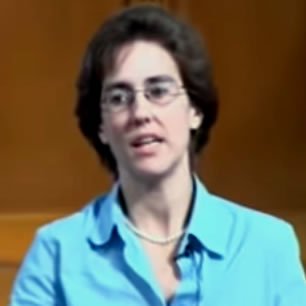 Who is Christine Hayes? (MEMBER OF Yale University)
Christine Hayes is the Robert F and Patricia Ross Weis Professor of Religious Studies at Yale University. She is former Chair of the Department of Religious Studies, and one of the foremost American academics focusing on talmudic-midrashic studies and Classical Judaica. Hayes received her B.A. summa cum laude in The Study of Religion from Harvard University in 1984. She subsequently received an M.A. with distinction from the University of California, Berkeley in 1988 which included a year of graduate work at the Hebrew University of Jerusalem. She received her PhD. in Talmudic and Judaic Studies (Department of Near Eastern Studies) from the University of California, Berkeley in 1993.
 What is New Testament?
The New Testament is the second part of the Christian biblical canon. The first part being the Old Testament, based on the Hebrew Bible. The New Testament discusses the teachings and person of Jesus, as well as events in first-century Christianity. Christians regard both the Old and New Testaments together as sacred scripture. The New Testament (in whole or in part) has frequently accompanied the spread of Christianity around the world. It reflects and serves as a source for Christian theology and morality.
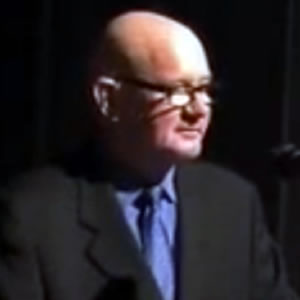 Who is Dale Martin? (MEMBER OF Yale University)
Dale Martin (born 1954) is an American New Testament scholar. He is Woolsey Professor of Religious Studies at Yale University. He has degrees from Abilene Christian University, Princeton Theological Seminary, and Yale. Martin previously taught at Rhodes College and Duke University. Martin was elected a Fellow of the American Academy of Arts and Sciences in 2009.
 What is Roman?
In historiography, ancient Rome is Roman civilization. From the founding of the city of Rome in the 8th century BC to the collapse of the Western Roman Empire in the 5th century AD, encompassing the Roman Kingdom, Roman Republic and Roman Empire until the fall of the western empire. The civilization began as an Italic settlement in the Italian peninsula, dating from the 8th century BC, that grew into the city of Rome and which subsequently gave its name to the empire over which it ruled and to the widespread civilisation the empire developed. The Roman empire expanded to become one of the largest empires in the ancient world, though still ruled from the city, with an estimated 50 to 90 million inhabitants (roughly 20% of the world's population) and covering 5.0 million square kilometres at its height in AD 117.