957 views
·
Last viewed: 19 hrs ago
Uploaded: 25 Oct 2020 (6 years ago) · Shared: 27 Oct 2020
Duration: 2:44
Uploaded: 25 Oct 2020 (6 years ago) · Shared: 27 Oct 2020
Duration: 2:44
Youtube Description
The Crucifixion has been one of the major historical issues that Islam has to contend with. All the historical sources available to us testified tothe fact that Jesus was crucified, even the Liberals admit this as well, however, the Qur'an states that Jesus wasn't crucified.
In bid to justify the assertion of the Qur'an made in Quran 4:157, various explanations has been provided by Muslim Apologist, it does not seems that the Qur'an is at odd with history.
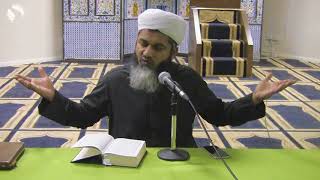
In this video, Adnan Rashid opined that the Qur'an was very unclear on this matter.
Donate and Support Seasoned Apologist Through Patreon:
📈 Patreon: https://www.patreon.com/seasonedapologist
INFORMATION:
🎬 More Debate Videos: https://www.youtube.com/playlist?list=PLm-9b6zAOTpnWmEUyXF8pU8bQMUD-Hg6H
SOCIAL MEDIA:
🎭 Facebook: https://www.facebook.com/seasonedapologist
🐦 Twitter: https://twitter.com/SeasonedA
💬 BitChute: https://www.bitchute.com/channel/seasonedapologist
💡 Minds: https://www.minds.com/seasonedapologist
▶️ My YouTube channel: https://www.youtube.com/sapologist
Explore More
Adnan Rashid Crucifixion The Quran JESUS
JESUS
Search Google Search Explore Topics
 Who is Adnan Rashid?
Adnan Rashid is a public figure, historian, traveller, poet, author and a philanthropist. He is also a Senior Researcher and Lecturer at the Hittin Institute, London. Rashid has speciality in the history of Islamic civilisation, comparative religion and Quran/Hadith sciences. He also takes a keen interest in lslamic numismatics, ancient manuscripts and antiquities. He has debated many high profile figures in the field of politics, history, Muslim/Christian theology. Rashid has represented Islam and Muslims appearing on a number of radio and TV platforms such as the BBC Asia Netwrok, Press TV, Iqra TV and Islam Channel.
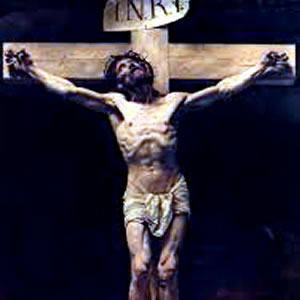 What is Crucifixion?
Crucifixion is a method of capital punishment in which the victim is tied or nailed to a large wooden beam. The victim is left to hang for several days until eventual death from exhaustion and asphyxiation. The crucifixion of Jesus is a central narrative in Christianity, and the cross (sometimes depicting Jesus nailed onto it) is the main religious symbol for many Christian churches. The English term cross derives from the Latin word crux. The Latin term crux classically referred to a tree or any construction of wood used to hang criminals as a form of execution. The term later came to refer specifically to a cross.
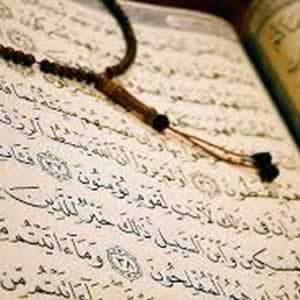 What is The Quran?
Quran, literally meaning "the recitation" is the central religious text of Islam, which Muslims believe to be a revelation from God (Allah). It is widely regarded as the finest work in classical Arabic literature. The Quran is divided into chapters (surah in Arabic), which are then divided into verses (ayah). Muslims believe that the Quran was verbally revealed by God to Muhammad through the angel Gabriel (Jibril), gradually over a period of approximately 23 years, beginning on 22 December 609 CE, when Muhammad was 40, and concluding in 632, the year of his death. Muslims regard the Quran as the most important miracle of Muhammad, a proof of his prophethood, and the culmination of a series of divine messages that started with the messages revealed to Adam and ended with Muhammad.