Youtube Description:
Jewish teacher of Tanakh Felipe discusses Paul and the facts that he openly and explicitly taught against God and the Torah, and that it is clear he was against the original followers of Jesus (Yeshua) historically and in his own words....I am not messianic at all I do not believe that Yeshua or jesus was the messiah...this is strictly to expose Paul as who he really was...a blasphemer...also my Muslim brothers understand this man was a liar and a abomination to ALLAH YHWH
Jewish teacher of Tanakh Felipe discusses Paul and the facts that he openly and explicitly taught against God and the Torah, and that it is clear he was against the original followers of Jesus (Yeshua) historically and in his own words....I am not messianic at all I do not believe that Yeshua or jesus was the messiah...this is strictly to expose Paul as who he really was...a blasphemer...also my Muslim brothers understand this man was a liar and a abomination to ALLAH YHWH
Explore More
 Who is Peleh Ben Avraham?
Teacher of Karaite Judaism Hakham. Israelite, Married, Children
 What is Early Christian?
Early Christianity, the period of Christianity preceding the First Council of Nicaea in 325 AD. This typically divides historically into the Apostolic Age and the Ante-Nicene Period (from the Apostolic Age until Nicea). The first Christians, as
described in the first chapters of the Book of Acts, were all Jews either by birth or conversion and historians refer to them as Jewish Christians. The early Gospel message spread orally, probably originally in Aramaic, and later in Greek. The New Testament's Acts of the Apostles and Epistle to the Galatians record that the first Christian community centered on Jerusalem and that its leaders included Peter, James, the brother of Jesus, and John the Apostle.
 Who was Apostle Paul?
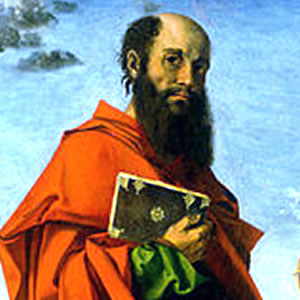
Paul the Apostle (Latin: Paulus), commonly known as Saint Paul and also known by his Jewish name Saul of Tarsus was an apostle (though not one of the Twelve Apostles) who taught the gospel of Christ to the first century world. Paul is generally
considered one of the most important figures of the Apostolic Age and in the mid-30s to the mid-50s AD he founded several churches in Asia Minor and Europe. He took advantage of his status as both a Jew and a Roman citizen to minister to both Jewish and Roman audiences. According to writings in the New Testament and prior to his conversion, Paul was dedicated to persecuting the early disciples of Jesus in the area of Jerusalem. In Acts, Paul was traveling on the road from Jerusalem to Damascus on a mission to 'arrest them and bring them back to Jerusalem' when the resurrected Jesus appeared to him in a great light. He was struck blind, but after three days his sight was restored by Ananias of Damascus and Paul began to preach that Jesus of Nazareth is the Jewish Messiah and the Son of God.
 What is a Prophet?
In religion, a prophet is an individual who is regarded as being in contact with a divine being and is said to speak on that entity's behalf. They claim to be serving as an intermediary with humanity by delivering messages or teachings from the
supernatural source to other people. The message that the prophet conveys is called a prophecy. In Islam, all prophetic messengers are prophets (such as Adam, Noah, Abraham, Moses, Jesus, and Muhammad) though not all prophets are prophetic messengers. The primary distinction is that a prophet is required to demonstrate God's law through his actions, character, and behavior without necessarily calling people to follow him, while a prophetic messenger is required to pronounce God's law (i.e. revelation) and call his people to submit and follow him.
 Who are FT?