978 views
·
Last viewed: 3 days ago Uploaded:
01 Jul 2017 (9 years ago)
·
Shared: 26 Aug 2019
Video Description (from Youtube)
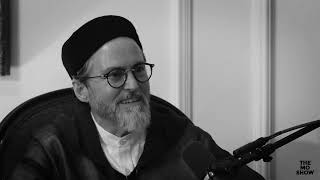
Kegan Chandler, author of the book, “The God of Jesus,” speaks to his audience regarding the question “Did John write his gospel to compete with Gnosticism?” Kegan asserts that orthodox Christology is
ultimately Gnostic Christology repackaged and painted over.
Search Results on 'Irenaeus (130-202 AD): John's Gospel written to refute Gnosticism - Kegan Chandler'
What is Gnostic? Gnosticism (from Ancient Greek: gnostikos, "having knowledge") is a modern name for a variety of ancient religious ideas and systems. Originating in Jewish-Christian milieus in the first and second century AD. These systems believed that the material world is created by an emanation of the highest
God, trapping the divine spark within the human body.<br><br>Gnosticism is also defined as the belief in, dualism of good and bad and special knowledge for salvation.
What is Gospel? Gospel is the Old English translation of Greek evangelion, meaning "good news". It originally meant the Christian message itself, but in the 2nd century it came to be used for the books in which the message was set out. The four gospels of the New Testament: Matthew, Mark, Luke and John are the
main source of information on the life of Jesus.
What is Gospel John? Gospel According to John, or John is the fourth of the canonical gospels. The work is anonymous, although it identifies an unnamed "disciple whom Jesus loved" as the source of its traditions. It is closely related in style and content to the three Johannine epistles, and most scholars treat the four
books, along with Book of Revelation, as a single corpus of Johannine literature, albeit not from the same author. John seems to be concerned with issues of the church-synagogue debate at the time of composition. In John, the community appears to define itself primarily in contrast to Judaism, rather than as part of a wider Christian community. Though Christianity started as a movement within Judaism, it gradually separated from Judaism because of mutual opposition between the two religions.
What is Gospel Matthew? Gospel According to Matthew, or Matthew is the first book of the New Testament and one of the three synoptic gospels. It tell how the Messiah, Jesus, rejected by Israel, finally sends the disciples to preach the gospel to the whole world. Most scholars believe it was composed between AD 80-90 AD
The anonymous author was probably a male Jew, standing on the margin between traditional and non-traditional Jewish values, and familiar with technical legal aspects of scripture being debated in his time.
What is Gospel Luke? Gospel According to Luke, or Luke is the third of the four canonical Gospels. It tells of the origins, birth, ministry, atonement, death, resurrection, and ascension of Jesus Christ. Luke is the longest of the four gospels and the longest book in the New Testament; together with Acts of the Apostles
it makes up a two-volume work from the same author, called Luke-Acts. The cornerstone of Luke-Acts' theology is "salvation history", the author's understanding that God's purpose is seen in the way he has acted, and will continue to act, in history. Luke-Acts does not name its author. According to Church tradition this was Luke the Evangelist, the companion of Paul, but while this view is still occasionally put forward the scholarly consensus emphasises the many contradictions between Acts and the authentic Pauline letters. The most probable date for its composition is around 80-110 AD, and there is evidence that it was still being revised well into the 2nd century.
What is Gospel Mark? Gospel According to Mark, or Mark is one of the four canonical gospels and one of the three synoptic gospels. It tells of the ministry of Jesus from his baptism by John the Baptist to his death and burial and the discovery of the empty tomb - there is no genealogy of Jesus or birth narrative, nor
in the original ending at chapter 16, any post-resurrection appearances. It portrays Jesus as a heroic man of action, an exorcist, a healer, and a miracle worker. Jesus is also the Son of God, but he keeps his identity secret concealing it in parables so that even the disciples fail to understand. Mark probably dates from 66-70 AD. Most scholars now regard it as the earliest written gospel. They also reject the tradition which ascribes it to John Mark, the companion of the apostle Peter, and regard it as the work of an unknown author working with various sources including collections of miracle stories, controversy stories, parables, and a passion narrative.
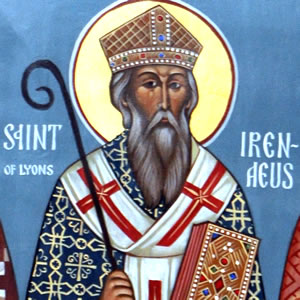
Who was Irenaeus? Irenaeus (130-202 AD) was a Greek bishop. He is noted for his role in guiding and expanding Christian communities in what is now the south of France and, more widely, for the development of Christian theology by combating heresy and defining orthodoxy. Originating from Smyrna, now Izmir in Turkey
he had heard the preaching of Polycarp, who in turn was said to have heard John the Evangelist.
Who is KeganChandler? Kegan Chandler is a Christian author and researcher of Early Christianity, pagan religion, and Gnosticism. He is an adjunct professor at Atlanta Bible College. Chandler holds a Master of Theology from Campbellsville University's School of Theology, where he studied Church History and Theology, and
is a graduate of SCAD University, where he studied Graeco-Roman drama, medieval literature, and dramatic writing.
<br><br>
He is the author of the forthcoming book 'Constantine and the Divine Mind' (Wipf and Stock, TBD), and 'The God of Jesus in Light of Christian Dogma' (Restoration Fellowship, 2016). He is also an award-winning screenwriter, and currently writes for his blog on Church history.
<br><br>
Chandler also sits on the board of directors of the Unitarian Christian Alliance (formed 2019), and New Life Ministries of America, Inc., a small non-profit which has been producing Christian literature and financing overseas missions since 1994.

Who is Gnostic Informant? Gnostic Informant is a channel by Neal Sendlak, focusing on History, Mythology, and Comparative Religion.
DISCLAIMER
All videos are shared for educational and information purposes only. All videos are hosted and viewable on Youtube servers. Video titles are generated using the original video title; overall content theme including actual dialogue and speech (Transcript); and A.I-based recommendations with a focus on SEO, keyword density, and internal search functions. The video title does not represent the views held by the Youtube video uploader, or any individual, organisation or business.