838 views
·
Last viewed: 11 hrs ago
Uploaded: 23 Dec 2018 (8 years ago) · Shared: 30 Dec 2018
Duration: 26:11
Uploaded: 23 Dec 2018 (8 years ago) · Shared: 30 Dec 2018
Duration: 26:11
Youtube Description
While waiting for Richard Carrier to show up to the studio, Rex Burks and Owen Younger (the Skeptical Texans) sat down for an informalchat.
https://skepticaltexans.org
Did you hear the one about the two atheists who went to Sunday School? Rex Burks and Owen Younger were both raised as devout fundamentalist Christians until reason and evidence eventually took over. Since leaving religion, they have both become enthusiastic students of the New Testament, the historical Jesus, and the early Christian church. For more than two years, Bible in hand, they have been visiting a wide range of Christian denominations and joining Sunday school class discussions with believers.They love to share their fascinating and sometimes humorous stories about the astonishing variety of belief among Christians, and learn how an understanding and appreciation of this diversity can help make us all more effective advocates for freethought. SPOILER: Episcopalians and Pentecostals are not the same! Owen and Rex also frequently share their insights on effective ways to relate to different types of Christians and highlight the most common objections to non-belief they’ve repeatedly heard. Professionally, Owen is a pilot and aviation consultant; Rex is an attorney. Both are long time residents of the Dallas, Texas area.
Outro:
Narration by David Nolan
Music by Jason Hall
______
https://twitter.com/AtheistEdge
https://www.patreon.com/atheistedge
PayPal: teamtalon@yahoo.com
https://www.facebook.com/atheistedge
https://www.instagram.com/atheist_edge/
www.atheistedge.com
https://www.stitcher.com/podcast/athe...
https://itunes.apple.com/us/podcast/a...
https://vid.me/Atheist_Edge
Merch available at https://teespring.com/stores/atheist-...
Books:
https://www.amazon.com/Most-People-Be...
https://www.amazon.com/Pulling-Back-G...
Please like, subscribe, comment and consider a donation if enjoy the content! (Links above)
A $1/month contribution via Patreon or a one-time contribution via PayPal makes a huge difference to improve our production quality. Thank you in advance!
Explore More
Apostle Paul The Bible Atheism JESUS
JESUS
Search Google Search Explore Topics
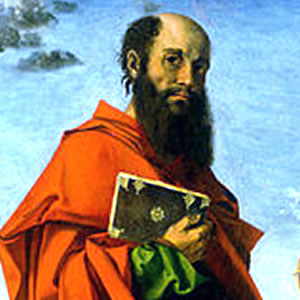 Who was Apostle Paul?
Paul the Apostle (Latin: Paulus), commonly known as Saint Paul and also known by his Jewish name Saul of Tarsus was an apostle (though not one of the Twelve Apostles) who taught the gospel of Christ to the first century world. Paul is generally considered one of the most important figures of the Apostolic Age and in the mid-30s to the mid-50s AD he founded several churches in Asia Minor and Europe. He took advantage of his status as both a Jew and a Roman citizen to minister to both Jewish and Roman audiences. According to writings in the New Testament and prior to his conversion, Paul was dedicated to persecuting the early disciples of Jesus in the area of Jerusalem. In Acts, Paul was traveling on the road from Jerusalem to Damascus on a mission to 'arrest them and bring them back to Jerusalem' when the resurrected Jesus appeared to him in a great light. He was struck blind, but after three days his sight was restored by Ananias of Damascus and Paul began to preach that Jesus of Nazareth is the Jewish Messiah and the Son of God.
 What is The Bible?
The Bible is a canonical collection of texts sacred in Judaism and Christianity. There is no single "Bible" and many Bibles with varying contents exist. The term Bible is shared between Judaism and Christianity, although the contents of each of their collections of canonical texts is not the same. Different religious groups include different books within their Biblical canons, in different orders, and sometimes divide or combine books, or incorporate additional material into canonical books. The Hebrew Bible, or Tanakh, contains 24 books. Christian Bibles range from the 66 books of the Protestant canon to the 81 books of the Ethiopian Orthodox Church canon. The first part of Christian Bibles is the Old Testament, which contains, at minimum, the 24 books of the Hebrew Bible divided into 39 books and ordered differently from the Hebrew Bible. The Catholic Church and Eastern Christian churches also hold certain deuterocanonical books and passages to be part of the Old Testament canon. The second part is the New Testament, containing 27 books: the 4 Canonical gospels, Acts of the Apostles, 21 Epistles or didactic letters, and the Book of Revelation.
 What is Atheism?
Atheism is, in the broadest sense, the absence of belief in the existence of deities. Less broadly, atheism is the rejection of belief that any deities exist. In an even narrower sense, atheism is specifically the position that there are no deities. Atheism is contrasted with theism, which, in its most general form, is the belief that at least one deity exists.