689 views
·
Last viewed: 2 days ago
Uploaded: 27 Feb 2017 (9 years ago) · Shared: 07 Jun 2017
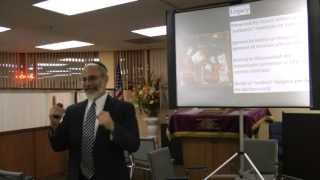
does the church celebrate Easter? Why is Easter celebrated with eggs and bunnies? Discover the Pagan Origins of Easter!
We hope you enjoyed the teaching: The Pagan Origins of Easter
To subscribe to our YouTube channel:
https://www.youtube.com/yahwehsrestorationministry
To continue your journey, please visit our extensive website:
http://www.yrm.org
Download our free mobile App for Apple or Android from the App Store. Search: Yahweh's Restoration Ministry
Join us on Roku! To find our channel search: Yahweh's Restoration Ministry
Watch live Sabbath services every Saturday at 1:30pm central. www.yrm.org/live
Find us on Social Media:
https://www.facebook.com/yrm.org/
https://twitter.com/yrmministry
https://plus.google.com/+YahwehsResto...
https://www.pinterest.com/YRMinistry/
To link this video: https://youtu.be/bqy33IJHE8M
-~-~~-~~~-~~-~-
Please watch: 'This Is Yahweh's Restoration Ministry - A HEBREW ROOTS, Messianic, Torah Observant, Congregation'
https://www.youtube.com/watch?v=xaaA5TWxeuo
-~-~~-~~~-~~-~-
Uploaded: 27 Feb 2017 (9 years ago) · Shared: 07 Jun 2017
Video Description (from Youtube)
What are the origins of the Easter holiday? Are these origins Christian or Pagan? Should a Bible believer celebrate Easter? What does the Bible say about Easter? Is Easter the same as Passover? Whydoes the church celebrate Easter? Why is Easter celebrated with eggs and bunnies? Discover the Pagan Origins of Easter!
We hope you enjoyed the teaching: The Pagan Origins of Easter
To subscribe to our YouTube channel:
https://www.youtube.com/yahwehsrestorationministry
To continue your journey, please visit our extensive website:
http://www.yrm.org
Download our free mobile App for Apple or Android from the App Store. Search: Yahweh's Restoration Ministry
Join us on Roku! To find our channel search: Yahweh's Restoration Ministry
Watch live Sabbath services every Saturday at 1:30pm central. www.yrm.org/live
Find us on Social Media:
https://www.facebook.com/yrm.org/
https://twitter.com/yrmministry
https://plus.google.com/+YahwehsResto...
https://www.pinterest.com/YRMinistry/
To link this video: https://youtu.be/bqy33IJHE8M
-~-~~-~~~-~~-~-
Please watch: 'This Is Yahweh's Restoration Ministry - A HEBREW ROOTS, Messianic, Torah Observant, Congregation'
https://www.youtube.com/watch?v=xaaA5TWxeuo
-~-~~-~~~-~~-~-
Search Results on 'Pagan Origins of Easter Exposed - Yahweh Ministry'
SCROLL TO :TOPICS | 4NEWS | 9ARTICLES | 7FAQ | 6VIDEO | 127LINKS | 0TOPICS #PAGAN YAHWEH MINISTRY EASTER YAHWEH
Topics include Pagan, Yahweh Ministry, Easter, Yahweh (4)
What is Pagan? Paganism is a term first used in the fourth century by early Christians. It was applied on populations of the Roman Empire who practiced polytheism, either because they were increasingly rural and provincial relative to the Christian population or because they were not milites Christi (soldiers of
Christ). Alternate terms in Christian texts for the same group were hellene, gentile, and heathen. Pagan and paganism were pejorative terms for the same polytheistic group, implying its inferiority. Paganism has broadly connoted the "religion of the peasantry", and for much of its history was a derogatory term. Both during and after the Middle Ages, pagan was a pejorative term that was applied to any non-Abrahamic or unfamiliar religion, and the term presumed a belief in false god(s). |
Who are Yahweh Ministry? Yahweh's Restoration Ministry (YRM) are devoted to exposing pagan church traditions and false doctrine. We also cover end-times prophecy, armageddon and prophetic events. The Hebrew roots of the Christian faith is an important element to unlocking Bible truth. Discover amazing facts that your church
doesn't want you to know! Facts like the Sabbath and Feast Days, the name of god Yahweh, common Bible misnomers, false doctrine, paganism, and amazing Bible facts are all covered. |
What is Easter? Easter, or Resurrection Sunday is a festival and holiday celebrating the resurrection of Jesus from the dead. This event is described in the New Testament as having occurred on the third day of his burial after his crucifixion by the Romans at Calvary c. 30 AD. It is the culmination of the Passion
of Jesus, preceded by Lent (or Great Lent), a forty-day period of fasting, prayer, and penance. Easter customs vary across the Christian world, and include sunrise services, exclaiming the Paschal greeting, clipping the church, and decorating Easter eggs (symbols of the empty tomb). The Easter lily, a symbol of the resurrection, traditionally decorates the chancel area of churches on this day and for the rest of Eastertide. Additional customs that have become associated with Easter and are observed by both Christians and some non-Christians include egg hunting, the Easter Bunny, and Easter parades. |
Who is Yahweh? Yahweh was the national god of the Iron Age kingdoms of Israel (Samaria) and Judah. His exact origins are disputed, although they reach back to the early Iron Age and even the Late Bronze: his name may have begun as an epithet of El, head of the Bronze Age Canaanite pantheon, but the earliest
plausible mentions of Yahweh are in Egyptian texts that refer to a similar-sounding place name associated with the Shasu nomads of the southern Transjordan. In the oldest biblical literature, Yahweh is a typical ancient Near Eastern "divine warrior", who leads the heavenly army against Israel's enemies; he later became the main god of the Kingdom of Israel (Samaria) and of Judah, and over time the royal court and temple promoted Yahweh as the god of the entire cosmos, possessing all the positive qualities previously attributed to the other gods and goddesses. |
News on Pagan, Yahweh Ministry, Easter, Yahweh (9)
Articles on Pagan, Yahweh Ministry, Easter, Yahweh (7)
Trinity - 13 Three God Pagan concepts

23,270 views
|
Jesus, Serapis & 7 Pagan Gods

41,971 views
|
Bible - Pagan Texts in the Bible

21,796 views
|
Gods - 60 Pagan deities in the Bible
39,964 views
|
Bible - 27 Verses on Yahweh, Elohim(s) and The Gods

30,683 views
|
Paul made Jesus into Yahweh
1,495 views
|
Hajj - How Islam purified the Pagan 'Kabah' Ritual in 22 Steps

103 views
|
FAQ on Pagan, Yahweh Ministry, Easter, Yahweh (6)
Youtube Videos on Pagan, Yahweh Ministry, Easter, Yahweh (127)

 In 200 years, Christianity lost Jesus' Jewish teachings; adopting Greek and Roman Paganism -
  The
The 
 Trinity is from Paganism; not found in New Testament -
  Interesting Facts About Jesus -
  False Church doctrine and False Christian teachings -
  Yeshua The Real Messiah -
 Sabbath: Was it Saturday or Sunday? -
  Bible Secrets Unveiled -
  Mithras:
  Resurrection was common amongst many
 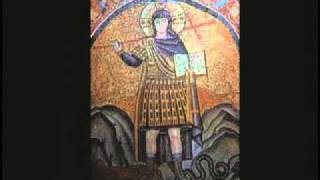 Constantine's
 In 321 AD, Emperor Constantine, a confirmed
  Halloween:
 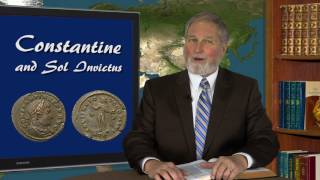 Constantine worshipped Sol Invictus, the
  In Exodus 3:14 and Exodus 3:15, I Am is a name of
  Julius Caesar, Romans and
  Christianity adopted Graeco-Roman
 Archaeology proves the Israelites worshipped
 Sun, Moon and
  Mithraism, like other Ancient Near East
  The Bible is not Scripture. Jesus is modelled on Dying & Rising
  Did the author of Mark copy
 Christmas on 25 December was a
  Origin of the Christmas Tree - Is it
 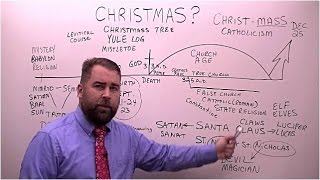 Christmas and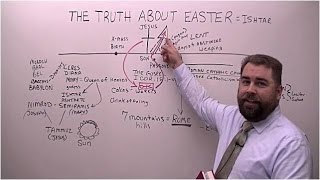
 Christianity and its
 Jesus evolved from Mithras, the Roman
  Did You Know Christmas is
  Mythical Jesus, Catholics and Engineering of Dates, Events, Gospels and Epistles (Clement & Barnabas) affirming pre-existant
  Tertullian (240 AD), first used 'Trinity' to mean 3 distinct persons, influenced by
  Academics acknowledge
  Archaeologists discover
  Christian origins in
  Christmas and
 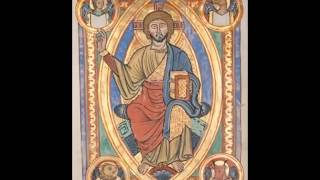 Christmas, 25th December was Ancient
 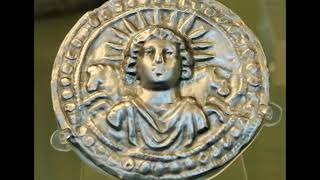 The Christian Church adopted the 'Sun God' Mithras and
  In 601 AD, Pope Gregory I adopted
 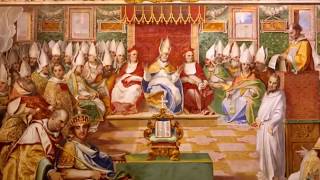 In 325 AD, Council of Nicaea created Jesus and Christianity by unifying
 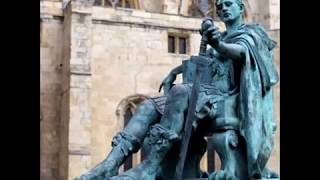 Arguing Bishops at Council of Nicaea voted
  Early Christianity developed as a Jewish version of various
  Emperor Constantine was a
  Christian Gospels are Symbolic Fiction; mythical narratives mined from Jewish texts and
  Father, Jesus, Holy Spirit. They are all
 Origins of Christmas, Bible &
  In Genesis 19:24 and Zecheriah 2:11, there is only one
  In Genesis 19:24, the LORD is mentioned twice. Is there two
 Christmas, December 25th is under the control of the Devil Satan and
  Jesus Christ: A
  Jesus is too similar to Mythical
  Trinity is 'veiled' Tri-theism (Three Gods). Combining of Jewish Monotheism with
  The Jesus Story is more
  The Jesus Story is more
  In Genesis 1:1, Elohim ('God') is singular when applied to
  Eusebius, an early Church Father loyal to Philo of Alexandria, who added the 'God From God'
  Jesus is not
 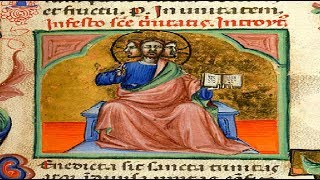 James Dunn: Jesus is not
  God is One. He moves by Spirit. He creates through Spoken Word (Trinity is from
 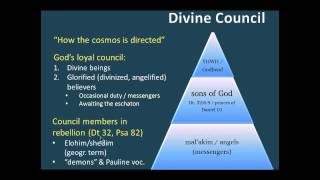 Many Biblical Gods (Elohim) are ordered to obey
  Pre-Islam
  Father, Son and Holy Spirit is
  Yeshua, Yesous, Iesous, Jesus are not derived from Zeus, the Greek
  In Psalm 89:6,
  How did Yeshua ('
 How did Yeshua ('
 Many Christian rituals have origins in
  Did Jesus speak of His Own or in name of
  In Genesis 16:7, did Hagar speak to
  The Black Stone and Safa-Marwa 'most likely' originate from pre-Islam,
  Jesus instructed Jews to worship
  Emperor Constantine merged
  Gnostic 'secret knowledge' of God features in


 In 70 AD, Rome destroyed the Jerusalem Church, establishing '
 Virgin Births were common in
 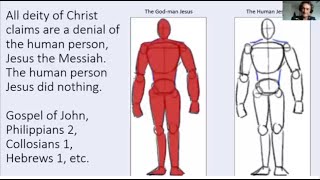 Historical development of Christian Trinity, Jesus-Man & Jesus-God-
 Father generated Jesus-Son. Can Jesus generate The Father-
 Origins of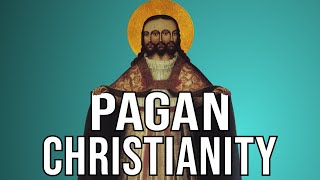
 Is the Christmas Tree
  Christianity, a collection of Pre-Christian
 Polytheism to
  Pantheon, Roman Temple to the Gods and Idols of
 Ancient
  Origins of
  Goddess Asherah, the Secret Wife of God
  Hajj at Kabah is a
 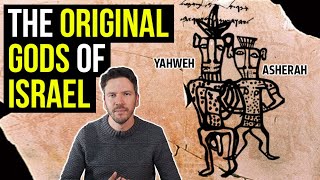 The Gods of Israel (El, Baal,
  Christianity is a
  Palestinian Children tortured and sacrificed for a Zionist
  Who Was Baal and
  Catholic Christians BANNED from Worship at Holy Sepulchre, Israel on
  Evolution of The Allah God from Pre-Islam
  Muslim Leaders promote
  Early Judaism was Polytheism: GOD
  The Evolution of God from
  Did Christianity borrow from
  Did
Did  King Cyrus, a
  Did Ancient Israelites Sacrifice Children to
DISCLAIMER
All videos are shared for educational and information purposes only. All videos are hosted and viewable on Youtube servers. Video titles are generated using the original video title; overall content theme including actual dialogue and speech (Transcript); and A.I-based recommendations with a focus on SEO, keyword density, and internal search functions. The video title does not represent the views held by the Youtube video uploader, or any individual, organisation or business.
If you spot any mistake, omission or give feedback, kindly contact us with details
All videos are shared for educational and information purposes only. All videos are hosted and viewable on Youtube servers. Video titles are generated using the original video title; overall content theme including actual dialogue and speech (Transcript); and A.I-based recommendations with a focus on SEO, keyword density, and internal search functions. The video title does not represent the views held by the Youtube video uploader, or any individual, organisation or business.
If you spot any mistake, omission or give feedback, kindly contact us with details