Live Screenshot
Source link:
https://hubpages.com/religion-philosophy/The-Mythic-Origins-of-Christianity-True-or-FalsePublished by: HUB PAGES on 24 Mar 2016
2628 views · Last view: 4 hrs ago
News Text (from HUB PAGES)
...Explore More
Christianity Religions Pagan MythSearch Google Search Explore Topics
 What is Christianity?
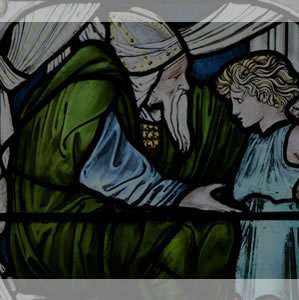
Christianity is a global religion centered on the life and teachings of Jesus Christ, who followers believe is the Son of God. It's a monotheistic faith, meaning Christians believe in one God who exists in three co-equal persons: God the Father, God the Son (Jesus Christ), and the Holy Spirit. Christianity is based on the Bible, with the Old Testament and New Testament serving as sacred texts.
 What are Religions?
Religion is a range of social-cultural systems, including designated behaviors and practices, ethics, morals, beliefs, worldviews, texts, sanctified places, prophecies, or organizations, that generally relate humanity to supernatural, transcendental, and spiritual elements. There is no scholarly consensus over what precisely constitutes a religion. It is an essentially contested concept. Different religions may or may not contain various elements ranging from the divine, sacredness, faith, and a supernatural being or beings. The origin of religious belief is an open question, with possible explanations including awareness of individual death, a sense of community, and dreams. Religions have sacred histories, narratives, and mythologies, preserved in oral traditions, sacred texts, symbols, and holy places, that may attempt to explain the origin of life, the universe, and other phenomena. Religious practice may include rituals, sermons, commemoration or veneration (of deities or saints), sacrifices, festivals, feasts, trances, initiations, matrimonial and funerary services, meditation, prayer, music, art, dance, or public service. There are an estimated 10,000 distinct religions worldwide, though nearly all of them have regionally based, relatively small followings. Four religions: Christianity, Islam, Hinduism, and Buddhism account for over 77% of the world's population, and 92% of the world either follows one of those four religions or identifies as non-religious, meaning that the vast majority of remaining religions account for only 8% of the population combined.
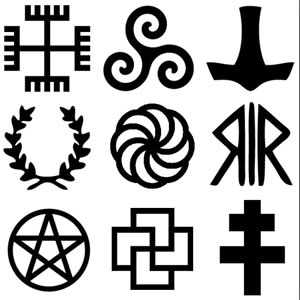 What is Pagan?
Paganism is a term first used in the fourth century by early Christians. It was applied on populations of the Roman Empire who practiced polytheism, either because they were increasingly rural and provincial relative to the Christian population or because they were not milites Christi (soldiers of Christ). Alternate terms in Christian texts for the same group were hellene, gentile, and heathen. Pagan and paganism were pejorative terms for the same polytheistic group, implying its inferiority. Paganism has broadly connoted the "religion of the peasantry", and for much of its history was a derogatory term. Both during and after the Middle Ages, pagan was a pejorative term that was applied to any non-Abrahamic or unfamiliar religion, and the term presumed a belief in false god(s).
What is Myth?Mythology refers to a collection of sacred, traditional tales from a specific culture that explain natural phenomena, world origins, and cultural values. This often featuring gods, goddesses, and heroes. It serves as a lens for interpreting shared human experiences through stories, rituals, and art. Myth is a genre of folklore consisting primarily of narratives that play a fundamental role in a society. For scholars, this is totally different from the ordinary sense of the term myth, meaning a belief that is not true, as the veracity of a piece of folklore is entirely irrelevant to determining whether it constitutes a myth. Myths are often endorsed by religious and secular authorities, and may be natural or supernatural in character. Many societies group their myths, legends, and history together, considering myths and legends to be factual accounts of their remote past. In particular, creation myths take place in a primordial age when the world had not achieved its later form. Origin myths explain how a society's customs, institutions, and taboos were established and sanctified. National myths are narratives about a nation's past that symbolize the nation's values. There is a complex relationship between recital of myths and the enactment of rituals.