Video Description:
Join Robert Sepehr on a fascinating exploration of fasting practices across major world religions, including Buddhism, Christianity, Islam, Judaism, Taoism, Jainism, and Hinduism. This insightful video delves into the spiritual significance of fasting, highlighting how each faith views this practice as a means of purification, self-discipline, and connection to the divine. Discover the rich traditions of fasting in Islamic guidance, where it is a pillar of faith, and how it is observed during Ramadan. Learn about the biblical roots of fasting in Christianity and its role in Jewish faith, as outlined in the Torah. This comparative study offers valuable spiritual reminders and insights for followers of all religions, fostering a deeper understanding and appreciation of the universal themes of faith and devotion.
Explore More
 Who is Robert Sepehr?
Robert Sepehr is an author, producer and anthropologist specializing in linguistics, archeology, and paleobiology.
 What is Christianity?
Christianity is a global religion centered on the life and teachings of Jesus Christ, who followers believe is the Son of God. It's a monotheistic faith, meaning Christians believe in one God who exists in three co-equal persons: God the Father, God
the Son (Jesus Christ), and the Holy Spirit. Christianity is based on the Bible, with the Old Testament and New Testament serving as sacred texts.
 What is Buddhism?
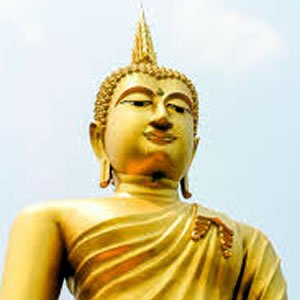
Buddhism is the world's fourth-largest religion with over 520 million followers, or over 7% of the global population, known as Buddhists. An Indian religion, Buddhism encompasses a variety of traditions, beliefs and spiritual practices largely based
on original teachings attributed to the Buddha and resulting interpreted philosophies. Buddhism originated in Ancient India as a Sramana tradition sometime between the 6th and 4th centuries BCE, spreading through much of Asia. All Buddhist traditions share the goal of overcoming suffering and the cycle of death & rebirth, either by the attainment of Nirvana or through the path of Buddhahood.
 What is Hinduism?
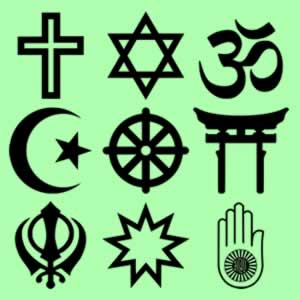
The third largest religion in the world, Hinduism, whose followers mainly reside in India and Nepal, is often referred to as the planet's original organized religion. While it may be organized, it is not centralized like Christianity and Islam - it
is a very large number of different religious groups that do not focus on any single founder or theology. The religion dates back to the sacred texts (Vedas) from 1500 to 4000 BC. One of the major principles is that of Brahman, which states that the universe is seen as one divine entity that can sometimes portray different manifestations.
What is Fasting?Fasting is the willing abstinence or reduction from some or all food, drink, or both, for a period of time. An absolute fast or dry fasting is normally defined as abstinence from all food and liquid for a defined period, usually 24 hours, or a number
of days. Water fasting refers to abstinence from all food and drink except water, but black coffee and tea may be consumed. Other fasts may be partially restrictive, limiting only particular foods or substances, or be intermittent.
What is Jainism?Also known as the Jain Dharma, this religion began with the succession of 24 conquerors (Jinas) in ancient India. The religion was founded by the last Jina Vardhamana, who in 420 BC fasted to death (an act known as salekhana). The religion has
similar ties with Hinduism and Buddhism, but does not have a heaven and hell. Instead, the religion sees the universe as a series of heavens and hells, where karma decides who lives on each level.
 What is Judaism?
Judaism encompasses the religion, philosophy, culture and way of life of the Jewish people. Judaism is a monotheistic religion, with the Torah as its foundational text (part of the larger text known as the Tanakh or Hebrew Bible), and supplemental
oral tradition represented by later texts such as the Midrash and the Talmud. Judaism is considered by religious Jews to be the expression of the covenantal relationship that God established with the Children of Israel.
Judaism includes a wide corpus of texts, practices, theological positions, and forms of organization. Within Judaism there are a variety of movements, most of which emerged from Rabbinic Judaism, which holds that God revealed his laws and commandments to Moses on Mount Sinai in the form of both the Written and Oral Torah.
The Jews are an ethnoreligious group and include those born Jewish and converts to Judaism. In 2012, the world Jewish population was estimated at about 14 million, or roughly 0.2% of the total world population. About 42% of all Jews reside in Israel and about 42% reside in the United States and Canada, with most of the remainder living in Europe.
What is Taoism?Also known as "Daoism," the Tao is translated into, "the path" or, "way." The founder of the religion is said to be a peer of Confucius known as Lao-Tse. His teachings were written in his book, the Tao-te-Ching, although many also believe that he
didn't exist, but is instead fictional. The concepts and traditions of Taoism have influenced many Asian religions over 2,000 years, and has become a philosophical way of life for many today.
 What is Islam?
One of the major religions of the world, Islam literally translates to "submission," as a follower of Islam (Muslims) devotes their life to that of their God. The religion began with the teachings of Muhammad in the 7th century. The theology of Islam
is based on the Qur'an, which was given to Muhammad by God. Some of the major fundamental principles of Islam include the Five Pillars, which hope to unite all Muslims into a community. Two different factions of Muslims exist - the majority are known as Sunni, with a small percentage known as Shi'a - both predominantly reside throughout the Middle East.
Muhammad died in 632 AD and the religion of Islam formally started after his death. The Quran was formally compiled and finalised in 650 AD, prior to which it was 'memorised' and written across many parchments.