473 views
·
Last viewed: 3 days ago
Uploaded: 27 Jul 2020 (6 years ago) · Shared: 13 Sep 2022
Duration: 15:05
Uploaded: 27 Jul 2020 (6 years ago) · Shared: 13 Sep 2022
Duration: 15:05
Youtube Description
Astrotheology is a term which refers to the influence the stars and celestial bodies have on religion. The original word for Alchemy comes from Kemetthe ancient name for Egypt and from where we get our word for chemistry. While most people associate it with the transmutation of base metals into gold, its occult context has to do with a sacred transmutation into spiritual gold, an eternally conscious and immortal soul.
Alexander the Great, King of Macedonia
https://www.youtube.com/watch?v=uBBwqZNR4IU
History of Atlantis and the Lost Tribes
https://www.youtube.com/watch?v=LNRXk80J5A0
Ancient Egyptian Alchemy, and Magnetism
https://www.youtube.com/watch?v=m1qyeAY4t-k
Osiris was the first son of the Gods and his myth is the most elaborate and influential story in ancient Egyptian mythology. It concerns events and symbolic alchemical interpretations of the god Osiris, a primeval king of Egypt.
Thank you for supporting Atlantean Gardens!
https://www.patreon.com/AtlanteanGardens
Robert Sepehr Books
http://amazon.com/Robert-Sepehr/e/B00XTAB1YC/
Robert Sepehr is an Anthropologist
https://linktr.ee/RobertSepehr
Explore More
Robert Sepehr Moon God GODSearch Google Search Explore Topics
 Who is Robert Sepehr?
Robert Sepehr is an author, producer and anthropologist specializing in linguistics, archeology, and paleobiology.
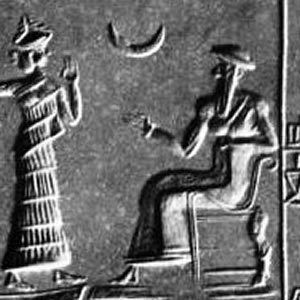 Who is the Moon God?
In modern times it is claimed Allah (God in Islam) historically originates as a Moon God. Therefore this Moon God was worshipped in pre-Islamic Arabia originates in early 20th-century scholarship, most prominently advocated by American evangelicals from the 1990s. The idea was proposed by archeologist Hugo Winckler in 1901. It was proliferated in the USA in the 1990s, first via the publication of Robert Morey's pamphlet The Moon-god Allah: In Archeology of the Middle East (1994). Morey argues that "Allah" was the name of a moon god in pre-Islamic Arabic mythology, the implication being that "Allah" as the term for God in Islam implies that Muslims worship a different deity than the Judeo-Christian one. Joseph Lumbard, a professor of classical Islam, has stated the idea is "not only an insult to Muslims but also an insult to Arab Christians who use the name 'Allah' for God."
 Who is GOD?
In monotheism and henotheism, God is conceived as the Supreme Being and principal object of faith. The concept of God as described by theologians commonly includes the attributes of omniscience (infinite knowledge), omnipotence (unlimited power), omnipresence (present everywhere), omnibenevolence (perfect goodness), divine simplicity, and eternal and necessary existence. In theism, God is the creator and sustainer of the universe In deism, God is the creator, but not the sustainer, of the universe Monotheism is the belief in the existence of one God or in the oneness of God In pantheism, God is the universe itself In atheism, God is purported not to exist, while deemed unknown or unknowable within the context of agnosticism.