Video Description:
In this insightful video, the speaker delves into the critical discussion surrounding the COVID-19 death rate, challenging the widely accepted figure of '3 in 100' and presenting evidence that it is actually '1 in 1000'. This discrepancy raises important questions about the global shutdowns and economic recessions that have ensued. Drawing from Islamic, Christian, and Jewish teachings, the video offers a balanced perspective, emphasizing the importance of accurate information and responsible decision-making. Whether you're a follower of Islam, Christianity, or Judaism, this video provides valuable insights and spiritual reminders about faith, responsibility, and community care during challenging times.
Explore More
 What is Death Rate?
Death rate, or Mortality rate is a measure of the number of deaths in a particular population, scaled to the size of that population, per unit of time. Death rate is typically expressed in units of deaths per 1,000 individuals per year; thus, a
mortality rate of 9.5 (out of 1,000) in a population of 1,000 would mean 9.5 deaths per year in that entire population, or 0.95% out of the total. It is distinct from "morbidity", which is either the prevalence or incidence of a disease, and also from the incidence rate.
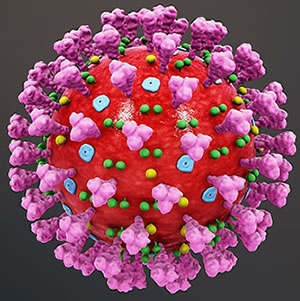 What is COVID?
Coronaviruses are a group of viruses that cause diseases in mammals and birds. In humans, coronaviruses cause respiratory tract infections that are typically mild, such as the common cold, though rarer forms such as SARS, MERS, and COVID-19 can be
lethal. Symptoms vary in other species: in chickens, they cause an upper respiratory tract disease, while in cows and pigs they cause diarrhea. There are yet to be vaccines or antiviral drugs to prevent or treat human coronavirus infections.
 Who are ONS?What is Sin?
In Abrahamic contexts, sin is the act of violating God's will. Sin can also be viewed as anything that violates the ideal relationship between an individual and God; or as any diversion from the ideal order for human living. To sin has been defined
as "to miss the mark".
Sins fall in a spectrum from minor errors to deadly misdeeds. Catholicism regards the least corrupt sins as venial sins which are part of human living and carry immediate consequences on earth, and, if unrepented for, more painful purgation, assuming the person is destined to heaven, as it is written in the formation letter "Purgatory", "most of the early Fathers of the Church speak of a cleansing fire, though we cannot tell whether this means actual or spiritual fire."
Conversely, sins of great evil are mortal sins which bring the consequence of hell if they are not addressed either through an act of perfect contrition or going to confession about them.