516 views
·
Last viewed: 1 day ago
Uploaded: 23 Apr 2017 (9 years ago) · Shared: 04 May 2017
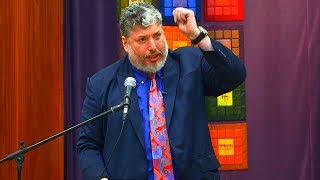
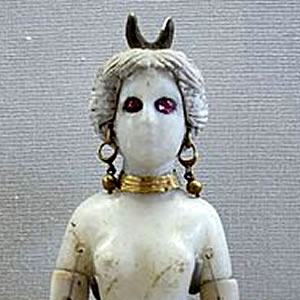
pagan gods. Then over time they began favoring one of these gods and ultimately decided that there is only one Creator. We explore many pagan deities mentioned in the bible such as the horned god El or the fact that the original hebrew genesis 1:1 says gods in the plural (In the beginning the gods created the heavens and the earth)
Uploaded: 23 Apr 2017 (9 years ago) · Shared: 04 May 2017
Video Description (from Youtube)
In this video series we look into the idea that the original hebrew of the bible says that there is actually many gods. We examine the claim that the hebrew religion worshiped many canaanite andpagan gods. Then over time they began favoring one of these gods and ultimately decided that there is only one Creator. We explore many pagan deities mentioned in the bible such as the horned god El or the fact that the original hebrew genesis 1:1 says gods in the plural (In the beginning the gods created the heavens and the earth)
Search Results on 'Pagan Gods In The Bible (Polytheist 'Confusion') - Andrea Salbego 2/3'
SCROLL TO : TOPICS | 4 NEWS | 50 ARTICLES | 10 FAQ | 22 VIDEO | 273 LINKS | 0TOPICS : PAGAN POLYTHEIST THE BIBLE
Topics include Pagan, Polytheist, The Bible (4)
What is Polytheism? Polytheism is the worship of or belief in multiple deities, usually as a pantheon of gods and goddesses. In most religions which accept polytheism, the different gods and goddesses are representations of forces of nature or ancestral principles, and can be viewed either as autonomous or as aspects
or emanations of a creator deity or transcendental absolute principle (monistic theologies), which manifests immanently in nature (panentheistic and pantheistic theologies). Most of the polytheistic deities of ancient religions, with the notable exceptions of the Ancient Egyptian and Hindu deities, were conceived as having physical bodies. Polytheism is a type of theism. Within theism, it contrasts with monotheism, the belief in a singular God, in most cases transcendent. Important polytheistic religions practiced today include Chinese traditional religion, Hinduism, Japanese Shinto, and various neopagan faiths. |
What is Pagan? Paganism is a term first used in the fourth century by early Christians. It was applied on populations of the Roman Empire who practiced polytheism, either because they were increasingly rural and provincial relative to the Christian population or because they were not milites Christi (soldiers of
Christ). Alternate terms in Christian texts for the same group were hellene, gentile, and heathen. Pagan and paganism were pejorative terms for the same polytheistic group, implying its inferiority. Paganism has broadly connoted the "religion of the peasantry", and for much of its history was a derogatory term. Both during and after the Middle Ages, pagan was a pejorative term that was applied to any non-Abrahamic or unfamiliar religion, and the term presumed a belief in false god(s). |
What is a Polytheist? Polytheism is the belief in or worship of more than one deity, a type of theism. Polytheism contrasts with monotheism, the belief in only one deity that is, in most cases, transcendent. Oftentimes, polytheistic religions reflect belief in a pantheon of deities that may themselves have religious
sects and rituals dedicated to them. Polytheism was common in the time and place of the Abrahamic religions, namely Judaism, Christianity, and Islam. The Quran, central to Islam, quite explicitly denounces polytheism, though there is certainly evidence to suggest that the Hebrew Bible, which Judaism and Christianity are established upon, may have originally been polytheistic to some extent. |
What is The Bible?
The Bible is a canonical collection of texts sacred in Judaism and Christianity. There is no single "Bible" and many Bibles with varying contents exist. The term Bible is shared between Judaism and Christianity, although the contents of each of their collections of canonical texts is not the same
<br><br> Different religious groups include different books within their Biblical canons, in different orders, and sometimes divide or combine books, or incorporate additional material into canonical books. <br><br> The Hebrew Bible, or Tanakh, contains 24 books. Christian Bibles range from the 66 books of the Protestant canon to the 81 books of the Ethiopian Orthodox Church canon. <br><br> The first part of Christian Bibles is the Old Testament, which contains, at minimum, the 24 books of the Hebrew Bible divided into 39 books and ordered differently from the Hebrew Bible. The Catholic Church and Eastern Christian churches also hold certain deuterocanonical books and passages to be part of the Old Testament canon. <br><br> The second part is the New Testament, containing 27 books: the 4 Canonical gospels, Acts of the Apostles, 21 Epistles or didactic letters, and the Book of Revelation. |
News on Pagan, Polytheist, The Bible (50)
Articles on Pagan, Polytheist, The Bible (10)





FAQ on Pagan, Polytheist, The Bible (22)
Youtube Videos on Pagan, Polytheist, The Bible (273)
 Prophet Muhammad and
  Books Banned from
  Prophet Job -
 How
How  Adam, Eve and Seth - Stories from
 Parallel accounts in
  Allah in
 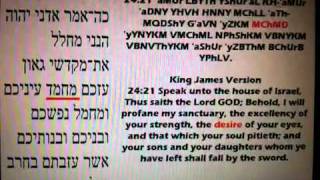 Prophet Muhammad in
 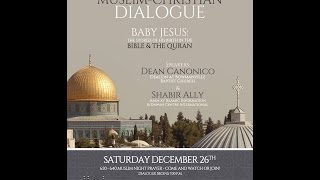 Baby Jesus: His Birth in
  Muhammed in
  What is
  Christian Dilemmas: Secret History of
 How does Christianity establish Justice in
  Is
Is  Was Muhammad foretold in
  Is belief in
  Does
Does  Does
Does  Contradictions in
  Gospel of Thomas: Why is it not in
  Constantine did not choose
  Is Muhammed prophesised in
  Is Muhammad foretold in
  Is Makkah (Mecca) in
  What does
  Islam In
  Is
Is  Does Jesus use violence in
  Are
Are  How
How  Is Trinity supported in
  Can
Can  Is David and Muhammad a Prophet in
  In Quran 10:94, God commands Muslims to study
  Is Muhammad prophesied in
 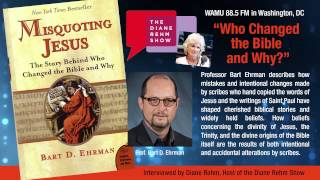 Misquoting Jesus: Who changed
 In John 7:53,
  On
On 
 1 John 5:7 proves
 Is Christianity a
 What Is
  Mistakes in
 Prophets in

 Who wrote
 1 John 5:7 added
  How to Read
  Banned From
  Mithras:
  Who wrote
  Resurrection was common amongst many
  Constantine's
 How do we explain
  Should 1 John 5:7 be in
  Jesus' Resurrection: Mark 16:9-20 was added into
  In Numbers 31:18,
 Is
Is  In 321 AD, Emperor Constantine, a confirmed
  Grooming Gangs of America: Human trafficking by White Christian Men. Do we blame
  Grooming Gangs of America: Human trafficking by White Christian Men. Do we blame
  Mark 7:16 is missing from
  Halloween:
  Constantine worshipped Sol Invictus,
  Julius Caesar, Romans and
  Jesus: A Mystery - Mysteries of
  Christianity adopted Graeco-Roman
 In
In  What is worse, doing Shirk (
 Show me Trinity in
  Show me Trinity in
  In Numbers 1:46,
  Archaeology proves
 Mithraism, like other Ancient Near East
 Did
Did  History of
  Is
Is  In Leviticus 11:7,
  Christmas on 25 December was a
  Origin of
 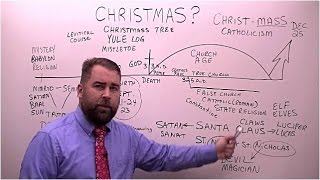 Christmas and
 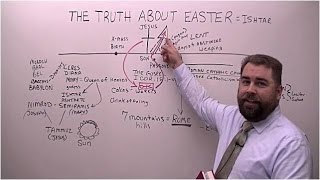 Easter and
  Christianity and its
  Easter Worship is
  In Luke 23:34, this is a Textual Variant, a verse added to
  Shirk, or
 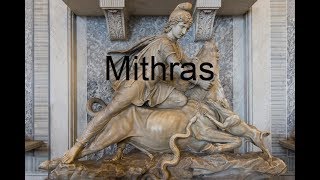 Jesus evolved from Mithras,
  In
In 
 Did You Know Christmas is
  In John 1:1, a 'Word With Him' is a common phrase in
  Mythical Jesus, Catholics and Engineering of Dates, Events, Gospels and Epistles (Clement & Barnabas) affirming pre-existant
  Muhammad in
  Prophets in
  Muhammad in
 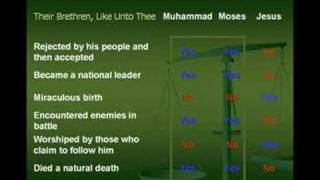 Muhammad in
 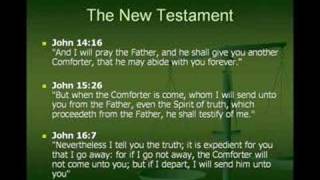 Muhammad in
  Is
Is  Trinity is not in
  Tertullian (240 AD), first used 'Trinity' to mean 3 distinct persons, influenced by
  At
At  At
At  How Badly Has
  New World Order in
 In Genesis 1:1 and John 3:16, 'Allah' is mentioned in
 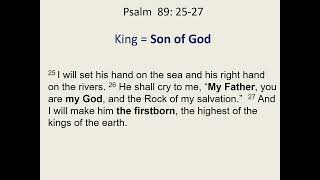 Sons of God in
  Authorship of
  Academics acknowledge
  Where is Muhammad in
  Christian origins in
  Christmas, 25th December was Ancient
 In 601 AD, Pope Gregory I adopted
  In 325 AD, Council of Nicaea created Jesus and Christianity by unifying
  Arguing Bishops at Council of Nicaea voted
  Early Christianity developed as a Jewish version of various
  Emperor Constantine was a
  Christian Gospels are Symbolic Fiction; mythical narratives mined from Jewish texts and
  In John 7:53,
  93% of Romans were
  For me,
  Keeping Old Testament in
  Christians today differ on what constitutes
  Early Christians freely disagreed on Christian fundamentals as
  In Ezekiel 18:21,
  In Ezekiel 18:21,
  Quoting
 Origins of Christmas,
  Muhammad met 5-points qualifying as a Prophet. What's
  Muhammad met 5-points qualifying as a Prophet. What's
  In Isaiah 42, Muhammad is found in
  Easter: A Christian festival or
  God inspired Scribes to insert verses into
  Jesus' Birth Narrative contradictions in
  Homosexuality, Sodom-Gomorrah and Lot in
  Evidence for Trinity in
  Christmas, December 25th is under
  Jesus Christ: A
  Show me Muhammad glorifying Jesus in
  Show me Muhammad glorifying Jesus in
  Discussion on Jesus, Apostle Paul and
 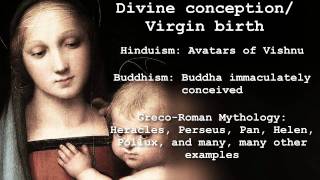 Jesus is too similar to Mythical
  Is
Is  In John 3:16, God gave his 'One And Only Begotten Son'. in some versions of
  Trinity is 'veiled' Tri-theism (Three Gods). Combining of Jewish Monotheism with
  In Romans 1:27,
 Alcohol & Wine in
  Eusebius, an early Church Father loyal to Philo of Alexandria, who added
  Torah and Injeel are not in
  Quran & Hadith date to Muhammad's life.
  How
How  Story of
  God 'spoke' to me in
  Shemesh,
  God is One. He moves by Spirit. He creates through Spoken Word (Trinity is from
  Greek Philosophy won at Council of Nicaea.
  Pre-Islam
  Yeshua, Yesous, Iesous, Jesus are not derived from Zeus,
  Many Christian rituals have origins in
  Israeli Minister:
  Lost Books of
 Trinity is not in
  Jewish Messiah will die for our Sins? Prove it from
  Emperor Constantine merged
  Gnostic 'secret knowledge' of God features in
  King James 'authorized'
 Muhammad in
  Muhammad in

 Is Muhammad mentioned in
  Jesus never explicitly says 'I Am God' in
  In 70 AD, Rome destroyed
  Noah in
  Adam in
  Prophets in
  Lot in
  Jacob in
  Job in
  Prophet Muhammad in
 Moses in
  Aaron in
  David in
  Virgin Births were common in
  Historical Understanding of God and gods in Monotheism,
  Noah in
  Who made
  False Prophets in
  Origins of Yahweh in a
 Is
Is  Christianity, a collection of Pre-Christian
 Pantheon, Roman Temple to
  Adam & Eve Story copied from Early
 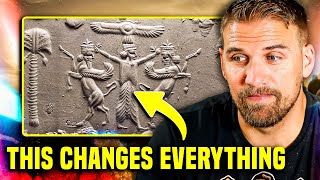 Ancient
  Pre-Islam Arabia was
  Hajj at Kabah is a
 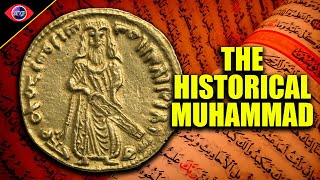 Archaeology indicates
  Israel will expand 'From Nile to Euphrates' according to
  Passion City Church?
 Who wrote
  Christianity is a
  Where is December 25th and 'this bastid' in
 Solomon -
  Palestinian Children tortured and sacrificed for a Zionist
  Moses Before
  Canada Law can imprison Christians for quoting
  Quran affirms
  Evolution of
  Muslim Leaders promote
  Christian Trinity is Mono-
 Early Judaism was
  Why did
  Creation of Adam & Eve |
  Did Christianity borrow from
  Where did Jesus claim to be GOD in
  Methuselah -
  Methuselah -
  Who was Judah in
  Jesus Existed - Just NOT in
  Show me Free Will in
  Queen Esther - A Hidden Hero in
  King Cyrus, a
  Queen Jezebel
  Job - Faith in
  Is Muhammad in
DISCLAIMER
All videos are shared for educational and information purposes only. All videos are hosted and viewable on Youtube servers. Video titles are generated using the original video title; overall content theme including actual dialogue and speech (Transcript); and A.I-based recommendations with a focus on SEO, keyword density, and internal search functions. The video title does not represent the views held by the Youtube video uploader, or any individual, organisation or business.
If you spot any mistake, omission or give feedback, kindly contact us with details
All videos are shared for educational and information purposes only. All videos are hosted and viewable on Youtube servers. Video titles are generated using the original video title; overall content theme including actual dialogue and speech (Transcript); and A.I-based recommendations with a focus on SEO, keyword density, and internal search functions. The video title does not represent the views held by the Youtube video uploader, or any individual, organisation or business.
If you spot any mistake, omission or give feedback, kindly contact us with details


![Video: Many Christians Converted To Islam After Ex-Christian Lecture [HD]](https://img.youtube.com/vi/vVWShgimuro/mqdefault.jpg)