Q Does the Bible tell us to act like slaves?
A Historically, the Bible has been used by some to enslave, subjugate and dominate over a people.
The 'Curse of Ham' Myth: Pro-slavery advocates twisted Genesis 9 to claim that people of African descent were divinely cursed to be eternal servants.
Old Testament Legal Protection: Slaveholders cited Leviticus 25 to argue that purchasing foreign bondmen and passing them down as inherited property was biblically sanctioned.
Weaponising Obedience Verses: Plantation owners frequently read verses like Ephesians 6:5 ('Slaves, obey your masters') to religiously brainwash enslaved people against rebelling.
The Redacted 'Slave Bible': British and American authorities physically censored the scriptures, deleting the entire Book of Exodus to hide the narrative of freedom from bondage.
Enforcing Fugitive Slave Laws: Pro-slavery preachers used Paul's letter to Philemon to argue that runaway slaves were legally and spiritually obligated to return to their masters.
0 views (57 years ago)
A Historically, the Bible has been used by some to enslave, subjugate and dominate over a people.
The 'Curse of Ham' Myth: Pro-slavery advocates twisted Genesis 9 to claim that people of African descent were divinely cursed to be eternal servants.
Old Testament Legal Protection: Slaveholders cited Leviticus 25 to argue that purchasing foreign bondmen and passing them down as inherited property was biblically sanctioned.
Weaponising Obedience Verses: Plantation owners frequently read verses like Ephesians 6:5 ('Slaves, obey your masters') to religiously brainwash enslaved people against rebelling.
The Redacted 'Slave Bible': British and American authorities physically censored the scriptures, deleting the entire Book of Exodus to hide the narrative of freedom from bondage.
Enforcing Fugitive Slave Laws: Pro-slavery preachers used Paul's letter to Philemon to argue that runaway slaves were legally and spiritually obligated to return to their masters.
Explore More
The Bible SlaveSearch Google Search Explore Topics
 What is The Bible?
The Bible is a canonical collection of texts sacred in Judaism and Christianity. There is no single "Bible" and many Bibles with varying contents exist. The term Bible is shared between Judaism and Christianity, although the contents of each of their collections of canonical texts is not the same. Different religious groups include different books within their Biblical canons, in different orders, and sometimes divide or combine books, or incorporate additional material into canonical books. The Hebrew Bible, or Tanakh, contains 24 books. Christian Bibles range from the 66 books of the Protestant canon to the 81 books of the Ethiopian Orthodox Church canon. The first part of Christian Bibles is the Old Testament, which contains, at minimum, the 24 books of the Hebrew Bible divided into 39 books and ordered differently from the Hebrew Bible. The Catholic Church and Eastern Christian churches also hold certain deuterocanonical books and passages to be part of the Old Testament canon. The second part is the New Testament, containing 27 books: the 4 Canonical gospels, Acts of the Apostles, 21 Epistles or didactic letters, and the Book of Revelation.
 What is Slave?
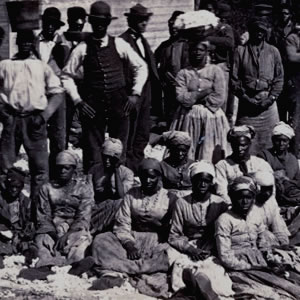
Slavery is any system in which principles of property law are applied to people. Thus allowing individuals to own, buy and sell other individuals, as a de jure form of property. A slave is unable to withdraw unilaterally from such an arrangement and works without remuneration. Slavery began to exist before written history, in many cultures. A person could become enslaved from the time of their birth, capture, or purchase. While slavery was institutionally recognized by most societies, it has now been outlawed in all recognized countries, the last being Mauritania in 2007. Nevertheless, there are an estimated 45.8 million people subject to some form of modern slavery worldwide.