325 views
·
Last viewed: 19 hrs ago
Uploaded: 24 Apr 2026 (6 months ago) · Shared: 29 Apr 2026
Duration: 28:44
Uploaded: 24 Apr 2026 (6 months ago) · Shared: 29 Apr 2026
Duration: 28:44
Youtube Description
Who were the Ebionites—and why were they pushed to the margins of history? In this episode of MythVision, we explore one of the most fascinating andmisunderstood groups in early Christianity.
The Ebionites were a Jewish movement that followed Jesus—but with beliefs very different from what most Christians accept today.
They believed:
Jesus was fully human, not pre-existent or divine
He became the Messiah at his baptism
The Torah still mattered
And Paul was not a true authority
Most of what we know about them comes from their opponents—early Church Fathers who labeled them as heretics.
But what if their version of Christianity preserves something earlier?
In this deep dive, we explore:
- Their origins and beliefs
- Their conflict with Paul and emerging Christianity
- Their unique texts and traditions
- And what they reveal about the earliest Jesus movement
⚠️ This isn’t just history—it’s a window into how Christianity evolved.
Watch until the end—this changes how you see early Christianity.
👉Dr. James Tabor's Links:
Blog: https://jamestabor.com
Youtube: / jamestaborvideos
#MythVision #Christianity #Jesus #Mythical #JesusMythTheory #HistoricalJesus #JesusDebate #BiblicalCriticism #ReligiousHistory #JesusMyth #ChristMythTheory #Skepticism #SecularScholarship #CriticalThinking #AtheistPerspective #FaithVsFact #BeliefQuestions #HistoricalJesus #ApocalypticProphet #Eschatology #BiblicalStudies #NewTestament #MythVision #MythVision
#Mítico #JesusHistórico #DebateSobreJesus
============================
CONTACT ME
Website: 👉 https://mythvisionpodcast.com/
Email MythVision: 👉 mythvisionpodcast@gmail.com
Facebook Page: 👉 / mythvision
Facebook Group: 👉 / thewaterboyzradio
Twitter X: 👉 https://x.com/DerekPodcast - - @DerekPodcast
TikTok: 👉 / mythvision
Instagram: 👉 / dereklambert_7
Discord: 👉 / discord
===========================
Join this channel to get access to perks:
https://www.youtube.com/channel/UCgLZ5SDuR1W_xO8y3A_4VVw/join
Explore More
Early Christian Derek Lambert Apostle Paul James Tabor Ebionites MythSearch Google Search Explore Topics
 What is Early Christian?
Early Christianity, the period of Christianity preceding the First Council of Nicaea in 325 AD. This typically divides historically into the Apostolic Age and the Ante-Nicene Period (from the Apostolic Age until Nicea). The first Christians, as described in the first chapters of the Book of Acts, were all Jews either by birth or conversion and historians refer to them as Jewish Christians. The early Gospel message spread orally, probably originally in Aramaic, and later in Greek. The New Testament's Acts of the Apostles and Epistle to the Galatians record that the first Christian community centered on Jerusalem and that its leaders included Peter, James, the brother of Jesus, and John the Apostle.
 Who is Derek Lambert?
MythVision Podcast (MVP) brings you some of the finest information surrounding Mythology. Knowledge from a variety of people in search of a better understanding of ancient text. We discuss mythology, syncretism, astrotheology, gematria, sacred geometry, secret societies, ancient languages, history, prophecy, scholarship, conspiracies, heretical ideas, myth interpretations and much more.
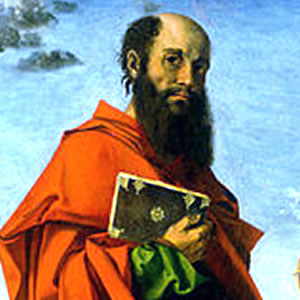 Who was Apostle Paul?
Paul the Apostle (Latin: Paulus), commonly known as Saint Paul and also known by his Jewish name Saul of Tarsus was an apostle (though not one of the Twelve Apostles) who taught the gospel of Christ to the first century world. Paul is generally considered one of the most important figures of the Apostolic Age and in the mid-30s to the mid-50s AD he founded several churches in Asia Minor and Europe. He took advantage of his status as both a Jew and a Roman citizen to minister to both Jewish and Roman audiences. According to writings in the New Testament and prior to his conversion, Paul was dedicated to persecuting the early disciples of Jesus in the area of Jerusalem. In Acts, Paul was traveling on the road from Jerusalem to Damascus on a mission to 'arrest them and bring them back to Jerusalem' when the resurrected Jesus appeared to him in a great light. He was struck blind, but after three days his sight was restored by Ananias of Damascus and Paul began to preach that Jesus of Nazareth is the Jewish Messiah and the Son of God.
 Who is James Tabor?
James D Tabor (born 1946) is a Professor in the Department of Religious Studies at the University of North Carolina, Charlotte. He has taught since 1989 and served as Chair from 2004-14. Tabor earned his Ph.D. at the University of Chicago in 1981 in New Testament and Early Christian Literature, with an emphasis on Christian origins and ancient Judaism, including the Dead Sea Scrolls, John the Baptist, Jesus, James the Just, and Paul the Apostle. The author of six books and over 50 articles, Tabor is frequently consulted by the media on these topics and has appeared on numerous television and radio programs.
 What is Ebionites?
Ebionites is a patristic term referring to a Jewish Christian movement that existed during the early centuries of the Christian Era. They regarded Jesus of Nazareth as the Messiah while rejecting his divinity and his virgin birth, and insisted on the necessity of following Jewish law and rites. They used only one of the Jewish-Christian gospels, the Hebrew Book of Matthew starting at chapter 3, revered James the brother of Jesus (James the Just), and rejected Paul the Apostle as an apostate from the Law.
What is Myth?Mythology refers to a collection of sacred, traditional tales from a specific culture that explain natural phenomena, world origins, and cultural values. This often featuring gods, goddesses, and heroes. It serves as a lens for interpreting shared human experiences through stories, rituals, and art. Myth is a genre of folklore consisting primarily of narratives that play a fundamental role in a society. For scholars, this is totally different from the ordinary sense of the term myth, meaning a belief that is not true, as the veracity of a piece of folklore is entirely irrelevant to determining whether it constitutes a myth. Myths are often endorsed by religious and secular authorities, and may be natural or supernatural in character. Many societies group their myths, legends, and history together, considering myths and legends to be factual accounts of their remote past. In particular, creation myths take place in a primordial age when the world had not achieved its later form. Origin myths explain how a society's customs, institutions, and taboos were established and sanctified. National myths are narratives about a nation's past that symbolize the nation's values. There is a complex relationship between recital of myths and the enactment of rituals.