Uploaded: 09 Mar 2026 (7 months ago) · Shared: 10 Mar 2026
Duration: 22:59
Video Description
Join Gabriel Reynolds and Hassan Ahmad as they delve into the fascinating journey of Prophet Moses , exploring his portrayal in both the Quran and the Bible. This insightful discussion, part of the Moses Series 2/2, offers a comparative analysis that highlights the shared narratives and unique perspectives of Islamic and Christian traditions. Discover the profound spiritual lessons and historical insights that emerge from this cross-religious examination. Whether you are a follower of Islam, Christianity, or Judaism, this video provides valuable spiritual reminders and a deeper understanding of the early history and faith that unite these religions. Don’t miss this enlightening conversation that bridges the gap between different faiths and enriches your spiritual journey.
Explore More
Gabriel Reynolds The Bible The Quran MOSES
MOSES
Search Google Search Explore Topics
 Who is Gabriel Reynolds?
Gabriel Reynolds is an American academic and historian of religion who serves as professor of Islamic Studies and Theology at the University of Notre Dame. His scholarship focuses on World Religions and World Church, History of Christianity, Quranic Studies, Islamic Origins, and Muslim-Christian relations. Gabriel Said Reynolds obtained his PhD in Islamic Studies at Yale University.The 'Exploring the Quran and the Bible' Youtube channel is dedicated to thoughtful, cutting-edge, and respectful conversations with leading scholars worldwide on the Bible or the Quran.
 What is The Bible?
The Bible is a canonical collection of texts sacred in Judaism and Christianity. There is no single "Bible" and many Bibles with varying contents exist. The term Bible is shared between Judaism and Christianity, although the contents of each of their collections of canonical texts is not the same. Different religious groups include different books within their Biblical canons, in different orders, and sometimes divide or combine books, or incorporate additional material into canonical books. The Hebrew Bible, or Tanakh, contains 24 books. Christian Bibles range from the 66 books of the Protestant canon to the 81 books of the Ethiopian Orthodox Church canon. The first part of Christian Bibles is the Old Testament, which contains, at minimum, the 24 books of the Hebrew Bible divided into 39 books and ordered differently from the Hebrew Bible. The Catholic Church and Eastern Christian churches also hold certain deuterocanonical books and passages to be part of the Old Testament canon. The second part is the New Testament, containing 27 books: the 4 Canonical gospels, Acts of the Apostles, 21 Epistles or didactic letters, and the Book of Revelation.
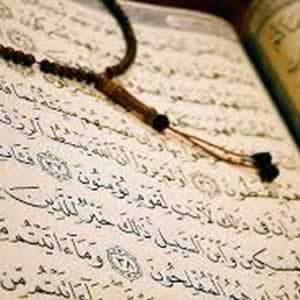 What is The Quran?
Quran, literally meaning "the recitation" is the central religious text of Islam, which Muslims believe to be a revelation from God (Allah). It is widely regarded as the finest work in classical Arabic literature. The Quran is divided into chapters (surah in Arabic), which are then divided into verses (ayah). Muslims believe that the Quran was verbally revealed by God to Muhammad through the angel Gabriel (Jibril), gradually over a period of approximately 23 years, beginning on 22 December 609 CE, when Muhammad was 40, and concluding in 632, the year of his death. Muslims regard the Quran as the most important miracle of Muhammad, a proof of his prophethood, and the culmination of a series of divine messages that started with the messages revealed to Adam and ended with Muhammad.