42:49
238 views
·
Last viewed: 17 hrs ago
Uploaded: 21 Jul 2026 (1 month ago) · Shared: 22 Jul 2026
Video Description (from Youtube)
Links Mentioned in this Episode: - https://www.bartehrman.com/visions - Visions of the End - How early Jews and Christians imagined the end of the age - is our new course with Dr. Jason Staplesstarting on August 13th. Early-bird pricing until August 1st via this link.
*Episode Description*
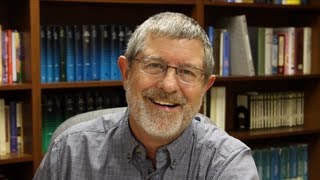
Most people, whether religious or not, assume that the concepts of heaven and hell—an eternal reward for the soul in paradise or eternal punishment in a fiery pit—were central to the teachings of Jesus and the foundations of Christianity. In this paradigm-shifting episode of Misquoting Jesus, Dr. Bart Ehrman reveals that this popular understanding is a later development, a fascinating synthesis of different ancient worldviews that would have been foreign to Jesus and his first followers.
The conversation begins by dismantling the common assumption that the Old Testament contains a blueprint for heaven and hell. Dr. Ehrman explains that in the Hebrew Bible, there is no concept of a soul separating from the body to live on in a divine realm or a place of torment. The word 'Sheol,' often mistranslated as 'hell,' simply meant the grave—the pit of death where all people, righteous and wicked alike, ceased to exist. In this ancient Israelite view, a human being was a unified body and soul (or 'breath'). When the body died and the breath left, that was the end. Rewards for righteousness and punishments for sin were expected to happen in this life, not the next.
So where did the idea of an afterlife of reward and punishment come from? The key, Bart explains, was the 'problem of justice.' As Jewish thinkers observed the world, they saw a glaring contradiction: righteous people often suffered terribly, while wicked and cruel people prospered. If God is just, how could this be? This theological crisis, which became prominent in the last few centuries before Jesus, led to a new idea: resurrection of the dead. The belief was not in a soul floating up to heaven, but in a future, physical resurrection where God would right the wrongs of this life. The righteous would be raised to an eternal, paradise-like life on a renewed earth, and the wicked would be raised for judgment and then annihilation. This apocalyptic worldview, Bart argues, was the one Jesus himself held.
The modern Christian concept of heaven and hell, as Bart masterfully explains, is the result of a momentous fusion between these two distinct traditions. As Christianity spread from its Jewish roots into the wider, Greek-speaking Roman Empire, new converts brought their Platonic understanding of the immortal soul with them. The Jewish 'horizontal' timeline (this evil age vs. the glorious age to come) was gradually transformed into a 'vertical' one (this world below vs. the world of souls above). The teachings of Jesus were combined with the philosophy of Plato.
The episode then explores the 'afterlife tourism' genre of early Christian literature that expanded on these ideas. In non-canonical texts like the Apocalypse of Peter and the Apocalypse of Paul, we get guided tours of the afterlife. These texts offer lurid, graphic, and terrifying descriptions of the torments of hell—often in far more detail than the descriptions of heaven—serving as powerful tools to scare potential converts into the faith. These writings also introduced concepts like a tiered heaven, where the more righteous a person was on earth, the greater their reward and the higher their status would be in paradise, a concept that fueled ascetic competitions among early monks and echoes even today.
*Three Key Takeaways from the Episode:*
1. *Jesus's Belief Was in a Physical Resurrection, Not a Soul Going to Heaven:* As an apocalyptic Jew, Jesus taught that at the end of the age, God would judge the world. The righteous dead would be physically resurrected to live forever in a renewed kingdom of God on earth, while the wicked would be annihilated. The idea of an immortal soul departing the body for a spiritual realm was a Greek concept, not a Jewish one.
2. *Modern Heaven and Hell are a Synthesis of Jewish Apocalypticism and Greek Philosophy:* The Christian doctrine of the afterlife did not emerge fully formed. It evolved as the early church moved into the Greco-Roman world, blending the Jewish expectation of a final judgment with the Platonic concept of an immortal soul that is rewarded or punished immediately after death.
3. *The 'Problem of Justice' Was the Primary Driver for Developing an Afterlife Theology:* Both ancient Jews and Greeks struggled to reconcile the idea of a just cosmos with the reality of righteous people suffering and wicked people prospering. The need for ultimate justice—for a final reckoning where all accounts are settled—was the fundamental motivation that led to the development of both the resurrection belief in Judaism and the immortal soul's judgment in Greek philosophy.
DISCLAIMER
All videos are shared for educational and information purposes only. All videos are hosted and viewable on Youtube servers. Video titles are generated using the original video title; overall content theme including actual dialogue and speech (Transcript); and A.I-based recommendations with a focus on SEO, keyword density, and internal search functions. The video title does not represent the views held by the Youtube video uploader, or any individual, organisation or business.
If you spot any mistake, omission or give feedback, kindly Contact Us with details
Search Results on 'Evolution of Heaven & Hell in Judaism and Early Christianity. What did Jesus believe? | Bart Ehrman'
SCROLL TO: TOPICS | 9 NEWS | 102 ARTICLES | 9 FAQ | 38 VIDEO | 742 LINKS | 2Topics include Bart Ehrman, Evolution, Christianity, Jewish, Heaven, Judaism (9)
Who is Bart Ehrman? Bart Ehrman (born 1955) is an American New Testament scholar focusing on textual criticism of New Testament, historical Jesus, and development of early Christianity. Ehrman has written and edited 30 books, including three college textbooks. He has also authored six New York Times bestsellers. He is
currently the James A. Gray Distinguished Professor of Religious Studies at the University of North Carolina at Chapel Hill. |
What is Jewish Temple? The Second Temple was the Jewish holy temple which stood on the Temple Mount in Jerusalem during the Second Temple period, between 516 BCE and 70 CE. According to Jewish tradition, it replaced Solomon's Temple (the First Temple), which was destroyed by the Neo-Babylonian Empire in 586 BCE, when
Jerusalem was conquered and part of the population of the Kingdom of Judah was taken into exile to Babylon. Much like the Babylonians destroyed the First Temple, the Romans destroyed the Second Temple and Jerusalem in 70 CE as retaliation for an ongoing Jewish revolt. Jewish eschatology includes a belief that the Second Temple will be replaced by a future Third Temple. |
What is Evolution?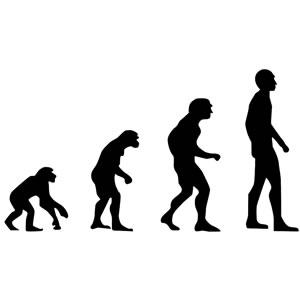 Evolution is change in the heritable characteristics of biological populations over successive generations. Evolutionary processes give rise to bio-diversity at every level of biological organisation, including the levels of species, individual organisms, and molecules. In the mid-19th century
Charles Darwin formulated the scientific theory of evolution by natural selection, published in his book On the Origin of Species (1859). Evolution by natural selection is a process first demonstrated by the observation that often, more offspring are produced than can possibly survive. |
Who are Jews For Judaism? Jews For Judaism connect Jews to the spiritual depth, wisdom, beauty and truth of Judaism. With educational programs, materials and counseling that keep Jews Jewish.
|
What is Jewish Law? Jewish Law (Halakha) is the collective body of Jewish religious laws derived from the written and Oral Torah. Halakha is based on biblical commandments (mitzvot), subsequent Talmudic and rabbinic law, and the customs and traditions compiled in the many books such as the Shulchan Aruch. Halakha is
often translated as "Jewish law", although a more literal translation might be "the way to behave" or "the way of walking". The word derives from the root that means "to behave" (also "to go" or "to walk"). Halakha guides not only religious practices and beliefs, but also numerous aspects of day-to-day life. |
What is Christianity? Christianity is a global religion centered on the life and teachings of Jesus Christ, who followers believe is the Son of God. It's a monotheistic faith, meaning Christians believe in one God who exists in three co-equal persons: God the Father, God the Son (Jesus Christ), and the Holy Spirit
Christianity is based on the Bible, with the Old Testament and New Testament serving as sacred texts. |
What is Jewish? Judaism is an Abrahamic, monotheistic, ethnic religion that comprises the collective spiritual, cultural, and legal traditions of the Jewish people. Religious Jews regard Judaism as their means of observing the Mosaic covenant, which they believe was established between God and the Jewish people
The religion is considered one of the earliest monotheistic religions. Jewish religious doctrine encompasses a wide body of texts, practices, theological positions, and forms of organization. Among Judaism's core texts is the Torah - the first five books of the Hebrew Bible - and a collection of ancient Hebrew scriptures. The Tanakh, known in English as the Hebrew Bible, has the same books as Protestant Christianity's Old Testament, with some differences in order and content. |
What is Heaven? Heaven, or the Heavens, is a common religious cosmological or supernatural place where beings such as deities, angels, souls, saints, or venerated ancestors are said to originate, be enthroned, or reside. Heaven is often described as a 'highest place', the holiest place, a paradise, in contrast to
Hell or the Underworld or the 'low places' and universally or conditionally accessible by earthly beings according to various standards of divinity, goodness, piety, faith, or other virtues or right beliefs or simply divine will. |
What is Judaism? Judaism encompasses the religion, philosophy, culture and way of life of the Jewish people. Judaism is a monotheistic religion, with the Torah as its foundational text (part of the larger text known as the Tanakh or Hebrew Bible), and supplemental oral tradition represented by later texts such as
the Midrash and the Talmud. Judaism is considered by religious Jews to be the expression of the covenantal relationship that God established with the Children of Israel. <br><br> Judaism includes a wide corpus of texts, practices, theological positions, and forms of organization. Within Judaism there are a variety of movements, most of which emerged from Rabbinic Judaism, which holds that God revealed his laws and commandments to Moses on Mount Sinai in the form of both the Written and Oral Torah. <br><br> The Jews are an ethnoreligious group and include those born Jewish and converts to Judaism. In 2012, the world Jewish population was estimated at about 14 million, or roughly 0.2% of the total world population. About 42% of all Jews reside in Israel and about 42% reside in the United States and Canada, with most of the remainder living in Europe. |
News on Bart Ehrman, Evolution, Christianity, Jewish, Heaven, Judaism (102)
Articles on Bart Ehrman, Evolution, Christianity, Jewish, Heaven, Judaism (9)


FAQ on Bart Ehrman, Evolution, Christianity, Jewish, Heaven, Judaism (38)
Youtube Videos on Bart Ehrman, Evolution, Christianity, Jewish, Heaven, Judaism (742)
 Jesus and the Historian -
  How Jesus Became God -
  Orthodox
  Similarities between Islam and
  Was Apostle Paul founder of
  The Islamic Stance on Human
  What does Islam say about the
  Biological
  Is
Is  What's common between Islam &
  Did Jesus claim to be God? -
  Bible scholar reveals the truth about the Bible -
  Did the Historical Jesus Claim to Be Divine? -
  From Jesus to Muhammad: A History of Early
  The Faces of Jesus -
  Jesus Before the Gospels -
  Bridging World Religions: Exploring
  Adam Mann leaves
  Who Wrote The Gospels: Mark, Matthew, Luke & John? -
 How Jesus Became God -
  What is the
  What did Apostle Paul say about keeping the
  How does
  From
From  Why does the Quran call the
  How
How  Zoroastrianism influenced
  Biblical
  Does the Bible misquote Jesus? -
  Contradictions in the Bible -
  Islam and
  Jesus was
  Did Apostle Paul invent
  A
A  Differences between
  How the
  Jesus in Islam and
  Salvation in
  In Luke 10:18, I saw Satan fall like lightning from
  Did Apostle Paul read the
  Theory of
  How the Early Christian Church left its

 Is Darwinian
  Theory of
  In the Quran, why does God say
  Was Jesus the promised
  In
In  Do
Do  Life of a
  Is Jesus prophesied in
  Why
Why  Is the original New Testament Bible lost? -
  How did Apostle Paul corrupt

 In Quran 2:62, does God say
  A
A  In Quran 9:30, God says the
  Why did the
  How
How  Why does
  In Genesis 1:26, Let us make man in our image - How do
  Similarities Between
  Do
Do  Islam,
  Why did Bible Gospel writers corrupt the
  From
From  From
From  From
From  From
From  Why did the
  In Quran 2:62, will
  Are Humans related to Apes? (
 Are Gospels Based on Eyewitness Testimony -
  Are Gospels Based on Eyewitness Testimony -
  Jesus, Law and New Covenant -
  Misquoting Jesus: Who changed the Bible? -
  Why can't all good people go to
  Was the New Testament forged? -
  Did Jesus Exist? -
  The Gospel Truth: Sometimes A Little Hazy -
 Hidden
  Peter, Apostle Paul and Mary Magdalene -
  How Jesus became God UCC -
  How Jesus became God UCC -
  How Jesus became God UCC -
  The case against Jesus' Resurrection -
  Deconstructing the New Testament -
  Can We Trust the Gospels? -
  Can We Trust the Gospels? -
 Christian Trinity in the
  Will the
  Does the New Testament misquote Jesus? -
  How Jesus Became God Q&A -
  Can historians prove Jesus rose from the dead? -
  Did Apostle Paul write 2 Corinthians? -
  Lost Christianities: TV Interview -
  Lost Christianities -
  On the Bible Authors -
  Salvation in Islam and
  Salvation in Islam and
  In 200 years,
  Origins of the Trinity -
  Bible Authors are not who we think they are #Forged -
  Is the New Testament lost? -
  Darwinism is different to
  Gay Marriage in
  Authenticity of the New Testament -
  Origins of the New Testament -
  Do we have the Original Manuscripts of the New Testament? -
  Can we reconstruct the Original Manuscripts of New Testament? -
  Is
Is  New Testament: Apostle Paul as
  New Testament: Growth of
  Catholic vs Protestant versions of
  The Hidden Truth On
 Siege of Jerusalem and destruction of the
  Last Stand of the Great
 The Lost Early History of Unitarian
  Jesus the
  Roots of Jesus'
  Roots of Jesus'
 Flavian Roman Conspiracy: Origins of
  Origins of
 Roman 'Arch of Titus' celebrates destruction of
  Seige of Jerusalem: Rome destroys the
  Are
Are 
 The African Rise of
 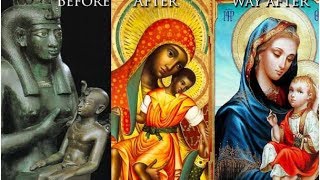 African Origin of
  Dead Sea Scrolls:
  Jesus come in the Flesh (Shaffer Lectures) -
  Jesus the Divine Man (Shaffer Lectures) -
  Jesus against the
  Apostle Paul only wrote 7 Letters/Epistles out of 13 -
 Siege of Jerusalem and Roman-
 Mithras: Pagan Origins of
  The fraudulent power and position of
  The Creation of the King James Bible -
  In Matthew 24 and Luke 21, Jesus prophecized destruction of
 Constantine's Pagan Influence on
 Truth about
  Mark 16:9-20 is fake -
  For popularity,
  Are Islam and
  How can we live today with 4000-year old Laws? - Hashim vs
  In Philippians 3:8, Apostle Paul compares
 Early Christians did not believe Jesus was God or in the Trinity -
  Apostle Paul said Jesus came from
  How are layers of Fossils evidence for
  The
The  Who is Jesus to the
  Early
Early  Do I believe in Darwin
  Early
Early  The Rise of
  The Rise of
  History of Orthodox

 Did Jesus exist in the
  How Certain is Darwinian
  Is
Is  Shalom. As the President of Pakistan, I would give
  3
3  Historically,
  In Matthew 15:24, Jesus claimed he was only sent to the
  Jesus' Resurrection -
  Why do we [
 In Quran 3:65, why do
  Is
Is  In Numbers 1:46, the Exodus had 2 Million
  Pagan Origins of
  In Romans 11:26, Apostle Paul misquotes Isaiah 59:20 and distorts the
  Jesus the Passover Lamb to Christians; God to Egyptians; and Sacrificial Meal for
 In Deuteronomy 18:18, the prophet to come was Joshua (
 Internet and spread of Knowledge will break
  Ebionites: Ancient Unitarian Christians -
 From Isaiah 60:3, Matthew copies the Christmas Story. Baby Jesus born to Joseph, a fatherly figure invented to reconcile warring
  Is Homosexuality Compatible with
  Mary, Mother of Jesus was a significant, powerful
  In Mark 7:15, Jesus upheld the
 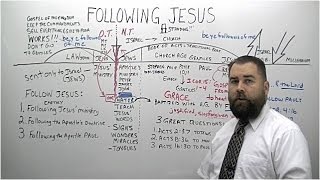 Many follow Jesus, do Works, yet will go to Hellfire. Follow the Risen Jesus, have Faith, obey the Church Age to get
  Islam is more balanced than Judeo-
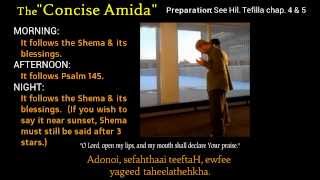 Jesus prayed the
 Zionism and
 In Matthew 28:19, is not a Trinitarian verse. Trinity came through
  Let's discuss
  Torah is the
  Jerusalem is a Holy city to the
  Ben-Gurion saw
  In
In  Zionism does not represent
  Zionists seek to remove
 Did Apostle Paul Invent
  In
In  Apostle Paul was not a religious Jew. He corrupted the
  Was
Was  Paganism,
  Do
Do  In Genesis 3:8, God walks with Adam and Eve. So, the
  In Noahide Laws,
  In
In  In
In  In
In  Allah is HaShem of the
  The Theory of
  Is the Bible Historically Reliable? -
  What can
  Does
Does  Conversations with Islam,
  Triumph of
  Did Christian Crusaders believe killing Muslims would gain them
  The Triumph of
 Are Islam and
  What
What  Suffering & God's Existence -
  In 70 AD, Rome destroyed Jerusalem and
  The Case Against Jesus' Resurrection -
  Homosexuals, Lesbians and Transgenders in
 Did
Did 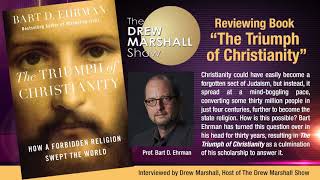 Triumph of
 Theological Similarities between
  Apostle Paul was not a Pharisee, or student of Rabbi Gamaliel. He persecuted early
  Similarities between Islam and
  Quran confirms
  Academics acknowledge Pagan Influences on
  As
As 
 In 73 AD, Masada was conquered by Rome; 967
  How
How  Archaeologists discover Yahweh, the
  According to the New Testament, Jesus and Apostle Paul died as
  El, Baal and Asherah: Israelite Gods of Ancient
  Ultra Orthodox: We are not Israelis. We have no connection with Israel. We are
  Has Zionism Hijacked
  Jesus is Son of the Father in
 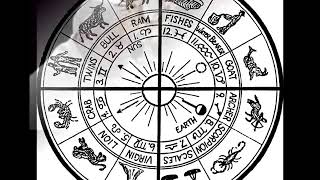 Importance of the Sun God, 12 Zodiac in Solar Mythology and
 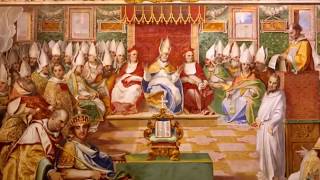 In 325 AD, Council of Nicaea created Jesus and
 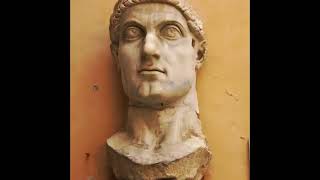 Constantine converted to
  Arguing Bishops at Council of Nicaea voted Pagan rituals into
  New Testament Bible compiled to agree with Catholic
  Early
Early 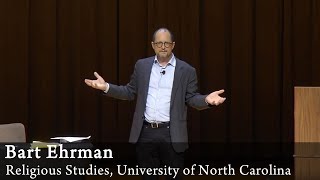 Matthew and John quote Jesus' sermons 50 years after he died.. Really? -
  Jesus claims he is divine, God-like in John's Gospel only. Why? -
  Gospels were not written by Mark, Matthew, Luke or John. These names were decided 100 years later -
  Jesus' disciples were Aramaic speaking, lower class, uneducated labourers. Gospels were written by highly educated, Greeks 50 years after Jesus -
  New Testament scholars agree Gospels are Anonymous, not written by Jesus' disciples, or eye-witnesses -
  Paul spoke Greek. How did he communicate with Jesus' Aramaic speaking disciples? -
 You could invent
  Jesus/Joshua was a very common name. 4% of
  Emperor Constantine made
 In Hebrews 9:15, Christians replaced the
  Christian Gospels are Symbolic Fiction; mythical narratives mined from
  Jesus was a
  Jesus never claimed to be divine or God-like in Matthew, Mark or Luke -
  Gospels are 'stories' by Greek writers 40 years after Jesus' crucifixion, not eyewitness accounts -
  Palestine had a 97% illiteracy rate. Jesus' disciples, poor, lower class labourers could not read or write -
  Mark, Matthew, Luke and John could not read or write. Who wrote the Gospels? -
  Gospel of Matthew: A collection of anonymous Jesus' stories, entitled 100 years later -
  In John, Jesus is a God-like diety from
  Mark, Matthew, Luke and John have too many differences and contradictions -
  Original Gospel Text does not exist. 1000's of copies, discovered 100's of years later do exist -
  In John 7:53, the adulteress story was added to the Bible by later scribes -
  New Testament Bible: 27 books were finally chosen 300 years after gospels were written -
  Jesus and his disciples were
  Paul was
  93% of Romans were polytheist pagans with many Gods. Christians had a 'more powerful' God -
  For me, the Bible has too many 'human' mistakes to be the inerrant revelation from God -
  I believe in Love your Father, Love your Neighbour, Love Everybody - Mansur Ahmad vs
  Paul was 'Apostle to Gentiles' and claimed superiority over
  '
' Jesus existed with His Father since time began, or created later? (Arian Controversy) -
  In 325 AD, Council of Nicaea debated and voted on divinity of Jesus -
  In 70 AD, Mark, the earliest Gospel depicts Jesus as suffering & dying
  After his resurrection, Jesus became a God, like Romulus, Moses etc. -
  Jesus progressed to God through Docetism, Separationism, Modalism and Trinitarianism -
  In 225 AD, Tertullian defined Trinity: 3 Gods in 1 Person, or Orthodox
  Early Christians did not believe Trinity, or write about it in New Testament Bible -
  In 1 John 5:7-8, the Trinity verse was added by later scribes. It is missing from the earliest Greek manuscripts -
  Ebionites believed Jesus was
  Jesus orders greater
  Jesus was a strict
  Jesus, a Jew who observed
  For Apostle Paul, Jesus' death & resurrection was key to salvation. Not the
  Keeping Old Testament in the Bible benefits
  As
As  In the ancient world,
  In Hebrew Bible, God took human form and walked amongst Adam & Eve in Garden of Eden -
  In Hebrew Bible, the 'Angel of the Lord' regularly appears as a Human being -
  In Genesis, 'sons of God' married beautiful earthly women reproduced Giants (Nephilim) -
  In Hebrew Bible, humans were called Gods i.e. King of Israel, Enoch -
  During his life, Jesus never called himself God, or think of himself as God -
  Pontius Pilate crucified Jesus for Treason, as 'rival' King of the
  Within 20 years, Jesus' status was debated, gradually Jesus was promoted to Godhead -
  Most likely, after Crucifixion, Jesus was left on Cross, his body decomposed and birds/dogs scavenged him -
  In Mark 2:10, Jesus claims authority to forgive Sin. But this does not make him God -
  In the Early Church, their were many different versions of
  Early Christians believed in 1, 2, 30, even 365 different Gods -
  Early Christians viewed Jesus as human & divine, human only, and divine only? -
  Early Christians differed on Jesus' resurrection: physical, spiritual or a symbolic event? -
  Christians today differ on what constitutes the Bible and scripture -
  Early Christians held conflicting and opposing beliefs on Christian doctrine -
  New Testament Bible contains books with conflicting teachings on Orthodox
  Early Christians freely disagreed on Christian fundamentals as the Bible did not exist -
  Mark, Matthew, Luke, John... Where's the other Gospels, Acts and Epistles? -
  Ebionites, early Christians believed Jesus was a Human being -
  Ebionites, early Christians held beliefs very similar to Jesus and his disciples -
  Ebionites, early Christians were
  Ebionites, early Christians required followers to convert to
  For
For  Ebionites, early Christians were right to believe Jesus was a Jew -
  Paul preached to majority, gentiles, pagans and idolators, who had no interest in
  Ebionites, the earliest Christians viewed Paul as a Heretic, and rejected his writings -
  Jesus, an Aramaic speaking Palestinian. New Testament originally in Greek, language of Rome -
  Matthew, Mark and Luke are similar and different. Were the Gospel differences 'inspired' by God? -
  Mark was copied by Matthew and Luke -
  John's gospel presents a unique 'maverick' account of Jesus -
  Matthew, Mark, Luke and John are NOT objective, historically accurate accounts of Jesus' life -
  6 of 13 Paul's Letters (or Epistles) were written by unknown authors at a later date -
  Jesus, a
  Apostle Paul never met Jesus in his lifetime. Paul spoke Greek and lived outside of Palestine -
  Apostle Paul preached Jesus' death & resurrection guaranteed Salvation, not observing
  Apostle Paul established Churches, and converted Gentiles, Polytheists and Pagans to
  In Galatians, Apostle Paul orders new Christians abandon circumcision/
 Apostle Paul was highly controversial amongst early Christians who believed he had fabricated the Gospels -
  Apostle Paul taught faith in Jesus' blood/death on the Cross was ultimate sacrifice for our Sins -
  3 Corinthians explains Docetism. The concept did not exist. It is a Forgery! -
  Apostle Paul may not have written 2 Thessalonians, Ephesians and Colossians -
  Apostle Paul did not write 1 Timothy, 2 Timothy and Titus -
  Matthew, Mark, Luke and John are written by Anonymous Authors in third-person (i.e. they) -
  Matthew, Mark, Luke and John authored by highly-educated, literate, 2nd gen. Greek speakers -
  Gospels are 'Jesus Stories', rumours and gossip spread orally amongst early Christians -
  Conflicting Gospel accounts of Jesus' Crucifixion and final moments -
  Gospels present fundamentally opposing Jesus stories due to 'oral culture' -
  On Jesus' birth, Matthew and Luke give different accounts -
  On Jesus' death, Mark and Luke give different accounts -
  Mark Gospel, the first gospel, Jesus is the suffering Son of God who nobody recognizes -
  Matthew depicts Jesus as a
  Luke's Gospel depicts Jesus as a prophet with a universal message, rejected by his people -
  John's Gospel, Jesus reveals his true identity, divine God who came to Earth -
  Original text of all New Testament books is lost -
  In Hebrews, scribes edited a verse as they saw fit -
  In 1707 AD, John Mill reported on 30,000 textual variants in 100 Bible manuscripts -
  Luke Gospel, a 14th century manuscript (109) proves a scribe incorrectly copied Jesus' geneology -
  In John 7:53, Scribes added, later removed, the Adulteress story from New Testament -
  In Mark 16:9-20, Scribes wrote a 'longer ending' to New Testament Bible -
  In Mark 1:40, Scribes replaced an 'angry' Jesus with a 'compassionate' Jesus -
  In Joshua 6:21, God ordered Israelites to destroy the inhabitants of Jericho -
  In 2 Kings 2:24, God allows Elisha to summon bears to hurt the children -
  Gnostic Christians praise John's Gospel as he writes of a 'Salvation' diety coming to Earth -
  In 367 AD, the New Testament Bible finally came into existence, 330 years after Jesus -
  Early Christians, Ebionites, Marcionites, Gnostics, all had their own Bibles and scripture -
  Anonymous Texts given Apostolic titles, Matthew, Mark etc. to qualify for Bible NT canon -
  In 1545 AD, Council of Trent was first ecumenical council to officially recognise 27 New Testament books -
  Matthew recalls Jesus' 2000-word 'Sermon On The Mount', 55 years after Jesus delivered it? -
  1 Timothy was probably not written by Paul -
  Apocalypse of Peter almost made it into the New Testament canon -
  During his life, Jesus never once claimed he was God -
  Jesus' central message was repent of your Sins, and prepare for God's Kingdom, not Love -
  According to Islam, only Muslims will go to
  Apostle Paul discovered Jesus in the
  Apostle Paul takes the
  Jesus' stories were orally circulating 40-60 years before Gospels were written -
  Mark's Gospel was not based on Peter's Testimony or any other Jerusalem eyewitness -
  John-Mark wrote Mark's Gospel? Historical studies and evidences do not prove this -
  Anonymous author of Mark's Gospel resided outside of Palestine -
  Source for Mark's Gospel? It was not Peter's Testimony or any eyewitness' account -
  If Mark's Gospel was based on eyewitness', why did Matthew & Luke 'radically' edit it? -
  Clement, Ignatius, Polycarp, Justin & Papias quoted from nameless, anonymous Gospels -
  Irenaeus (180 AD) named popular, 'anonymous' texts Mark, Matthew, Luke, John for Apostolic reasons -
  Papias (163 AD) described Matthew's Gospel as Jesus' sayings written in Hebrew -
  Gospels are not Jesus' words. They are Oral stories passed down years later -
  Early Christians invented Jesus' stories, sayings and sermons; aka New Testament -
  Jesus' stories were shared between Gospel writers. This is not proof of Bible preservation -
  Critical scholars doubt the Jesus' sayings in John's Gospel on Jesus' divinity -
  Oral story tellers created Jesus' stories long before the Gospels were written -
  If Matthew and Luke revised Mark, what about the earlier 'unchecked' Oral tradition? -
 In 1 Corinthians 10:16, Jesus' body/blood are consumed at 'Eucharist'. Human sacrifice is not from
  In Mark 11:13, Jesus cursed Fig tree is allegory for God abandoning the
  Pagans gave up their Gods, and turned to the one Christian, all-powerful, Jealous God -
  Apostle Paul wrote Letters. Later Christians, raised their status to God-inspired revelation -
  Apostle Paul taught new Christians, ex-pagans, did not have to convert to
 What do Muslims think of Darwins Theory of
  Was Jesus
  Gospels are not 100% accurate accounts of Jesus -
  Anonymous writings were named after Apostles (Peter, James, Mark etc.) for credibility -
  Jesus' resurrection is nowhere to be found in the New Testament Gospels -
  Differences & discrepencies are proof Biblical stories been revised again and again -
 No physical evidence for
  Apostle Paul did not see Jesus as a real, historical
  Mark, Matthew & Luke write of Jesus a mythical
 Muslim Spain protected
  In 1492 AD, Muslims protected
  In Genesis 6:6, the Omniscient, All-Knowing
 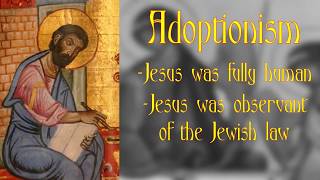 In 75 AD, Adoptionism taught Jesus a
 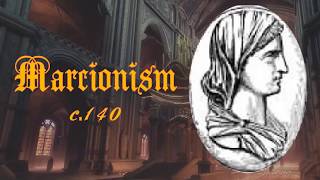 In 140 AD, Marcion rejected the OT Bible, and 'inferior, evil' OT
  F.C Baur (d. 1860 AD) argued Apostle Paul preached a 'different
  Mark, Matthew, Luke, John are anonymous texts named later (false ascriptions) -
  After 100 years, Church Fathers refered to gospels as Matthew, Mark, Luke & John -
  John's Gospel may have been authored by multiple anonymous authors -
  6 of 13 Apostle Paul's Letters were not written by Paul, but unknown authors -
  6 of 13 Apostle Paul's Letters were forgeries, written for 'Greater Christian Good' -
  Jesus' disciple, Peter, an illiterate Palestinian fisherman did not write 1/2 Peter -
  In 367 AD, Athanasius decided the 27 books to include in the Christian NT Bible -
  Apostle Paul evidences Jesus as a Spiritual, celestial being sent from
  NT Gospels ordered so baby Jesus the
  The original New Testament Bible -
  In Gospels, Jesus is crucified by 'innocent' Pontius Pilate who reluctantly bows to
  Papias (d. 163 AD), a Proto-orthodox Church Father believed in Orthodox
  21 Ecumenical Church Councils defined Catholic
 Theodosius (380 AD) declared
  Did Constantine (d. 337 AD) convert to
  From 306 AD, Constantine used
  Arius (d. 336 AD) used Reason to define Jesus & Continuity, for
  In 389 AD, Rome ordered Library of Alexandria be destroyed, so a new religion,
  Christian Origins of Antisemitism &
  In Matthew 1:18, Jesus had a begining. He was 'born' into existence -
 In Genesis 18, a
  In
In 
 Why I Left Orthodox
  Was Jesus a Jew who followed
  I condemn the violence in the
 In
In  3 major sins
 Alice Bailey, New World Order and
  Jesus was a follower of Moses. He followed the
  New Testament writers plagarized Jesus' Prophecies from
  For
For  In Isaiah 53, the
  In Quran 71:17, God makes strong arguments for
 Islamic views on
  Is Jesus the Promised
 Jesus Christ: A pagan Sun God turned into a
  Christians were ordered to 'Render unto Caesar', over
 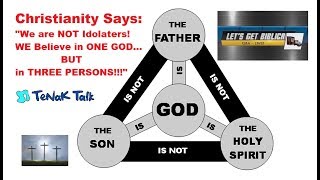 Trinity is a form of Idolatory, in conflict with
  Greek philosophy influenced Early
  Paul Invented
  Pauline
  Salvation in
  Rabbi Moskoff, Israel's
  Greek language, philosophy & culture conflicts with
  In Luke 24:19, Jesus of Nazareth is called a man who was a '
 The Third Temple will be
  Trinity is 'veiled' Tri-theism (Three Gods). Combining of
  Philo of Alexandria, a
  In Council of Ephesus (431 AD), Roman Catholics elevated Mary, to 'Mother of God' aka 'Queen of
  Philo of Alexandria mixed Greek philosophy with
  Introduction to Torah and
  Pliny the Elder (23-79 AD) never wrote of Jesus,
  How do
  King James bible (KJV) translators 'twisted' the
  In Deuteronomy 13:2,
  In Numbers 31:18, Child Marriage was encouraged. Today,
  In Acts 15:13-35, Apostle Paul and James argue over
  The modern Black priest continues preaching 'soft love'
 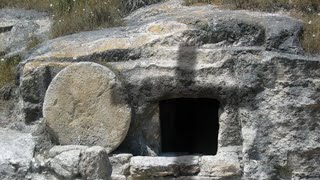 Christian Church claim Jesus' Crucifixion is in the
  Jesus was a Jew. Jesus is Kosher for
  If Moses did not write the Torah,
  Maimonides (1204 AD), a
  Maimonides (1204 AD), a
  Were
Were  Was Mark's Gospel copied from Josephus 'War of the
  Moses was not a Jew who spoke modern Hebrew. Show me '
 How does
  In Daniel 7:13 and Matthew 16:27, 'Son of Man' is the
  Basics of
 Self-Appointed Apostle, Paul disagreed with Jesus 12 '
 In Romans 4:5, the 'Faith versus Works' concept goes against
  In Galatians 1:12 and 2 Corinthians 3:10, Apostle Paul claims revelation from Jesus & opposed the
  In Leviticus 20:26, God forbids consuming Pig. As He has 'set the
  Based on Exodus 34:15,
  Jesus did not abolish
  Apostle Paul, a Pharisee, had a Love-Hate relationship with
  In 1 Corinthians 9:20, Paul was self-appointed Apostle to Gentiles; not Rabbi Saul for
  In 1 Corinthians 7:19, Apostle Paul opposes Circumcision and
 The
The  Islam raises all Prophets to Jesus' status AND lowers the Christian Jesus-God to
  Israel supports the LGBTQ community and
 Jesus spoke Aramaic. Not Greek or Latin -
  1st century religious
  Josephus (37-100 AD): Aramaic was language of
  Elijah the Gentile Prophet (not
  Do Christians believe in
  In 200 AD, Noahide Laws came from the
  Jesus instructed
 Did Hitler on the Road to Berlin, have a Vision that named him 'Apostle to the
  Emperor Constantine merged Pagan and Christian values to define
 Quran teaches hatred of
  Council of Jerusalem (50 AD) charged Apostle Paul of taking
  Only Muslims are guaranteed Salvation in
  Sadducees, Pharisees, Zealots and Essenes were 4 different types of
  On
On  In Hebrews 9:22, Apostle Paul requires shedding of Blood.
  What is Astrotheology, and its relation to
  Dead Heros ascend to
  Josephus' 'Antiquities of
  Suetonius (121 AD) wrote of
  In Torah, God regret His decision to choose Saul as King. Is this a positive Attribute? - Shamsi vs
 Jesus'
  Both Apostle Paul and Philo of Alexandria wrote of Jesus the supreme Archangel in
  In Acts 21:21, Apostle Paul accused of Apostasy, follows
  Concept of a 'Unified' God in Islam &
  Matthew and Luke copied from Gospel of Mark -
  In
In  In
In  In 70 AD, Rome destroyed the Jerusalem Church, establishing 'Pagan' Trinitarian
  Respect the
  Only Muslims will go to
  42% of American
  Suetonius (69-122 AD): Chrestus (Jesus) encouraged
  Was Apostle Paul really
  Philo of Alexandria, a
  Evangelical Christians 'unfairly' target Israeli
  In Romans 1:16, Apostle Paul urges GOD TV to evangelize Israel's
  Original disciples of Jesus were close to Orthodox
  In Quran 21:30, God confirms
  In Mark 12:29, Jesus was an observant
  Apostle Paul proclaimed
  In
In  Should
  After
After 
 Muhammad, a prophet for Muslims, but Torah cannot be challanged - Shamsi vs Orthodox
  Is
Is  Can
Can 
 Jesus is not the
  Orthodox
  Why
Why  Astrology in Early
  Pagan Origins of
  Why Is Swine Pork Forbidden in
  Rome's Gods: From Imperial Cult to
  Do Muslims follow the true Jesus? -

 Stonewall Riots 1969: Goddess Ishtar replaces
  Fasting in Buddhism,
 How Modern
  Is Religion Compatible With Human
  POLL: 47% Israeli
  Israel's Racist Genocide will lead to their Own Destruction | Abbas London vs
 Why Christian Zionists support
 Origins of Islam and the Hidden connections to
 Do Muslims hate
  Did Muhammad borrow from
  Historical Origins and
  Is the New Testament Bible full of fiction? |
  Believer (Mumin) vs Submitter (Muslim) - Early Islam was Inclusive, Multi-Faith Community of
  Does the Israeli Zionist project protect the
  In 70 AD, 1,000,000 '
 The
The  Israel belongs to
  Will A.I ChatGPT overtake Islam,
  Jesus, Abraham, Isaac & Jacob were Black Men and Real
  Epstein Files reveal
  The 'slow death' of
  Jesus NEVER Claimed to be God |
 A.I will control the text in Islamic, Christian and
  The Old Testament drove me AWAY from
 72% of
  Why Early Christians turned Against
  Relationship between Islam,
  Is Jesus the
  What did Rabbi Throat do for
  Apostle Paul rejected Jesus
  'God gave us Israel. All of Jerusalem is
  Walking Tour of Stamford Hill, London's Ultra-Orthodox
  Why do
  The Real Story behind the Virgin Birth in
  Islam is the 'Broom of Israel',
  Israel recruits Christian Church Pastors to promote
  Have Israeli Zionists hijacked
 Was Jesus the Antichrist to the
  Is
Is  USA, New Jersey's
  Zionists are 'very Anti-
 The
The  Who is closer to
  Only God knows who will go
  Extreme Violence in Early
 Israel quotes 'Amalek' Bible verse after killing of 165 Iranian School Girls on
  Hellfire does not exist in
  Religious, Anti-Zionist
  Muhammad's letters to Caesar and Kings - Khaybar Conquest -
  The
The  Who Understood Jesus - Christians or Muslims? |
 Did Christians Invent Jesus' Teachings? |
  Real Jesus - A Jew Preaching
  Caesar Messiah EXPOSED: Did Rome Create
  Lebanon Under Attack - '
 Christians face 'spitting and physical attacks' from
 Zionism is not
  Did Apostle Paul Invent
  How Israeli School textbooks turn
  Was Jesus an Essene? |
  95% of Israeli
  Why do
 Zionism,
  Who Respects Jesus more? Muslims or
 Did Jesus actually believe in Hell? |
  Israel is the Holy Land for Zionists, not
 The Gods of
  The Core Themes of
 Human
Human  The Late Invention of
 Edom (
 Why does a
  Biblical Jacob & Esau (
 The Ebionites - Orthodox
  USA, UK, Russia, China, Germany, France, Poland will 'go down on their knees',
  Christian Church storytelling of
  Turn Antisemitism into expression of Love. Bring
  The Invention of
  DEBATE:
  Early Man
  Early
Early  The
The  Neturei Karta, Ultra-Orthodox
  Zionism is
  Is
Is  In Matthew 23:34, was Jesus antisemitic for stating Pharisees (
 Book of Isaiah does NOT prove Trinity in
  Israeli $730M PR budget to counter 'rockets of disinformation and lies' and protect
 Inside the Most
  Jesus mocked 'GOD-like'
  Did
Did  Zionism and
 How Satan, Demons, Hell & Evil were found in
  Early
Early  Apostle Paul invented
  Early Muslims,
  Criticisms of Early Islam and
  Quran 'BELIEVERS' is Inclusive of ALL Monotheists: Muslims, Christians and
  NWO Satanism to replace
 Who is Jesus The Messiah in Islam? How this differs from
  Early Christians were 'wholly
  UNDER ATTACK - 2000 years of
  The Original Jesus Was Hidden in Gospel of Mark |
  In
In  GOD CHOSE US: '1
  Hannah - The Prayer That Moved
  Sodom-Gomorrah - When God Rained Fire From
  Elijah vs 450 Prophets of Baal - The Day Fire Fell From
  Can
Can  Was James the Leader of
 Links on Bart Ehrman, Evolution, Christianity, Jewish, Heaven, Judaism (2)
| 1.Manna and Quail from Heaven (Exodus 16) |
| 2.Elijah taken to heaven (2 Kings 2:1-11) |