Explore More
Marijn Van Putten Skepsislamica IslamSearch Google Search Explore Topics
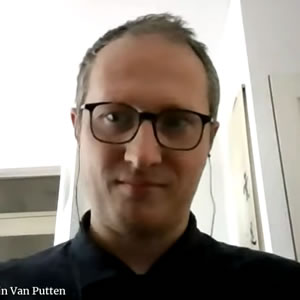 Who is Marijn Van Putten?
Marijn van Putten (born 1988) is a Dutch historical linguist and assistant professor at Leiden University. Born in Amsterdam, Marijn van Putten completed his diploma at Jan Tinbergen College in Roosendaal in 2006. He then pursued a bachelor's degree in Comparative Indo-European Linguistics at Leiden University, followed by a Research Master in Linguistics, focusing on language structure and variation. During this period, he developed an interest in Berber languages and their historical linguistics. In 2012, he began his PhD research on Awjila Berber grammar at the Leiden University Centre of Linguistics, completing his thesis within a year. He received his PhD from Leiden University in 2013. After his Research Master, he worked as a research assistant in the Comparative Indo-European Linguistics department, contributing to etymological dictionaries and the New Indo-European Dictionary Project.
 Who are Skepsislamica?
We spotlight perspectives in Islamic history that often go unnoticed, keeping you informed on the latest academic research and discussions. Our content is non-sectarian and grounded in rigorous academic approaches to Islamic studies, offering deep and thoughtful analysis.
 What is Islam?
One of the major religions of the world, Islam literally translates to "submission," as a follower of Islam (Muslims) devotes their life to that of their God. The religion began with the teachings of Muhammad in the 7th century. The theology of Islam is based on the Qur'an, which was given to Muhammad by God. Some of the major fundamental principles of Islam include the Five Pillars, which hope to unite all Muslims into a community. Two different factions of Muslims exist - the majority are known as Sunni, with a small percentage known as Shi'a - both predominantly reside throughout the Middle East. Muhammad died in 632 AD and the religion of Islam formally started after his death. The Quran was formally compiled and finalised in 650 AD, prior to which it was 'memorised' and written across many parchments.